A place renamed after a reckoning
Long before its newer name began to appear in conservation reports and maps, this Aleutian island was known for damage that could be counted in feathers, eggs, and silence. It lies in the western reaches of Alaska’s Aleutian chain, part of the Near Islands group, where low tundra and steep maritime weather meet the North Pacific and Bering Sea. Treeless, wind-scoured, and often wrapped in cloud, it does not present the dramatic volcanic profile many people associate with the Aleutians. Its power is subtler than that: broad uplands, wet ground, ponds, rocky shores, and an atmosphere shaped by distance and weather more than by height.
Hawadax Island was long called Rat Island, a name earned after the accidental introduction of Norway rats, probably from a shipwreck in the late eighteenth century. In a region where seabirds evolved on islands free of mammalian predators, that single arrival altered everything. Ground-nesting birds that had filled the slopes and coast with breeding colonies were suddenly exposed to an agile, relentless hunter. The island became one of the starkest examples in the North Pacific of how an invasive species could recompose an ecosystem almost completely.
When the birds fell quiet
The Near Islands sit far from ordinary traffic, and even within the Aleutians they feel withdrawn. Sea fog, heavy swells, and abrupt storms have always made approach uncertain. Russian navigators moved through these waters in the eighteenth century during the empire’s expansion into Alaska, and the broader region later became entangled in fur trading, imperial rivalry, and wartime strategy. Yet this particular island’s modern significance came less from settlement than from ecological loss. It remained uninhabited, but not untouched.
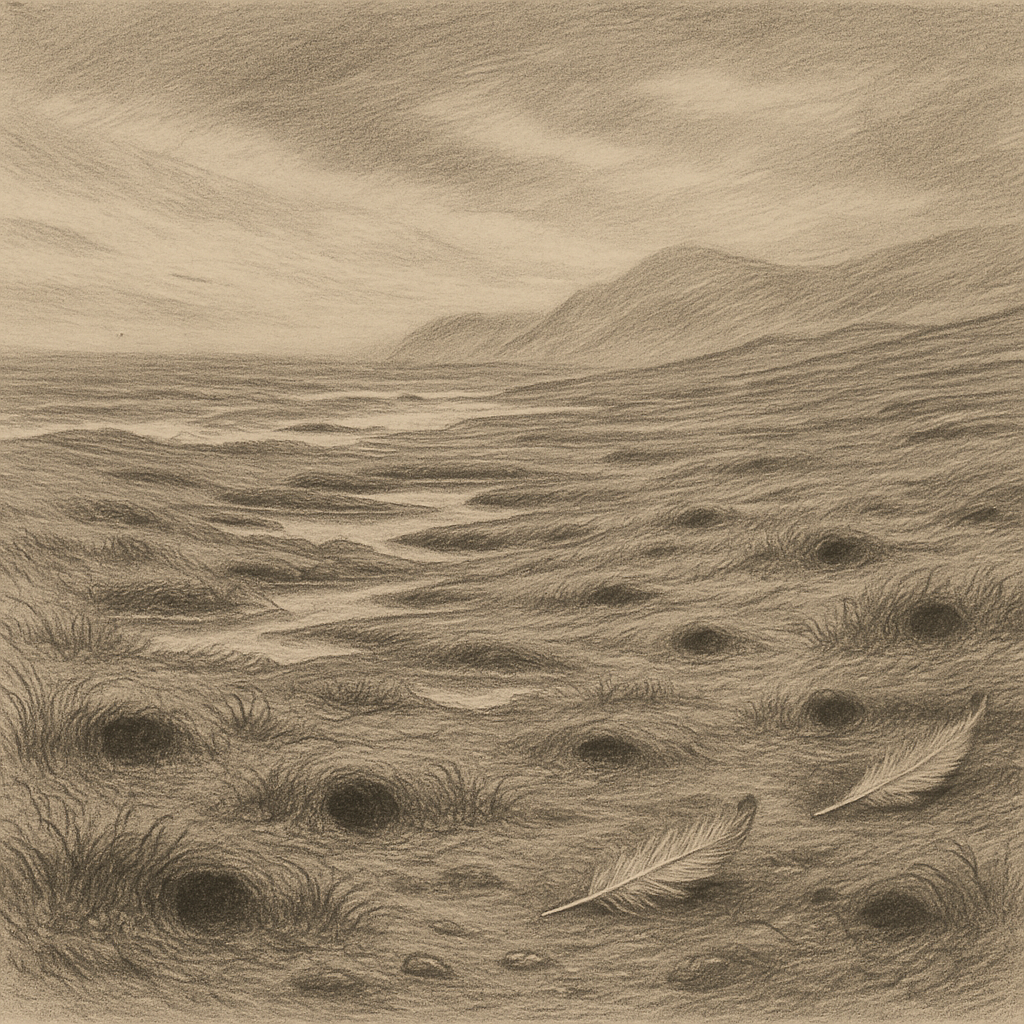
Biologists documented what the rats had done with unusual clarity. Seabirds that should have bred there in large numbers either vanished or were reduced to remnants. Species such as ancient murrelets, storm-petrels, and other burrow- or ground-nesting birds proved especially vulnerable. What made the place haunting to scientists was not just that life had diminished, but that nearby rat-free islands offered a direct comparison: where one island still pulsed with nesting birds, this one had been thinned almost to absence. In the Aleutians, where marine nutrients carried inland by birds help shape entire terrestrial systems, the loss spread beyond the birds themselves. Soil chemistry, invertebrates, and plant communities all reflected the break.
That history led to one of the most ambitious island restoration efforts in North America. In 2008, the Island Conservation partnership and cooperating agencies carried out a rat eradication operation across the island. It was a difficult, controversial intervention in a severe environment, using aerial distribution of rodenticide bait over terrain and weather that allowed little margin for error. There were painful costs. Bald eagles and some other non-target birds died, and the operation drew scrutiny for that reason. But the rats were eliminated, and in the years that followed, monitoring showed the beginning of a biological reversal. Seabirds started to return. The change was not instantaneous and not complete, but it was measurable and real.
A hard lesson written in tundra and surf
In 2012, the island was officially renamed with an Aleut word, Hawadax, often translated as “those two over there,” a decision that did more than replace an ugly shorthand. It marked a shift in what the island was understood to represent. No longer simply a cautionary label attached to an ecological wound, it became associated with restoration and with the persistence of local Indigenous language in a landscape too often described only through the vocabulary of empire, war, and extraction.
Physically, the island remains severe in the quiet Aleutian way. There are no forests to soften the wind, no permanent settlement, no roads carrying ordinary life. The ground is dominated by maritime tundra, grasses, mosses, and low vegetation adapted to cold, salt, and saturation. The coast alternates between beaches and cliffs. Fresh water collects in ponds and wetlands. For much of the year, visibility can collapse into mist, then lift abruptly to reveal an enormous horizon of steel-colored sea. It is habitat built less for human comfort than for birds, foxes once introduced elsewhere in the Aleutians, and the endless atmospheric exchanges of the North Pacific. On this island, the ecological drama has never needed a crowd to matter.
There is no well-established folklore attached specifically to the island in the way some remote places gather tales of hauntings or treasure. Its eeriness is modern and documented. Conservation papers, field notes, and monitoring reports supply the drama: a place nearly emptied by an accidental landing, then watched for signs of return. Few islands make the consequences of a single human error so legible. Fewer still offer the chance to witness repair.
What distance preserves, and what it cannot
Even now, the island resists easy romance. It is remote, cold, expensive to reach, and exposed to a sea that has little interest in accommodating visitors. Yet that very severity has helped preserve the clarity of its story. Nothing urban distracts from it; no resort, village, or layered architecture competes with the central fact of the place. Land, weather, birds, and one introduced predator shaped the record.
What stays in the mind is not grandeur in the usual sense, but the feeling of a living system brought almost to stillness and then, slowly, stirred again. In the western Aleutians, where cloud banks drag low and the shoreline seems perpetually on the verge of disappearing into weather, that recovery feels both fragile and stubborn. The island stands as proof that remoteness does not guarantee safety, and that even at the far edge of Alaska, human actions arrive with force. It also shows that repair, though costly and imperfect, can take hold in places where the wind seems to erase every trace except the ones that matter most.