Agrihan Island: A Remote Volcano Crown in the Northern Mariana Islands
Agrihan Island, also known historically as Agrigan, is one of the most remote and intriguing islands within the Northern Mariana Islands chain in the western Pacific Ocean. Volcanic in origin and largely untouched by modern development, Agrihan stands as a striking testament to the raw beauty and geological dynamism of the Pacific Ring of Fire.
Geographic Location and Geological Background
Agrihan is located in the northern part of the Mariana Islands, approximately 620 kilometers north of Saipan and nearly 400 kilometers south of Iwo Jima. This isolated island lies above the Mariana Trench, the deepest point in the world’s oceans, and is part of a volcanic arc formed where the Pacific Plate subducts beneath the Philippine Sea Plate.
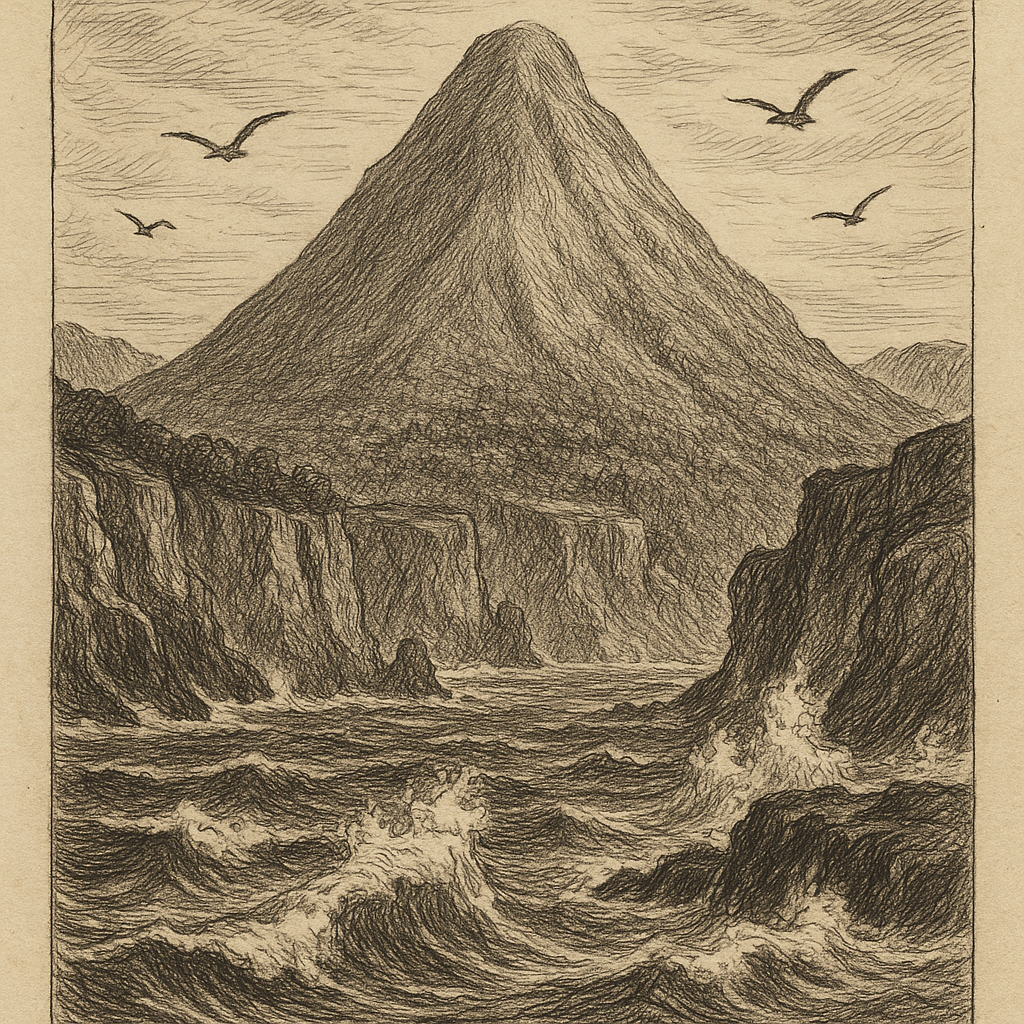
Measuring roughly 10 kilometers in diameter, Agrihan spans an area of about 44.4 square kilometers, making it one of the larger islands in the Mariana chain. Its landscape is dominated by a massive stratovolcano that occupies nearly the entire island and reaches a summit elevation of 965 meters (3,165 feet), the highest point in all of Micronesia.
This majestic volcano, dormant since a minor eruption in 1917, is surrounded by dense forests, steep ridges, and rugged lava flows, encircled by coral reefs and steep coastal cliffs that drop off dramatically into the surrounding Pacific.
Climate and Natural Environment
Agrihan experiences a tropical rainforest climate, with abundant rainfall throughout the year and temperatures that typically range from 24°C to 31°C (75°F to 88°F). Its remote location has preserved a relatively pristine ecosystem, with large areas of untouched forest cover and diverse flora, including coconut palms, breadfruit trees, and native hardwoods.
Though not studied in great detail due to its inaccessibility, the island is assumed to host a variety of native birds, insects, and lizards. Its dense vegetation also provides an important refuge for seabirds, which use the cliffs and remote forest interiors for nesting.
Surrounding waters are teeming with marine life and are part of a region known for high biodiversity, including migratory whales, sea turtles, reef sharks, and vibrant coral communities. The island’s isolation, along with minimal human interference, makes it a valuable site for conservationists and researchers.
Human History and Settlements
Historically, Agrihan was inhabited by the indigenous Chamorro people. Spanish explorers reached the island in the 16th century and included it in their colonial holdings. Under various colonial powers—Spanish, German, Japanese, and later American—the island was sparsely used primarily for agricultural purposes, notably coconut plantations.
Agrihan’s population has always been minimal. A small community resided on the island until the late 1990s, primarily engaged in subsistence farming and occasional harvesting of copra (dried coconut meat). These residents were eventually evacuated in the early 1990s following concerns about potential volcanic activity.
In 2009, a group of families returned with the goal of re-establishing settlement in an ecologically sustainable way. However, long-term habitation remains minimal, and access is difficult due to the lack of infrastructure, harbors, or airstrips.
Curiosities and Unique Facts
Despite being one of the least populated islands in the Mariana chain, Agrihan has drawn the fascination of volcanologists and explorers for several reasons:
– Its volcano is the highest point in Micronesia, offering an unparalleled view of the surrounding Pacific and rare access to an undisturbed caldera.
– In 2018, a rare botanical survey documented previously unrecorded plant species on the island’s upper slopes, suggesting that Agrihan may harbor endemic flora still unknown to science.
– It is one of the few islands in the world where hikers can scale a completely forested volcanic cone from beach to summit, passing through several ecological zones.
Additionally, independent adventurers who have sailed around the Marianas consider Agrihan one of the most difficult yet rewarding islands to approach due to its lack of landing facilities and steep topography.
Myths and Legends of Agrihan
As with many islands in the Pacific, Agrihan is steeped in local myths passed down through generations of Chamorro oral tradition. One prominent legend speaks of the “Sleeping Giant” — a godlike warrior who fell into slumber after creating the Mariana chain. His heart, they say, beats beneath Agrihan’s volcano, and tremors are believed to be his restless stirrings.
Elders also recount tales of a hidden freshwater spring inside the volcano’s caldera, guarded by forest spirits named Aniti. These spirits are said to protect the island and punish those who disturb its sacred grounds. Hikers who disrespect the land reportedly experience strong winds, sudden downpours, or even lose their way despite clear skies.
Another legend speaks of a golden canoe buried under lava near the summit, a relic of ancient seafarers who fled a great war between island clans. According to lore, the canoe can only be found by someone with a pure heart and a good reason for seeking it.
Access and Preservation Challenges
Due to its remoteness and lack of infrastructure, visiting Agrihan requires significant preparation. Access is only viable by private boat and is heavily dependent on favorable weather conditions and sea states. There are no piers or airstrips, and landing must be done using small dinghies or inflatable boats in calm coves along the rugged coast.
The island’s current status as largely uninhabited offers both a challenge and an opportunity for conservation. Efforts are being considered by environmental groups and local authorities to designate parts of Agrihan a protected area to safeguard its endemic species and unique geological features.
Agrihan serves as an important reminder of the raw power of nature and the delicate balance required to preserve untouched ecosystems. With its towering volcano, rich biodiversity, and cultural legends that echo through the rainforest, Agrihan remains one of the Pacific’s most enigmatic and awe-inspiring islands.