Bougainville Reef is an isolated coral atoll located in the Coral Sea, off the northeastern coast of Australia. Despite its relatively small size and harsh environment, this remote reef holds a mystique that draws in marine biologists, divers, and storytellers alike.
Geographical Overview
Bougainville Reef lies about 250 kilometers east of the coast of Queensland, Australia, and forms part of the Coral Sea Islands Territory. It is located at the coordinates approximately 15°52′S 147°07′E.
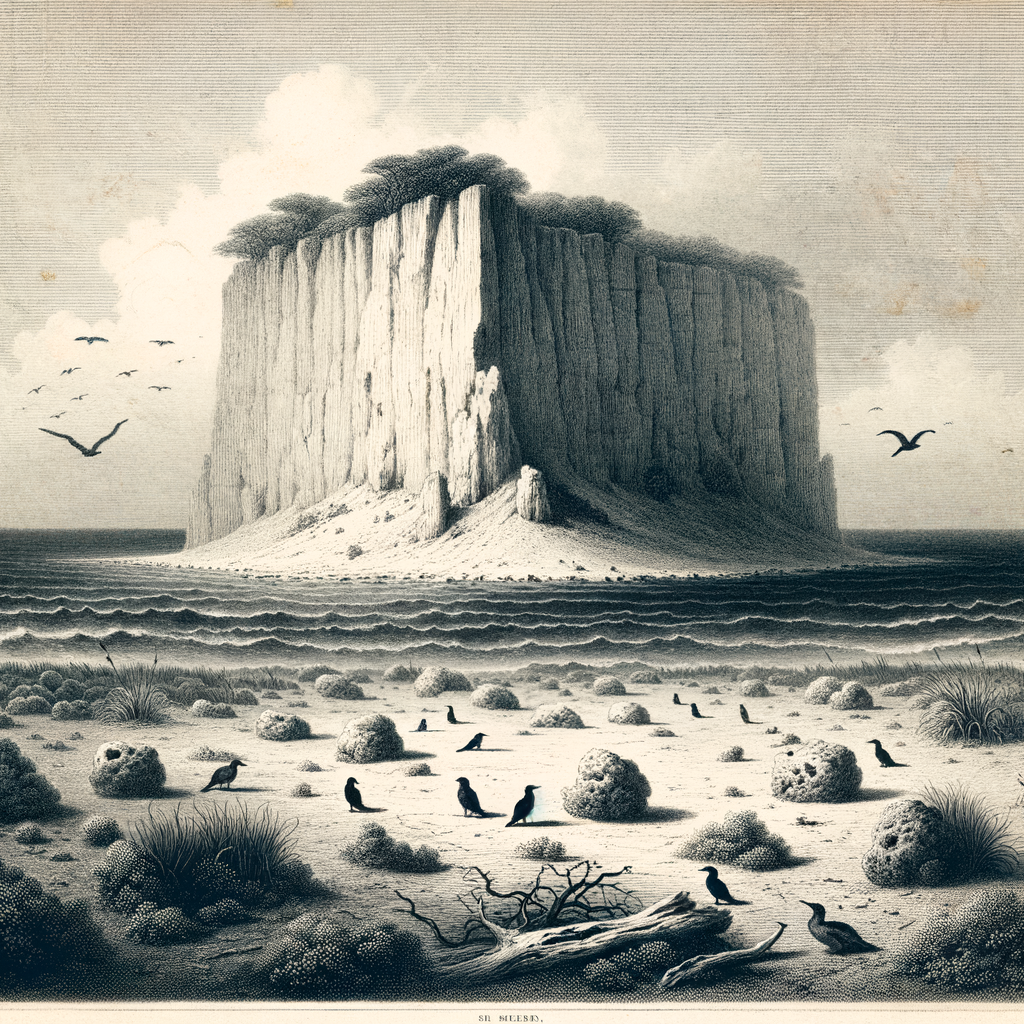
It is one of the many submerged reefs in the Coral Sea and considered one of the most isolated features in this vast marine expanse. The reef is a near-complete atoll, with a lagoon open to the northwest, surrounded by a narrow rim of coral that emerges above water at low tide.
At high tide, most of the reef is submerged, giving the illusion of a circular turquoise patch in the open ocean. One of the main features visible above sea level is a partial steel wreck used as a navigation marker.
Formation and Marine Geology
Bougainville Reef is part of the northern extension of the Great Barrier Reef Marine Park and is geologically part of the same complex coral formation process lasting millions of years. Its origin is volcanic, formed by a now-extinct underwater volcano surrounded by coral growth.
Over time, the volcanic cone subsided, allowing coral to build up and maintain the reef’s structure close to sea level—a process commonly associated with atoll formation.
Today, the reef’s base lies thousands of meters below the ocean surface, but the coral growth has reached sea level, forming a ring-shaped feature just above the depths of the Coral Sea Basin. The reef has been the focus of scientific research, due to its location near tectonic plate boundaries and its role in understanding coral adaptation in isolated marine environments.
Climate and Environmental Conditions
The reef is located in a tropical marine climate, characterized by warm sea surface temperatures ranging from 24°C to 30°C year-round. Tropical cyclones frequently pass through the area from December to April, occasionally causing temporary damage to the reef structure and influencing the distribution and diversity of marine life.
Being exposed directly to the open ocean, the reef has no natural protection from swell, currents, or storms. This makes access difficult but also preserves its remote and undisturbed condition, allowing for a unique and relatively untouched marine ecosystem to flourish.
Ecological Significance
Bougainville Reef, although small in area, supports a diverse assortment of marine biodiversity. Species that inhabit and traverse its waters include reef sharks, manta rays, sea turtles, and a wide range of reef fish and invertebrates.
The reef features both hard and soft coral species, including brain corals, staghorn coral, and vibrant sea fans. Because of its isolation, the reef acts as a stepping stone for pelagic species traveling between the Great Barrier Reef and the deeper Coral Sea.
Birds, such as the red-footed booby and great frigatebird, may also use the reef as a resting point during migrations. The surrounding waters are part of a designated Marine National Nature Reserve, aiming to safeguard the integrity of the reef’s fragile habitats.
Human History and Exploration
Due to its isolated location and challenging conditions, Bougainville Reef has never supported permanent human settlement. It was first officially surveyed in detail during the mid-20th century by Australian maritime authorities.
Maritime charts from earlier eras identified the area vaguely, warning of “dangers” in the Coral Sea likely referring to unclear reef systems. The reef has become a notable site among divers and adventure seekers eager to explore untouched underwater environments.
Sporadic dives and scientific expeditions report stunning visibility, dramatic reef walls, and thriving coral gardens. However, due to the absence of any landmass, strong currents, and unpredictable weather, visiting the reef poses a challenge and requires careful planning.
Points of Interest
One of the most intriguing aspects of Bougainville Reef is an abandoned shipwreck known locally as the “Bougainville Wreck,” protruding above sea level. It is believed to be the remains of a navigation aid vessel or part of a former attempt to station a lighthouse structure on the reef, though official records are sparse.
This rusted skeleton now serves both as a visual marker and as habitat for an array of marine species. Another highlight is the reef’s sun-drenched central lagoon, home to schools of parrotfish, barracuda, and swarms of iridescent anthias.
Divers also report encounters with humpback whales during their migration season between June and November, as well as vibrant night-time bioluminescence in the plankton-rich waters of the reef’s outer rim.
Local Legends and Myths
Though uninhabited and rarely visited, Bougainville Reef carries its share of maritime lore. Among sailors and old Queensland fishermen, tales circulate of “The Singing Reef,” a phenomenon where unusual harmonic vibrations are said to emanate from the reef’s undersea walls during certain tide and wind conditions.
Oceanographers suggest this may be due to the turbulent interaction between water flow and the reef’s eroded limestone tunnels, but the effect has gained a mythical status over the years.
Another legend tells of a “ghost ship” occasionally seen near the reef—an old schooner with tattered sails appearing at dusk, only to vanish with the rising moon. While no verifiable accounts exist, such stories have given Bougainville Reef a reputation as a place where the lines between reality and myth blur in the ocean mist.
Access and Conservation
Access to Bougainville Reef is restricted due to its classification as a protected zone in the Coral Sea Marine Park. Visitors must obtain permits from the Australian authorities, and only scientific or conservation-related activities are generally allowed.
The reef is patrolled periodically by the Australian Border Force and marine biologists conducting research missions. Efforts are ongoing to monitor the reef’s health, especially in light of global coral bleaching trends.
Because of its remoteness and lack of tourism infrastructure, Bougainville Reef is considered one of the last relatively pristine coral sites in Australia’s maritime domain.
Conclusion
Bougainville Reef remains a remote marvel in the Coral Sea—an island-less atoll surrounded by myths, legends, and marine wonders. Though not within reach of casual travelers, it holds immense ecological, geological, and cultural value.
Whether viewed through the eyes of scientists, sailors, or storytellers, it is a place that continues to intrigue and inspire, hidden in the vast blue expanse of the Pacific.