Bouvetøya Minor Island, often referred to simply as Bouvet Island, is a small, ice-covered volcanic island located in the South Atlantic Ocean. It is considered one of the most isolated islands in the world, lying nearly symmetrically between the southern tips of Africa and South America. Governed by Norway as a dependency, Bouvetøya is notorious for its inaccessibility, extreme conditions, and the mysterious aura that surrounds its landscape.
Geographical Location and Formation
Bouvetøya is situated at approximately 54°25′S 3°22′E, about 1,600 kilometers south-southwest of the coast of South Africa and over 2,500 kilometers from Antarctica. Its remote coordinates make it the most isolated island on Earth. The nearest landmass is Queen Maud Land in Antarctica.
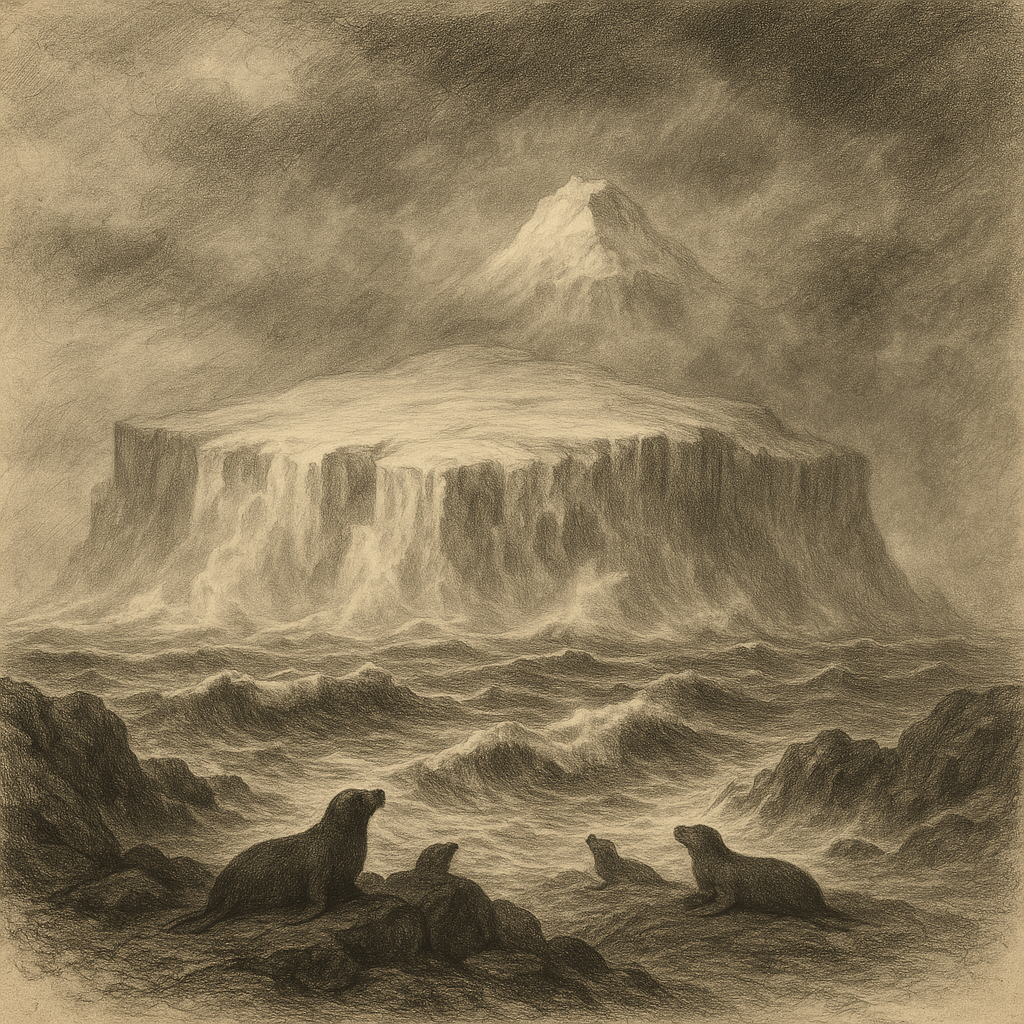
The island is the exposed summit of a dormant submarine volcano and spans an area of only 49 square kilometers (19 square miles). Over 93% of the island is covered by a glacier, with steep cliffs and ice shelves dominating the coastline.
The highest point is Olavtoppen, which rises 780 meters (2,560 feet) above sea level. The island’s terrain is so rugged and icy that landing ashore is frequently impossible due to weather and sea conditions.
Volcanic Origin and Geological Features
Bouvetøya is located at the intersection of the South American, African, and Antarctic tectonic plates, specifically near the Mid-Atlantic Ridge. The island’s volcanic origin dates back millions of years, and although the volcano is considered inactive today, seismic activity has been recorded in the area, suggesting possible geothermal movements beneath the surface.
The island is surrounded by a shelf of pack ice for much of the year, and cliffs of solid ice and rock plunge directly into the Southern Ocean. Due to its volcanic past, Bouvetøya’s interior is characterized by lava flows now buried under permanent snow and ice.
Climate and Ecosystem
Bouvetøya experiences a cold, maritime polar climate, with frequent cloud cover, fog, high winds, and snowfall throughout the year. Temperatures rarely rise above freezing, even during the Southern Hemisphere’s summer.
Despite its austere conditions, Bouvetøya supports a limited yet fascinating ecosystem. Mosses and lichens can be found clinging to exposed rock during brief summer thaws. The island’s shoreline serves as a breeding ground for various seabirds, including petrels and skuas, as well as seals such as the Southern elephant seal and Antarctic fur seal.
However, the ecosystem is extremely fragile and vulnerable to external influences. Norway, which governs the island under the Bouvet Island Act of 1930, has designated it as a nature reserve, helping to preserve its integrity as one of the last mostly untouched ecosystems on earth.
Scientific and Human Activity
Human activity on Bouvetøya has remained minimal due to its remoteness and difficult terrain. The island was first discovered in 1739 by French explorer Jean-Baptiste Charles Bouvet de Lozier, after whom it is named. However, it remained largely unvisited until the 20th century.
Norway established formal sovereignty over the island in 1928, and it has since been used for limited scientific observation, meteorological studies, and environmental monitoring. In 1977, a Norwegian automated weather station was installed, although its operational consistency has faced natural challenges.
In 1996, the Norwegian Polar Institute constructed a semi-permanent research station on Nyrøysa, one of the few relatively flat areas on the coast. However, the structure has been damaged and rebuilt multiple times due to harsh weather and shifting glaciers.
Interesting Facts
Bouvetøya is considered the most remote island on Earth — the nearest inhabited land is Tristan da Cunha, which lies over 2,200 kilometers away. The island has its own ISO country code (BV) and top-level domain (.bv), although these are not actively used.
The entire island is a nature reserve, and access requires special permission from the Norwegian authorities. Scientific teams are extremely limited, and tourism is virtually non-existent.
Due to the extremity of landing, helicopters are the most reliable (though rare) means of accessing the interior. The ice fully encases the island except for a few minor rocky outcrops, making biological studies particularly challenging.
Legends and Mysteries
Bouvetøya has been surrounded by mystery for centuries, owing to its inaccessibility and the frequent misidentification of its location in early nautical charts. One of the most enduring legends involves phantom islands such as “Liverpool Island,” supposedly spotted by British sailors near Bouvetøya’s vicinity in the 19th century but never confirmed. Some believe shifting icebergs or mirages may have caused these ghost sightings.
Another famous mystery related to the island is the unexplained appearance of an abandoned lifeboat discovered during a 1964 British expedition. The boat was found on Nyrøysa with no traces of crew or identifying markings, stirring theories ranging from lost mariners to clandestine activity during the Cold War. No logical explanation was ever found, and the mystery of the lifeboat has never been fully resolved.
Additionally, conspiracy theories have occasionally cited the island’s remoteness as a potential site for secret military or scientific experiments, although there is no evidence supporting such claims. What remains undeniable is that Bouvetøya’s eerie isolation continues to ignite imaginations around the world.
Access and Conservation
Approaching Bouvetøya is a considerable logistical challenge. The combination of thick sea ice, freezing temperatures, and rough seas makes any expedition treacherous. Visits are usually made by research vessels equipped with helicopters, and even then, weather conditions often dictate long waiting periods or complete mission cancellations.
To preserve the unique and fragile ecosystem, all activities are tightly regulated under Norwegian governance. No structures or remnants are allowed to remain unless specifically permitted, and environmental ethics are strictly enforced.
Efforts are ongoing to monitor the impact of climate change, as even this remote island is not immune to global shifts in temperature and sea levels. Its ice coverage has shown signs of alteration, prompting increased attention from climatologists and conservationists.
Bouvetøya Minor Island stands as one of nature’s most enigmatic strongholds. Isolated by geography and wilderness, it remains a place seldom seen and rarely touched. For scientists, adventurers, and storytellers alike, Bouvetøya continues to captivate with its stark beauty, unresolved mysteries, and enduring silence amidst the roaring Southern Ocean. In a world evermore connected, it remains a solitary sentinel — a rare place where nature speaks without interruption.