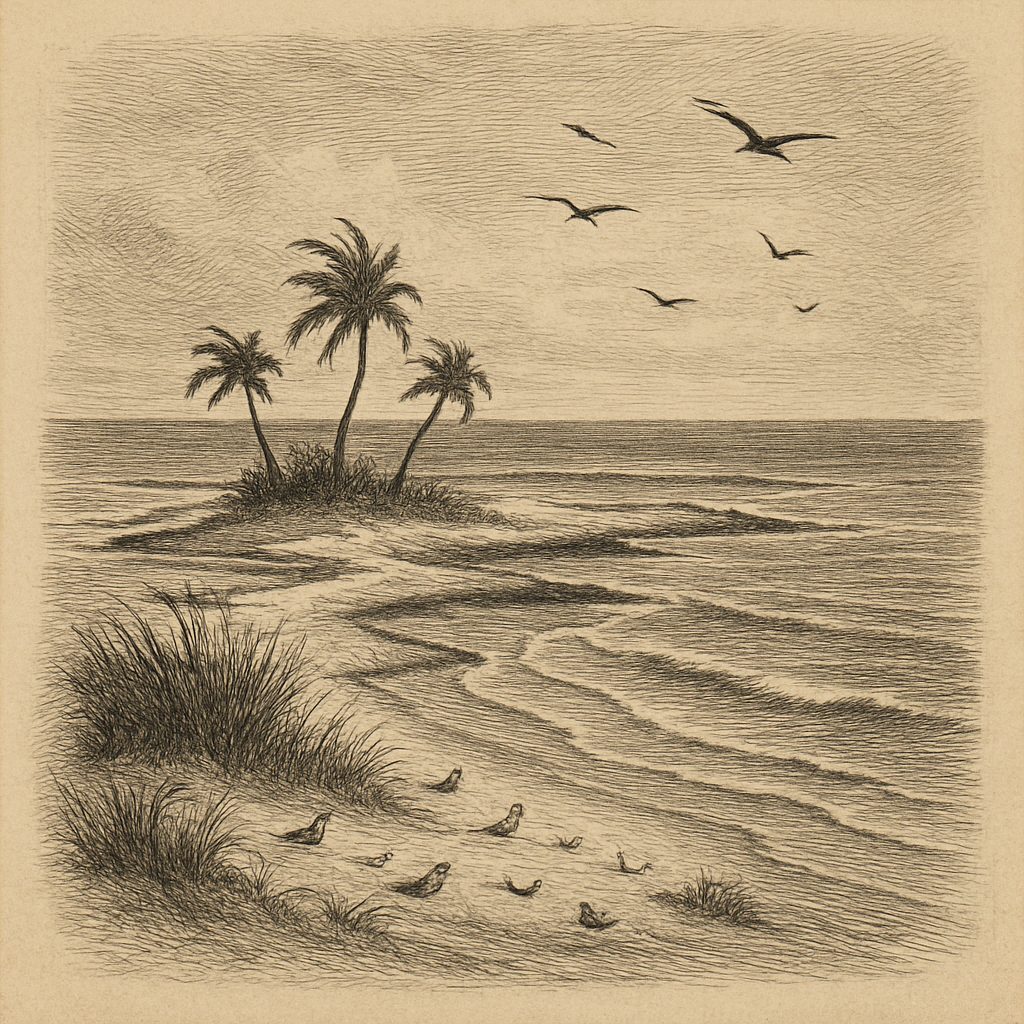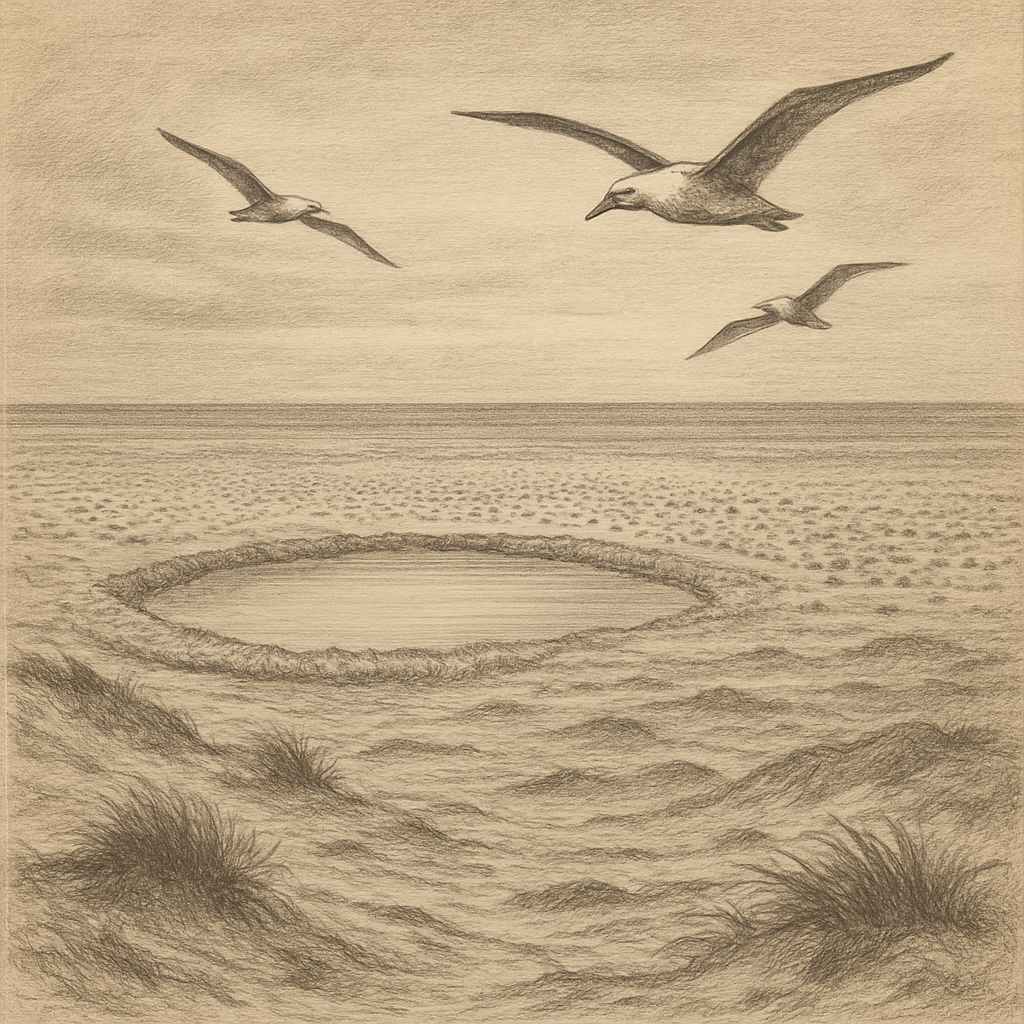
Far out in the Northwestern Hawaiian chain, beyond the busy imagination most people attach to Hawaiʻi, a low ring of coral and sand holds a shallow lake in its center and lets the Pacific work at its edges without interruption. Laysan Island lies roughly 1,500 kilometers northwest of Honolulu, inside the Papahānaumokuākea Marine National Monument, and almost everything about it feels reduced to essentials: wind, salt, birds, glare, and distance. It is not large—about 4 square kilometers—but it has the improbable geometry of a world unto itself, an island with an interior lagoon set behind dunes and reef, as if a piece of seafloor had briefly chosen enclosure over openness.
That lagoon is what makes the place physically unusual among the Hawaiian Islands. The island is a low coral island rather than a high volcanic one, and its central lake, often described as hypersaline, has long shaped both its ecology and its strangeness. Around it stretch sandy flats, bunchgrasses, shrubs, and low dunes. There are no trees, no harbor, no permanent settlement, and little visual softness. Yet this austere surface shelters one of the most important seabird colonies in the archipelago. Millions of birds have used these grounds: albatrosses, petrels, boobies, terns, and frigatebirds, arriving to breed in extraordinary concentrations on land that from offshore can seem barely substantial enough to hold them.
Guano, feathers, and a nearly broken world
Its recorded modern history is bound less to conquest than to extraction. The island was known in the nineteenth century to mariners moving through the North Pacific, and its English name comes from a whaling vessel, the Laysan, reported in 1828. Later came commercial interest of a harsher kind. In the late nineteenth and early twentieth centuries, guano was mined here, and rabbits introduced during that era transformed the vegetation with astonishing speed. They stripped plant cover from the island, turning a biologically intricate place into a landscape of erosion and exposed sand.
The damage was not abstract. Laysan once supported several endemic birds found nowhere else. The Laysan rail, the Laysan honeycreeper, and the Millerbird subspecies native to the island disappeared in the early twentieth century as habitat collapsed. Images and reports from the period are among the bleakest in Hawaiian conservation history: a seabird island still crowded with life overhead, but its native land birds cornered by a catastrophe set in motion by people who did not stay. By 1923, when the Hawaiian Islands Bird Reservation was established and federal protection strengthened, the island had already paid dearly for a brief chapter of human use.
The rabbits were eventually eradicated, and recovery began slowly. That recovery matters because the island is not merely a nesting station but a highly specific ecological system. Its plant communities, insects, brine life, and breeding birds are linked to a narrow set of conditions: isolation, low relief, salt, and the absence—finally—of grazing mammals. Conservation work in the Northwestern Hawaiian Islands has often required patience rather than spectacle, and this place is one of its sternest lessons.
A breeding ground with global consequence
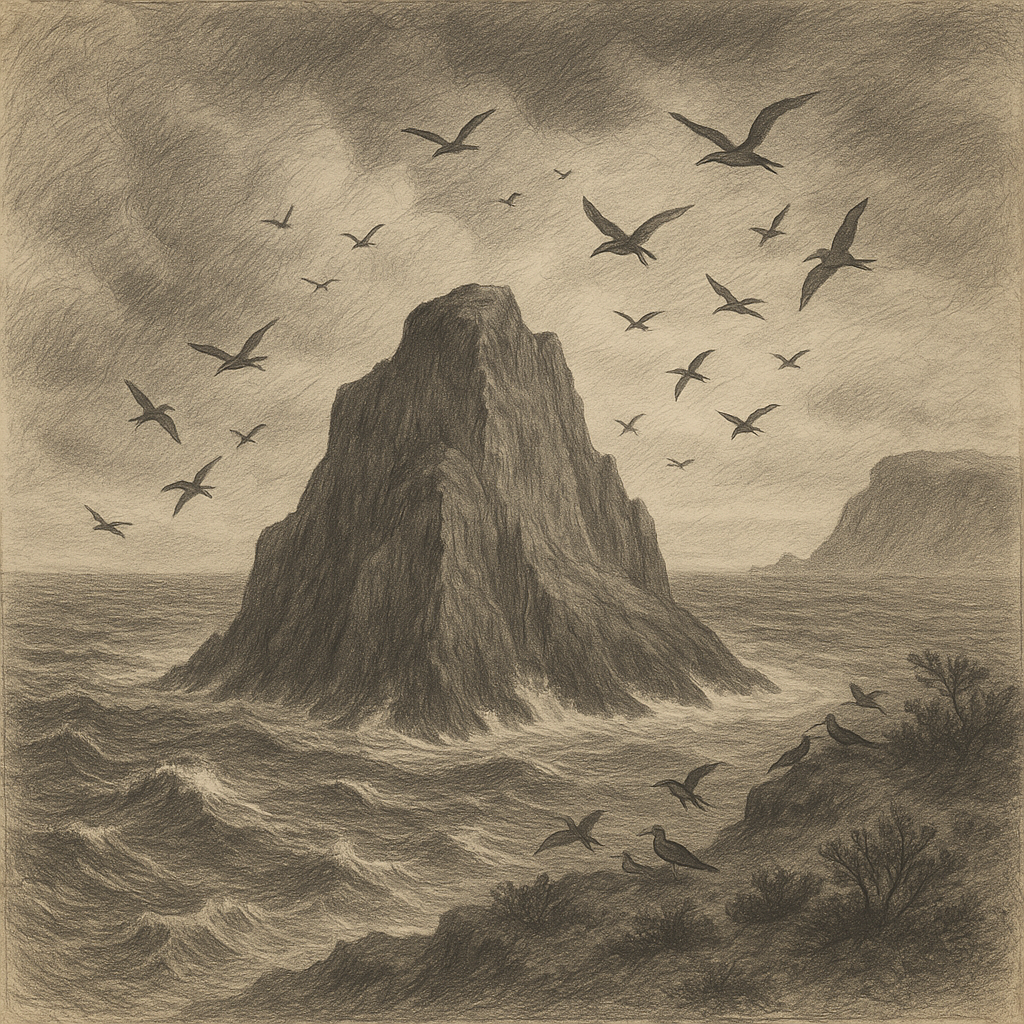
If the island has a dominant presence today, it is avian. This is one of the key breeding sites for the Laysan albatross, Phoebastria immutabilis, the species that took its common name from this very place. They nest in dense numbers on open ground, awkward and almost comic on land until the moment they lift into the air and become all precision. Black-footed albatrosses breed here as well, along with Bonin petrels, Christmas shearwaters, wedge-tailed shearwaters, red-tailed tropicbirds, and many others. In some seasons the ground itself can seem occupied in layers—adults on nests, chicks waiting, burrows beneath, calls overhead, and endless movement between sea and colony.
The lake adds another dimension. Its saline waters support specialized invertebrate life and attract migratory shorebirds. Isolation has also made the island important for translocation and restoration efforts. In the twenty-first century, conservationists moved Nihoa Millerbirds and Laysan finches to and from islands in the monument to rebuild populations and reduce the risk that a single storm, disease event, or invasive species might erase an entire lineage. On a map, that sounds technical. On the ground, it means that a flat island of sand and nesting birds has become one of the places where extinction is argued with directly.
Where access ends and vigilance begins
Very few people ever see it. Landing is difficult, access is tightly restricted, and the surrounding waters and reefs can be unforgiving. The remoteness that once exposed the island to careless exploitation now helps shield it. There are no ruins grand enough to romanticize, no village remnants to invite easy melancholy. What remains are traces of use, records of loss, and a landscape dominated by wildlife rather than by any durable human mark.
Even so, the island has not escaped modern threats. Marine debris reaches remote shores across the Pacific. Rising seas and stronger storms pose obvious risks to a place so low that elevation is measured modestly. For a seabird colony, for nesting habitat, for a saline lake enclosed by delicate landforms, small changes are not small. They alter breeding success, plant cover, shoreline stability, and the margin by which such a place continues to exist in recognizable form.
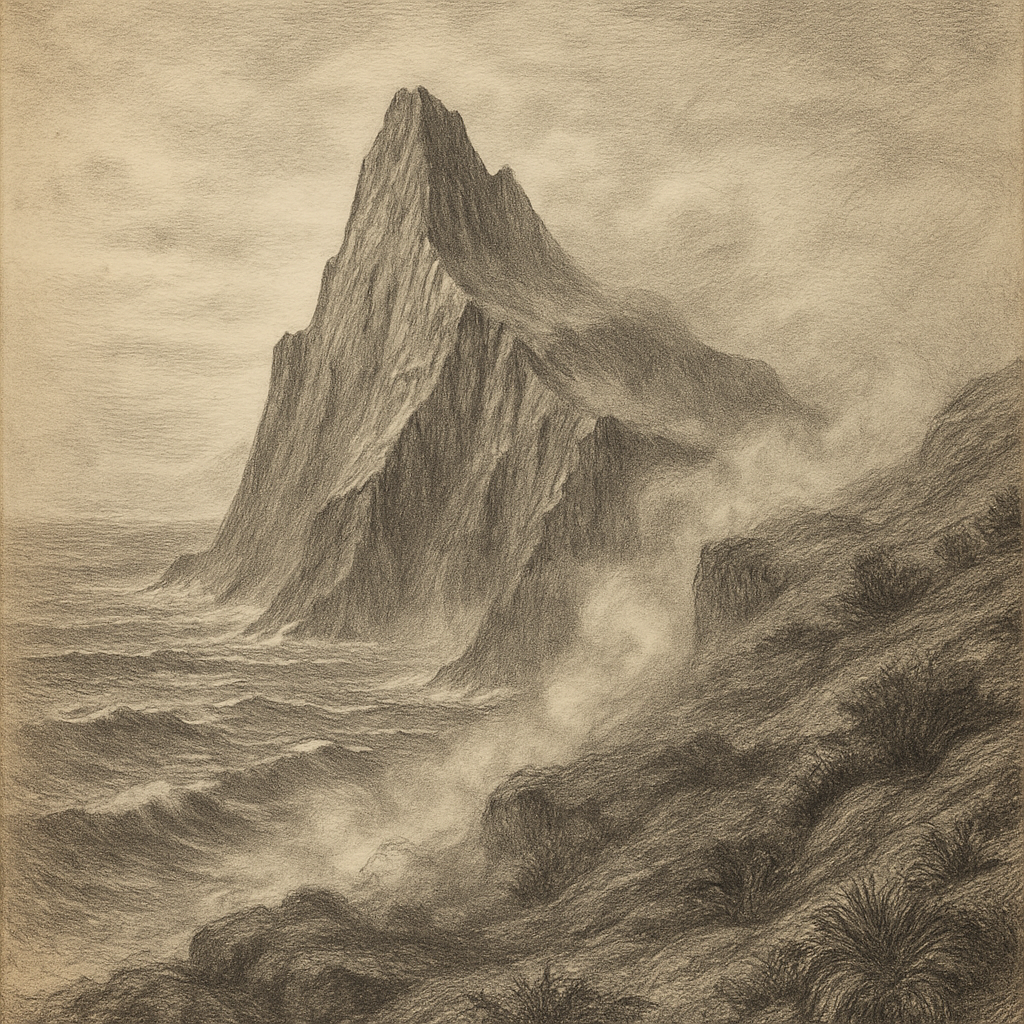
That is part of what makes this island so arresting. It does not offer the drama of cliffs or volcanoes. Its power comes from exposure and from scale turned inside out: a tiny piece of land carrying immense biological weight, a nearly level horizon guarding a long memory of damage and repair. Out there, in the far reaches of the Hawaiian chain, the wind passes over sand, over burrows, over the white backs of resting albatrosses, and over a lake held improbably at the center. Nothing about the scene is crowded by people, yet almost every feature bears the consequence of what people once did—or chose, at last, to stop doing.