Few islands advertise their nature so bluntly. Barren Island, in the Andaman Sea east of India’s main Andaman chain, is uninhabited not because history forgot it but because fire never fully did. It is the only confirmed active volcano in South Asia, a dark, isolated cone rising from deep water about 135 kilometers northeast of Port Blair, and even on a map it looks less like a settlement waiting to happen than an event still in progress.
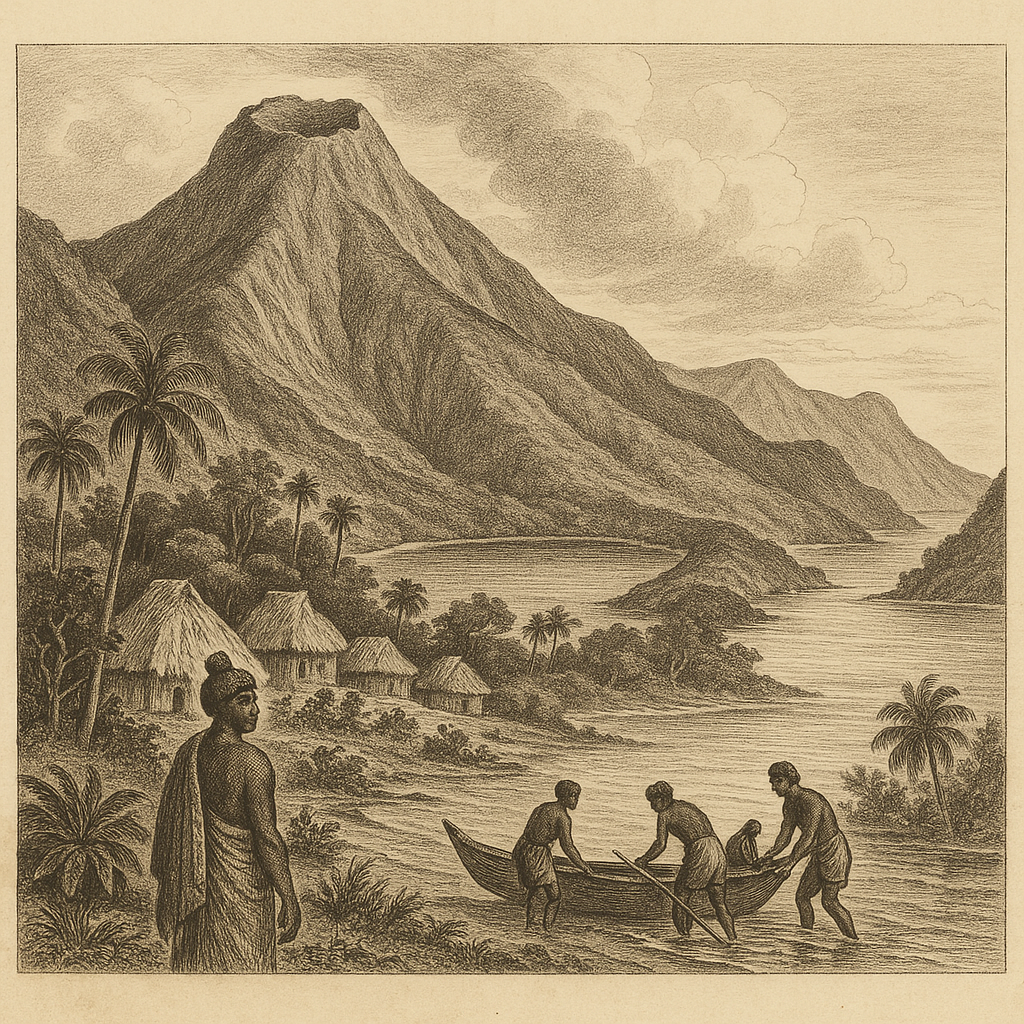
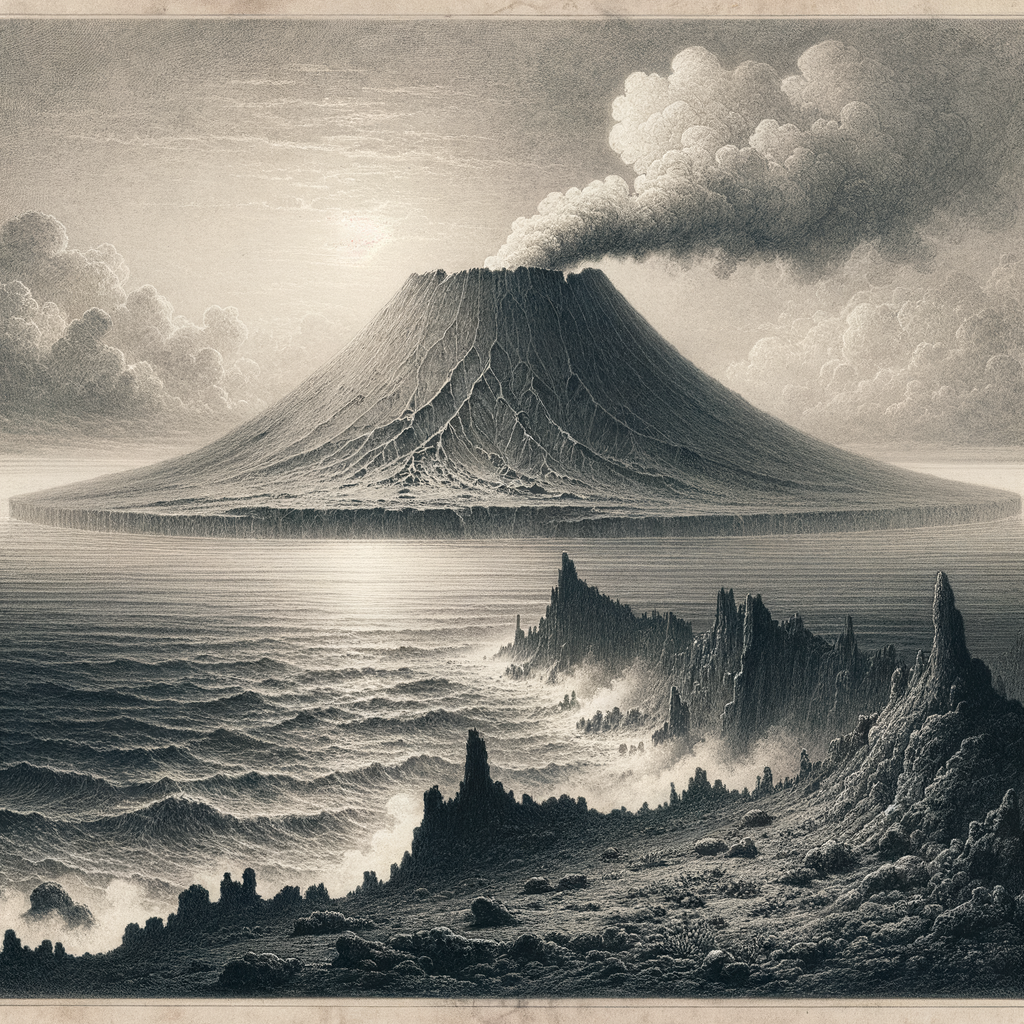
The island is small, roughly circular, and built around a caldera about two kilometers wide, the remnant of a much older collapse. Inside that broken ring stands a younger cinder cone, the feature responsible for the eruptions recorded in modern times. Steep slopes fall to a narrow coast of ash, lava, and rock. There are no streams, no harbor of consequence, no cultivated ground, no permanent population. What vegetation exists has always had to negotiate heat, drought, and periodic destruction. The place belongs geologically to the volcanic arc created where the Indian Plate descends beneath the Burma Microplate, part of the same restless tectonic system that shaped the Andaman and Nicobar Islands.
A crater with a timetable of its own
For long stretches, the volcano can seem dormant, almost withheld. Then it resumes. Historical accounts indicate activity in the late eighteenth century; an eruption was reported in 1787, and more episodes followed in the decades after. The island drew scientific attention during the nineteenth century, including visits by British surveyors and officials working in the Andamans. Yet the modern image of the island was fixed much later, when after a long quiet interval it erupted again in 1991. That event ended more than a century of relative silence and announced that the volcano was not a relic but an active system.
Since then, eruptions have recurred intermittently, with documented activity in 1994–95, 2005, and in several later phases observed by the Geological Survey of India, satellite instruments, and naval patrols. Some episodes produced ash plumes and incandescent lava flows descending the inner and outer flanks; others were more subdued. The 2004 Indian Ocean earthquake, generated far to the south along the Sunda megathrust, did not create the volcano, but researchers noted renewed eruptive behavior afterward. On an island like this, chronology never feels settled. Dates accumulate, but the larger fact is continuity: magma remains close enough to the surface to remake the landscape repeatedly.
That remaking has practical consequences. Landing is difficult and often restricted. Visits are controlled by the Indian authorities, and for ordinary travelers the island is usually something seen from offshore rather than walked upon. It is dangerous not only because of eruptions but because the coast offers poor shelter and the surrounding waters can be rough. Even when the volcano is quiet, it is not a place arranged for human confidence.
Life on a damaged margin
And yet the island is not lifeless. Scientific surveys have recorded a surprisingly persistent ecology recovering after eruptions and enduring between them. Feral goats, introduced in the nineteenth century, survived for many years in conditions that seem almost designed to refuse them. Rodents and bats have been noted. Among birds, the island has supported species typical of the region, including seabirds and raptors, though populations fluctuate with disturbance. The surrounding sea is richer still: clear water, reefs, and pelagic traffic have made the area notable for marine life, even as volcanic ash and lava periodically alter the nearshore environment.
Its flora tells the same story in a harsher key. Botanists have described phases of recolonization after eruptions, with grasses, shrubs, and scattered trees returning where heat and ash had stripped the ground. On an active volcanic island, succession is not a march toward stable maturity so much as a repeated negotiation. Nothing here can assume permanence. Every root system is provisional.
That tension between devastation and return has made the island valuable to scientists. It offers a rare natural laboratory for observing how landscapes recover after eruptions, how organisms re-establish themselves, and how isolation shapes survival. In the Indian context, it is singular: no other volcano in the country presents this combination of active eruptive history, marine setting, and near-total absence of permanent human modification.
Seen mostly from a distance
Because so few people spend time ashore, much of the island’s character has entered record through glimpses: passing ships, survey reports, photographs taken during windows of access, thermal signatures captured from orbit, distant observations of smoke above the cone. It is an island known in intervals. Mariners in the Andaman Sea have long recognized it as a hazardous landmark, but not in the old romantic sense of a fabled island full of tales and inhabitants. Its reputation is simpler and more severe. It smokes. It erupts. It stays empty.
Perhaps that is why it lingers so strongly in the imagination. Many remote islands suggest withdrawal from the world; this one suggests the world before withdrawal was possible, before settlement, before roads, before anything durable could be laid down. The caldera wall, the black slopes, the recurrent ash, the sea pressing in on all sides—these are not symbols but facts, and together they produce an atmosphere more powerful than legend. Some islands seem abandoned. This one seems ongoing.
From the deck of a vessel in the Andaman Sea, the outline can look almost self-contained, an isolated volcanic ring set against open water. But the longer one considers it, the less self-contained it becomes. The island is connected downward to moving plates, outward to monsoon seas, and forward to eruptions not yet scheduled in any human calendar. Its solitude is real, though not quiet in any final sense. Deep inside that dark cone, the story remains unfinished.