## Fukutoku-Okanoba Island: A Mysterious Volcanic Outcrop in the Pacific
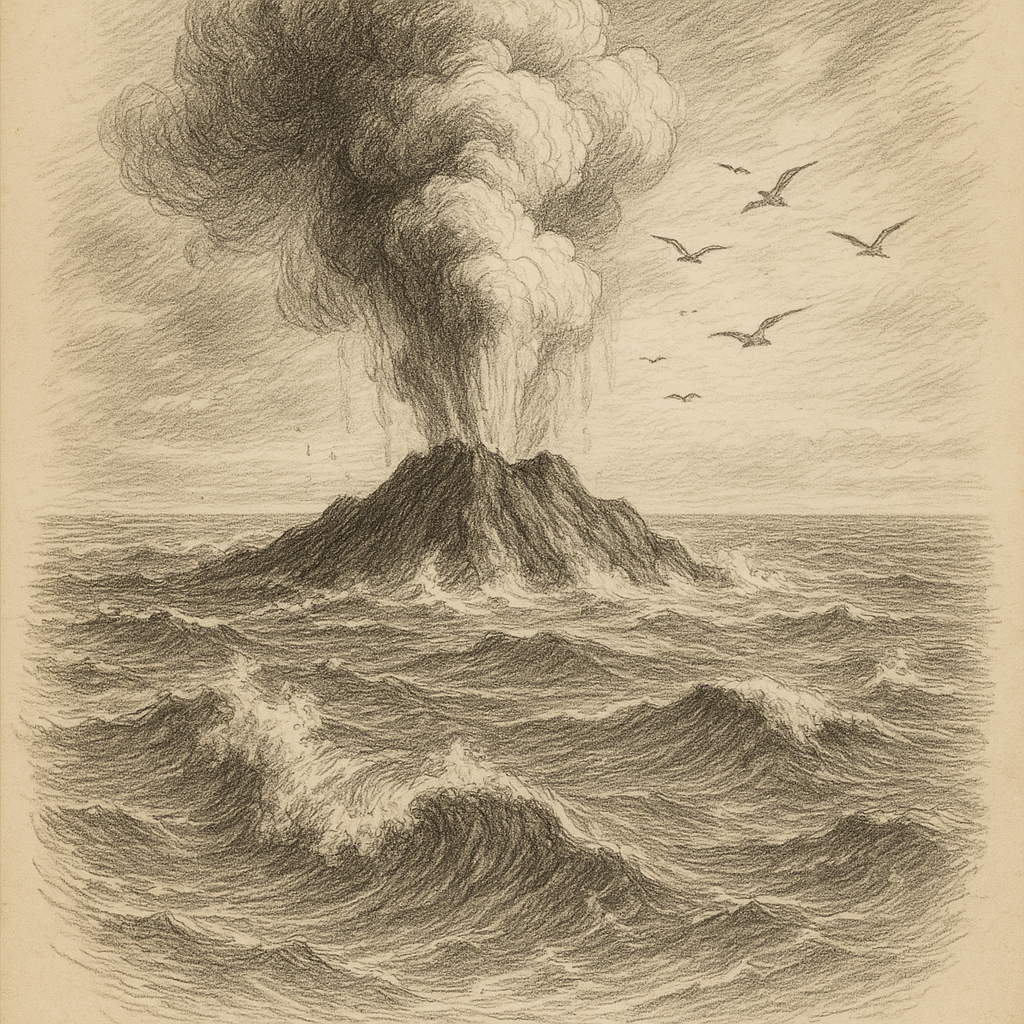
Fukutoku-Okanoba Island, also known as Fukutoku-Okanoba Volcano, is a remote and ephemeral volcanic island located in the northwestern Pacific Ocean, part of Japan’s Izu-Bonin-Mariana Arc system. This isolated geologic feature has a fascinating history of emerging and disappearing above the ocean surface due to frequent volcanic activity, capturing the attention of geologists, sailors, and folklore enthusiasts alike.
## Geographic Location and Geological Background
Fukutoku-Okanoba lies approximately 1,300 kilometers south of Tokyo and around 5 kilometers north of Minami Iwo Jima, part of the Ogasawara (Bonin) Islands of Japan. It is situated within the volcanically active Pacific Ring of Fire, where the Pacific Plate is being subducted beneath the Philippine Sea Plate—an area renowned for intense seismic and volcanic phenomena.
The volcano forms part of a submarine volcanic field and for most of its existence lies submerged beneath the sea surface. Fukutoku-Okanoba is classified as a submarine volcano, but sporadic eruptions over the years have resulted in multiple temporary island formations, some lasting only days or weeks before being reabsorbed by the surrounding ocean due to erosion and submersion.
## Volcanic Eruptions and Island Formation
The island is one of the most active submarine volcanoes in Japanese waters. Historical records indicate multiple eruptions dating back to the early 20th century, with significant activity noted in 1904, 1914, 1986, 2010, and most recently in August 2021.
The 2021 eruption was particularly notable. It ejected vast columns of ash and volcanic material up to 16 kilometers into the atmosphere and led to the partial emergence of a new landmass. The Japanese Ministry of Defense captured dramatic aerial images of a crescent-shaped islet formed by the eruption. However, like most formations at Fukutoku-Okanoba, this new island began disintegrating shortly afterward, highlighting the fragile and temporary nature of such volcanic creations.
## Unique Ecological Considerations
Due to its impermanent nature and extreme conditions, Fukutoku-Okanoba Island does not host any permanent terrestrial biodiversity. However, the waters surrounding the volcano present a unique ecological niche. The nutrient-rich upwellings associated with ongoing volcanic activity attract a myriad of marine life, including pelagic fish and migratory birds.
Scientists have a keen interest in studying these nascent islands for early colonization patterns by marine organisms and the chemical composition of volcanic deposits. The rapid erosion of these structures allows researchers to observe the geological life cycle of island birth and decay in real time, offering insights into early planetary formation and oceanic island ecosystems.
## Points of Interest and Curiosities
One of the most intriguing aspects of Fukutoku-Okanoba Island is its ever-changing topography. It is one of the few places on Earth where new land literally rises from the sea within a human lifetime—only to vanish within months or years.
Another point of interest is how eruptions here influence maritime navigation and atmospheric conditions. The high-altitude ash plumes ejected during powerful eruptions can disrupt air travel, and local sea routes must be rerouted due to floating pumice and lava rafts that can span hundreds of kilometers and damage vessels.
The 2021 eruption, for instance, produced massive pumice rafts that drifted across the Pacific, eventually reaching distant Japanese shores and causing disruptions at ports and marine ecosystems far from the eruption site. This underlines the far-reaching impact of even small volcanic islands emerging in remote locations.
## Myths and Legends of the Sea
While Fukutoku-Okanoba itself has not been inhabited by humans long enough to foster a rich local mythology, it has become enshrined in maritime folklore, especially among Japanese sailors and fishermen. Known as the “Phantom Island” or the “Ghost Volcano,” stories abound of mysterious landmasses appearing on the horizon only to vanish hours later—visions that spooked crews and inspired tales of sea monsters and island spirits.
Some legends suggest that the place marks the boundary between the human world and the “Ryūgū-jō,” a mythical undersea palace from Japanese folklore ruled by the dragon god of the sea. Sailors believed that sudden changes in the ocean’s behavior around the volcano were signs of displeasure from the sea gods, especially after particularly violent eruptions.
Despite modern science’s ability to explain these phenomena, the area retains an aura of mystery and awe, reinforced by the volatile, fleeting nature of the island and the dramatic displays of nature’s power that accompany each eruption.
## Access and Exploration
Due to the unpredictable nature of the volcano and its tendency to be submerged or in active eruption, direct access to Fukutoku-Okanoba Island is highly restricted. There are no permanent research stations on the island, and all visits—when they do occur—are conducted via sea or air by Japan’s Meteorological Agency or maritime security agencies for monitoring purposes.
For safety reasons, it is off-limits to civilian vessels and tourists. Research teams typically study the volcano from offshore ships or via satellite imaging, using remote sensing technology and drone footage to document eruptions and land formations.
## Conclusion
Fukutoku-Okanoba Island is a fascinating example of Earth’s dynamic geology in action—a place where the planet continuously reshapes itself before our eyes. While its landmasses may be impermanent, their appearance is a powerful reminder of the Earth’s subterranean forces. It is a location that embodies both the destructive and creative power of nature, cloaked in scientific intrigue and maritime myth.
Enigmatic, ever-changing, and inaccessible, Fukutoku-Okanoba remains one of the Pacific’s most mysterious volcanic features—a testament to the ceaseless motion of Earth’s crust beneath the waves.