A low line in the Phoenix Islands
Far from the usual traffic of the Pacific, Rawaki Island lies in the Phoenix Islands of Kiribati, a narrow, uninhabited strip of coral land once more widely known as Phoenix Island itself. It is not large. The island rises only slightly above the surrounding ocean, an atoll islet of reef limestone and sand, exposed to heat, salt, and the long force of the trade winds. That modest scale is part of its power. On maps of the central Pacific, it appears almost incidental, yet in reality it sits inside one of the most isolated protected seascapes on Earth, the Phoenix Islands Protected Area.
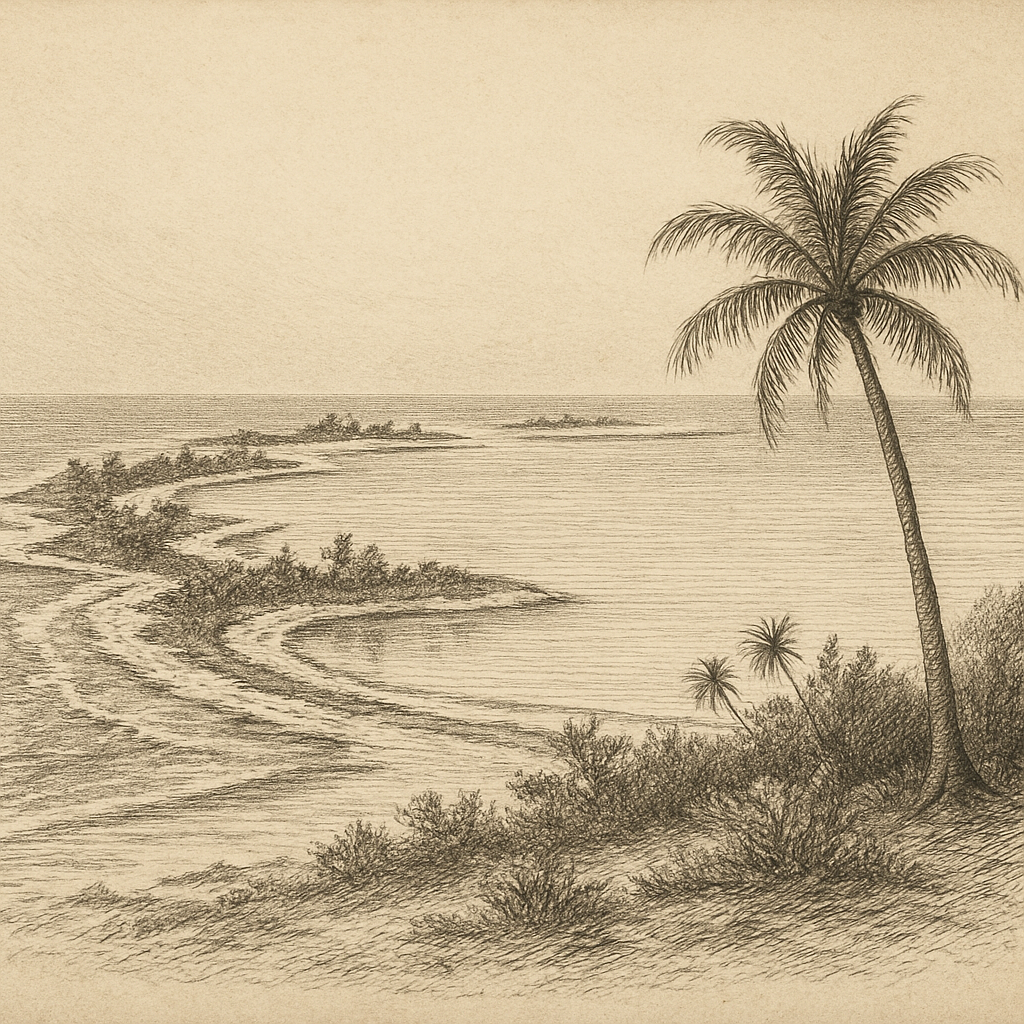
The setting is severe rather than lush. There are no mountains, no freshwater streams, no protective interior. What exists is brightness, reef, scrub, and the hard geometry of a low coral island surrounded by immense water. Like several of the Phoenix group, it belongs to a region where rainfall is uncertain and where El Niño cycles can reshape the terms of life. The island’s land surface, built from coral debris and reef material, has always been ecologically delicate. Here, the distinction between land and sea feels provisional: surf and weather do not merely surround the island; they continually define it.
Claims, schemes, and a place left alone again
European navigators encountered and charted these islands during the age of Pacific exploration, and the island entered the documentary record under the colonial name Phoenix. In the nineteenth and early twentieth centuries, like other remote equatorial islands, it drew attention less for settlement than for extraction and strategic possibility. The wider Phoenix group saw imperial claims, surveying, and the restless speculation that often followed the charting of remote islands. Yet this particular island never became a substantial human foothold. Its low relief, isolation, and lack of reliable freshwater made permanence difficult.
That absence matters. Across the central Pacific, many islands carry layers of military use, plantation history, or village life. This one is notable partly because so little held. Human presence was intermittent, external, and usually brief. In time, the logic that had brought officials, mariners, and claimants here lost force, while the island’s ecological value became clearer. Today it forms part of a protected area recognized for both marine and terrestrial significance, and access is tightly limited. The old vocabulary of possession has given way, at least in principle, to one of restraint.
Where seabirds still rule the ground
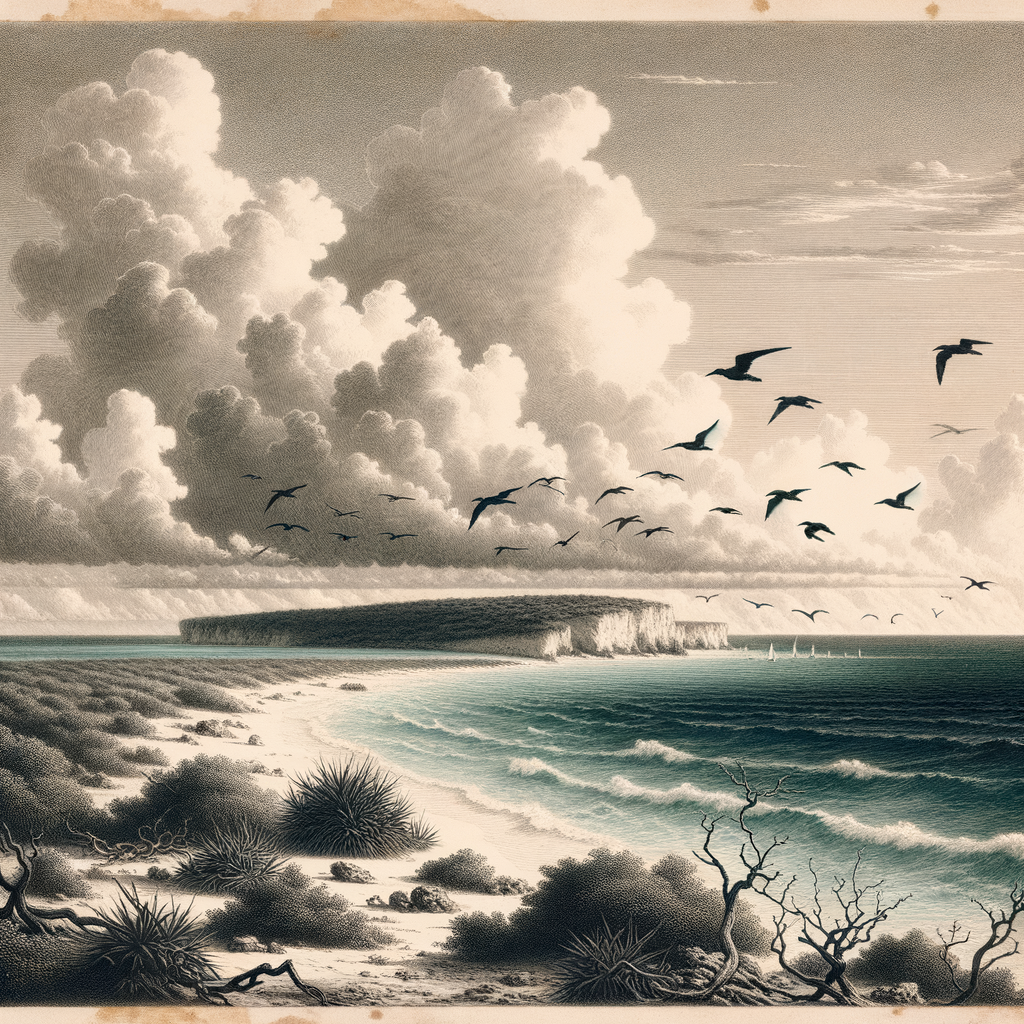
The most compelling life on the island does not arrive by boat. It circles overhead. Rawaki is known as an important seabird site, one of the places in the Phoenix group where colonial nesting birds persist in remarkable abundance. Species recorded from the island include sooty tern (Onychoprion fuscatus), frigatebirds of the genus Fregata, boobies, and other tropical seabirds that depend on isolated, predator-free ground for breeding. On low oceanic islands, that condition is rare and precarious. Introduced mammals have devastated bird colonies across the Pacific; where such predators are absent or removed, entire avian worlds can reassemble.
The surrounding waters deepen the significance of the land. The Phoenix Islands Protected Area, first established in 2008 and later expanded, is often described as one of the largest marine protected areas on the planet. Its fame usually rests on the vastness of its ocean, its coral reefs, and its relatively intact pelagic ecosystems. But islands like this are the fixed points that make that marine abundance legible. They provide nesting sites, resting places, and a small but essential partnership between sea and shore. A coral cay may look almost blank from a distance; biologically, it can be densely consequential.
There is a harsher side to that richness. Low equatorial islands are vulnerable to drought, storm surge, and the broader pressures of warming seas and changing climate. Their bird colonies can fluctuate dramatically with ocean conditions. Their vegetation is easily altered. Their coastlines can be rearranged by weather that leaves no monument behind. The island’s apparent simplicity is therefore deceptive. It is not empty in any useful sense. It is finely balanced.
The kind of place that survives by being overlooked
No substantial folklore clings to the island in the way it does to more inhabited coasts, and that too feels fitting. Its atmosphere comes not from legend but from documented remoteness: a place known to navigators, administrators, scientists, and conservationists, yet still beyond ordinary experience. Most people who learn its name will never see it. Even among remote islands, it remains peripheral, overshadowed by larger atolls, historic wrecks, and better-publicized corners of the Pacific.
That obscurity has become a form of protection. The island endures not through grandeur, but through distance, legal safeguarding, and the stubborn adequacy of reef and bird colony in a world that usually demands more visible importance. Seen in that light, its low profile is almost exact. Here is a Pacific island without spectacle in the usual sense, but not without drama: heat pressing down, birds lifting in sheets, surf writing a white margin around coral ground. In the middle of a vast ocean, that spare arrangement is enough to make the place unforgettable.