At the rim of the southern ocean
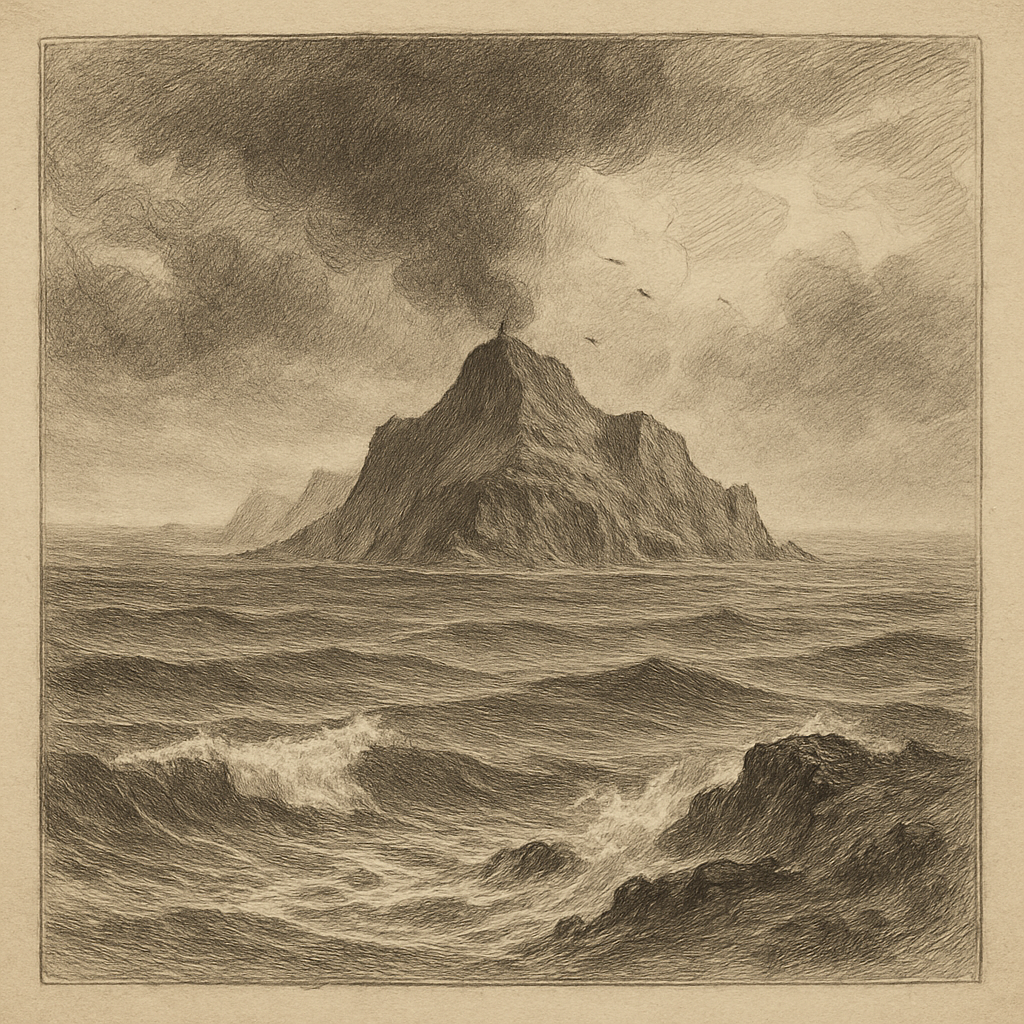
There are islands that seem to invite human life, and there are islands that appear to have survived by refusing it. Île Saint-Paul belongs unmistakably to the second kind. Lost in the southern Indian Ocean, far from ordinary shipping lanes and farther still from any settled coast, it is a small volcanic ring battered by wind, salt, and the long pulse of open water. From a distance it can look almost incomplete, as if some force had bitten into the island and left behind a dark, broken circle. At its center lies the feature that fixes itself in memory: a flooded crater, entered from the sea through a narrow gap, so that the island seems to hide its own inner harbor like a secret.
This is French territory, paired in geography and history with nearby Amsterdam Island, yet it feels less like a possession than an outpost of weather and geology. The nearest forms of regular human life are very far away. Around it stretch thousands of kilometers of ocean, the restless latitudes once dreaded by mariners for cold, storms, and isolation. Even now, with satellites overhead and engines more reliable than sail, the place keeps an old authority. It is not merely remote. It is exposed.
A crater open to the sea
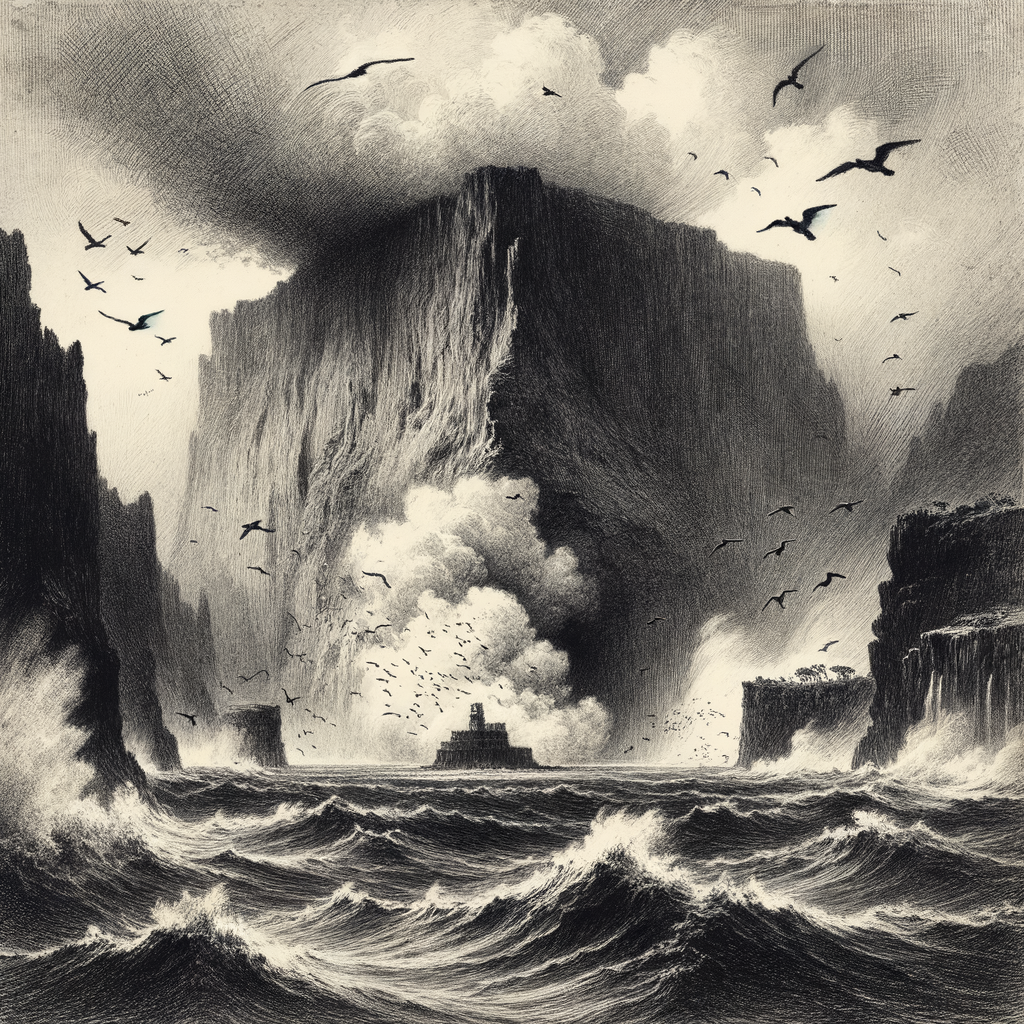
The island is the summit of a volcano rising from the seabed, compact in area but striking in form. Steep cliffs and rugged slopes enclose a central depression that has been invaded by the ocean, creating a sheltered basin unlike anything on a conventional shore. That basin, ringed by black volcanic walls and entered through a narrow channel cut in the crater rim, gave the island both its practical value and much of its haunting character. It offered refuge, but only in the most uneasy sense: a harbor inside a wound.
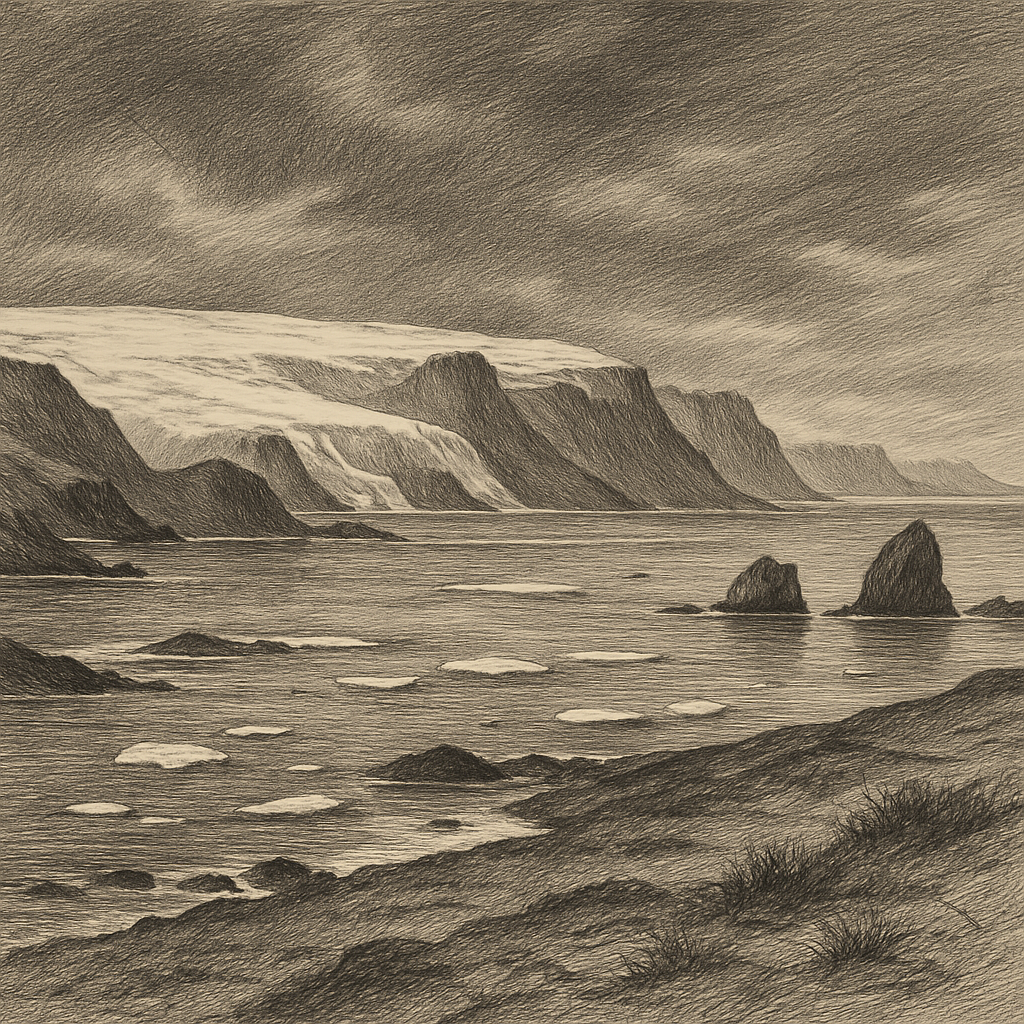
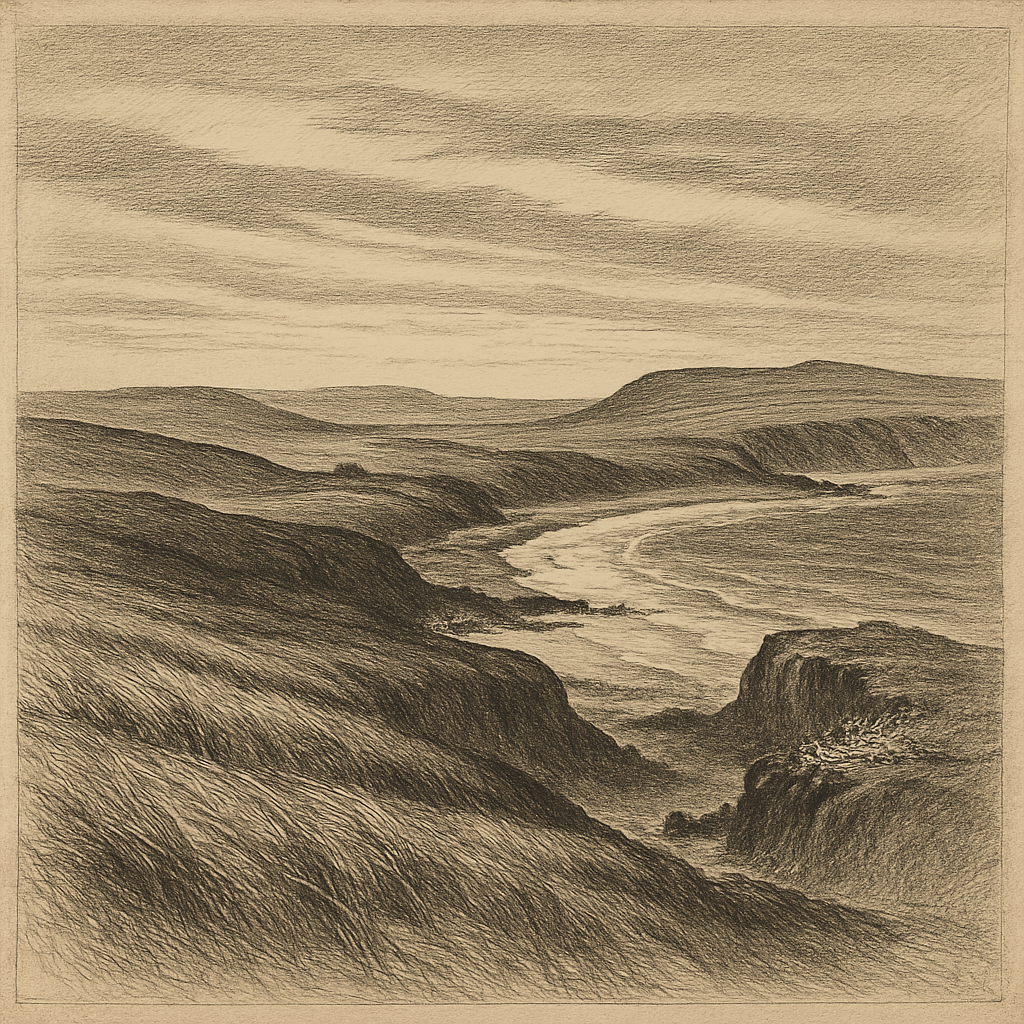
The climate is cool, wet, and oceanic, shaped by the Roaring Forties. Mist can close in quickly; winds scour the ground; the sea is rarely still for long. Vegetation exists, but not lavishly. This is not a tropical volcanic island softened by palms and bright lagoons. It is a harsher world, with grasses, low plants, bare rock, and the constant impression that everything living here has had to negotiate terms with salt and storm. That severity helps explain why human presence has always been temporary, contingent, and slightly improbable.
Seal hunters, fishermen, and a notorious tragedy
European navigators knew of the island from the early age of long-distance ocean travel, and over time it became a stopping point for sealers, whalers, and fishing ventures. In such waters, any landfall mattered. Fresh water, shelter from heavy seas, and a place to take stock could turn a lonely volcanic island into a strategic necessity. Yet settlement never truly took hold. The island was used, visited, worked, and left.
Its most disturbing human story dates from 1930, when a small group was left there as part of a lobster canning enterprise. What followed entered the history of the southern oceans as one of the starkest examples of abandonment. The men were not collected as planned. Months passed. Food ran short. Illness and deprivation set in. By the time rescue finally arrived, only two men and one woman were alive. The episode became known in France as “Les Oubliés de Saint-Paul” — the forgotten of Saint-Paul — and it still hangs over the island more heavily than any romantic tale of exploration. The phrase captures something essential about the place: not only its distance, but the speed with which distance can become severance.
Wildlife in a closed world
If the island resists permanent human use, it has long mattered to animals of the southern sea. Seabirds breed there, and marine mammals have used its shores. Like many remote islands, it was vulnerable to the ecological distortions that follow human arrival: exploitation, introduced species, and habitat disruption. That pattern, so common across oceanic islands, left marks here as well. In modern times, protection and restoration have become central to its identity. Access is controlled, and the island is valued less as a foothold for people than as a fragile sanctuary in need of careful handling.
Its scientific interest lies not only in species lists but in isolation itself. Oceanic islands are natural laboratories, and this one is unusually enclosed, both geographically and topographically. The flooded crater, the limited land area, the harsh weather, and the sheer separation from continental systems make it a place where ecological balances can be sharp, vulnerable, and revealing. What thrives here does so at the edge of several worlds: sea and land, exposure and shelter, permanence and contingency.
The afterimage it leaves
Maritime lore does not need embellishment in a place like this. Sailors have always respected islands that appear suddenly out of difficult water and offer help only on strict terms. The reputation here is less about myth than about atmosphere: a harbor hidden inside a volcano, a shore repeatedly occupied and relinquished, a history in which being forgotten was not a metaphor but a sentence. Even the map seems to describe a kind of isolation beyond ordinary remoteness, a point so small in such a large ocean that it feels almost accidental.
Yet that is precisely why it endures in the imagination. Some islands become famous by attracting people; this one becomes unforgettable by stripping human presence down to its most fragile proportions. It is a ring of lava in cold southern water, a refuge that can become a trap, a place where geology has made a near-perfect emblem of solitude. Long after the details fade, what remains is the image of that breached crater holding its dark inner sea, while around it the Indian Ocean goes on, immense and indifferent.