Where the Southern Ocean Keeps Its Own Counsel
Far below the usual maps of travel, in the storm-belt of the southern Indian Ocean, lies Kerguelen Island, a place so distant from ordinary human routes that it seems less discovered than merely endured. It belongs to the French Southern and Antarctic Lands, and sits roughly 3,300 kilometers southeast of Madagascar and more than 2,000 kilometers north of Antarctica, adrift among cold seas, fog, and relentless wind. Sailors long called this region the Roaring Forties and Furious Fifties; here those names stop sounding poetic and become a matter of weather, steel, and survival.
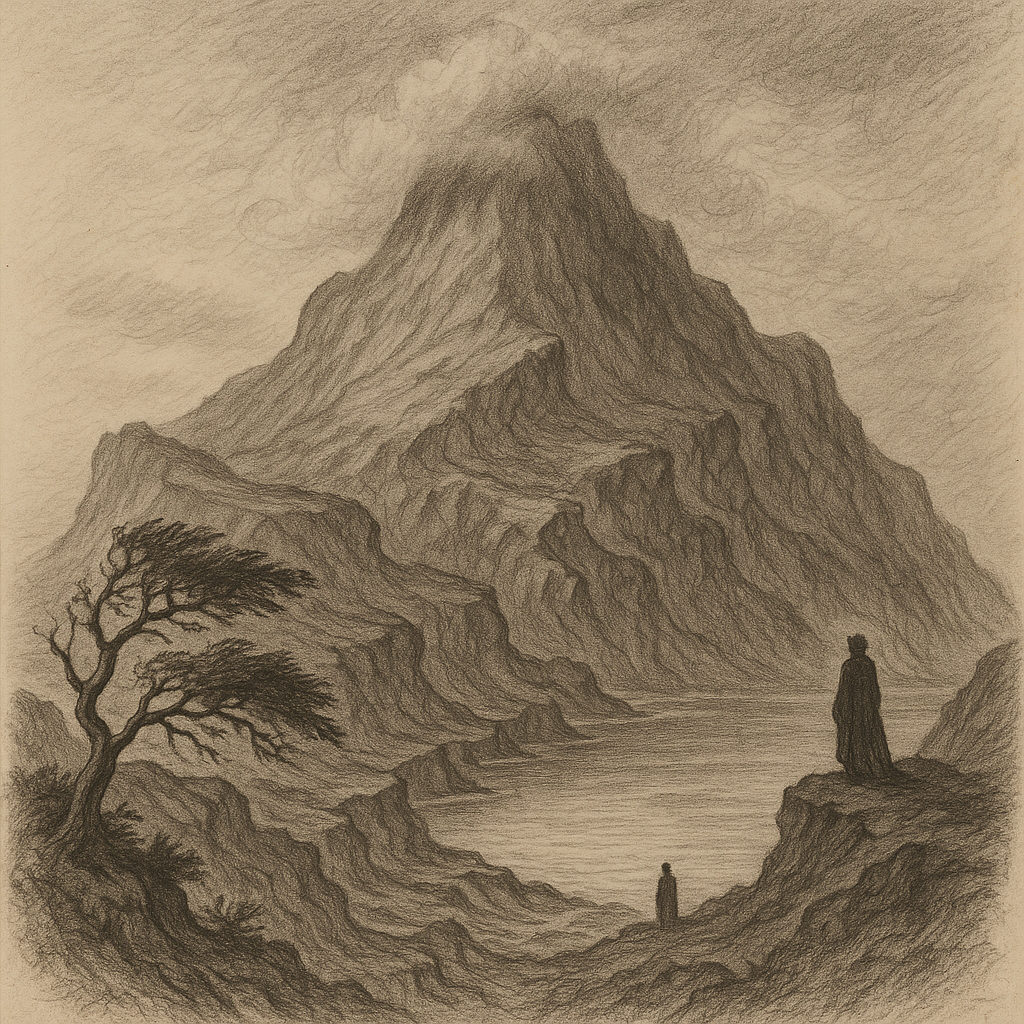
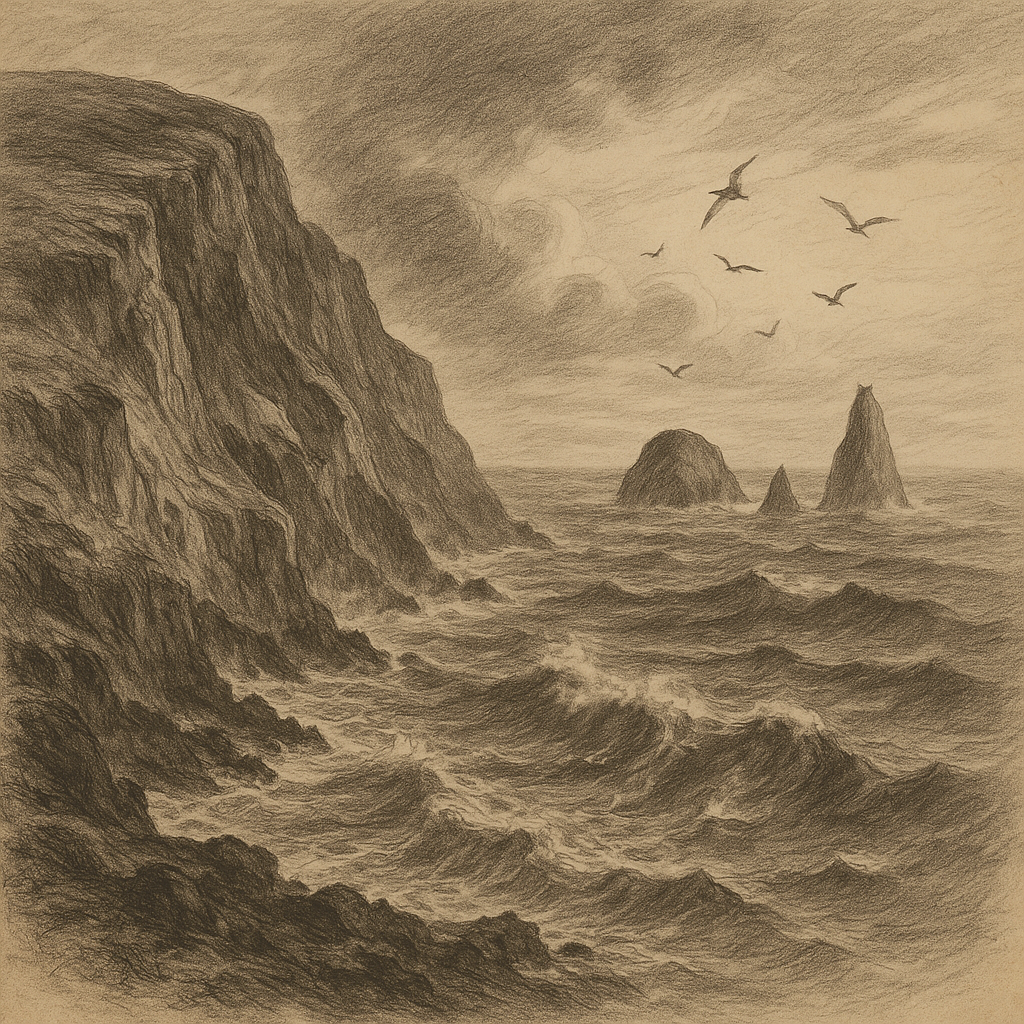
The land itself is not a single neat oval but a ragged volcanic mass cut by fjords, bays, peninsulas, and black, wave-beaten shores. Grande Terre, the main island, dominates the archipelago, and its interior rises into bleak uplands and glaciated heights, crowned by Mont Ross, an active stratovolcano over 1,800 meters high. Ice still survives here in the Cook Ice Cap, a reminder that even at sea level this is a cold, austere world. Treeless and open to the full force of the westerlies, the island has an exposed, almost unfinished look: lava plateaus, peat bogs, fellfields, and tundra-like vegetation flattened by climate rather than shade.
There is no native human population. What settlement exists is temporary and functional, centered on the French research station of Port-aux-Français, established in 1950 on the Gulf of Morbihan. Even that outpost, with its scientists, technicians, and seasonal staff, feels less like habitation than a negotiated truce with remoteness. For much of the year, access depends on a supply vessel from Réunion. No commercial airport shortens the distance. Arrival still carries something of the old maritime drama.
A Discovery Wrapped in Error, Ambition, and Weather
The island entered recorded European history in 1772, when the French navigator Yves-Joseph de Kerguelen-Trémarec sighted it during a naval expedition. He believed he had found part of a great southern continent, a mistake born from fog, distance, and the era’s persistent geographical hopes. On a later voyage, the illusion dissolved: this was no rich Terra Australis, but a harsh subantarctic land with little immediate promise. Even so, the place kept his name, though English-speaking sailors later gave it a darker nickname, “Desolation Island,” one that endured because it seemed less like rhetoric than accurate description.
In the nineteenth century the shores drew sealers and whalers, men who came not because the island was welcoming but because the surrounding seas were rich. Southern elephant seals and fur seals were hunted heavily, as they were across many subantarctic islands. Whaling stations never transformed the place into a true colony, and no lasting settler society took root. Instead, its human record became episodic: rough anchorage, extraction, departure, and the long return of wind and silence.
Science eventually succeeded where commerce failed. The remoteness that once made the island economically awkward gave it another kind of value. French expeditions, meteorological work, geophysical research, biology, and long-term environmental observation all found a use for a place so isolated that it could serve as a baseline, a laboratory, and a warning. Its position in the Southern Ocean makes it important for studying climate, marine ecosystems, and the movements of wildlife across one of the least domesticated parts of the planet.
Life in a Land Without Trees
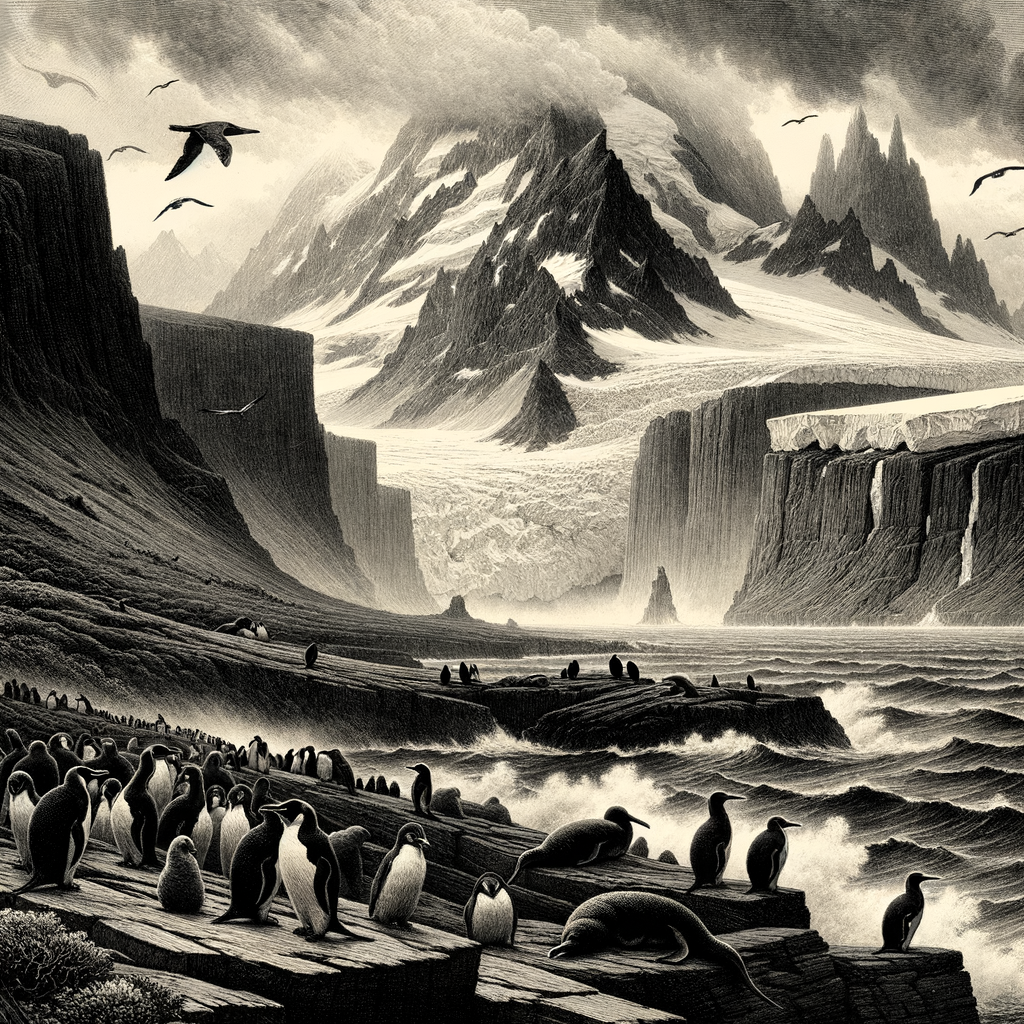
If the island can appear barren from a distance, that impression dissolves on closer inspection. The ecological drama here is subtle but dense. Vast colonies of seabirds nest along coasts and cliffs, and the surrounding waters support wandering albatrosses, giant petrels, penguins, and other pelagic species that spend much of their lives in open ocean. King penguins gather in remarkable numbers on parts of the archipelago, while elephant seals haul out on beaches that seem, for a few weeks, to belong more to mammal than to stone.
One of the most famous native plants is the Kerguelen cabbage, Pringlea antiscorbutica, once valued by sailors as a source of vitamin C against scurvy. It is one of those details that brings the island abruptly into human scale: a bleak anchorage, exhausted men, and an unexpectedly useful green growing in the cold. Yet the biological story is also one of disturbance. Introduced species, including rabbits, cats, and reindeer brought in the modern era, altered vegetation and bird life in ways familiar on islands worldwide, though restoration and management efforts have tried to limit the damage. In places, the ecological balance remains fragile, shaped as much by what humans carried ashore as by what evolved there.
The climate enforces its own order. Temperatures are moderated by the ocean but seldom generous; snow can fall at any time of year in higher areas, and rain, sleet, and mist pass quickly over the ground. There are no forests because there can be none. What grows does so low to the earth, bent by exposure. The effect is not empty but elemental, as if every living thing has learned to survive by refusing display.
The Weight of Distance
Many remote islands are imagined as escapes. This one resists that fantasy. Its power lies not in palm-fringed solitude but in a more severe beauty: basalt, surf, kelp-choked inlets, cloud dragging across volcanic slopes, the startling cries of birds over water the color of iron. Writers and sailors who encountered it often reached for language of bleakness, but bleakness is only part of the truth. There is also precision here, a stripped clarity. Nothing is softened. Distances matter. Weather matters. Time at sea still matters.
That may be why the place lingers in the mind. It stands at the edge of the habitable not as a ruin or a myth, but as a real territory where human presence remains temporary and conditional. The old nickname, “Desolation Island,” survives because it captures an emotional fact, though not the whole one. Desolation suggests absence; what this island offers is something more unsettling and more memorable: a landscape intensely occupied by wind, birds, seals, ice, and the long, unbroken force of the Southern Ocean, with humanity only passing through.