Remote Islands

Exploring the World’s Most Remote Islands

King Edward Point

About

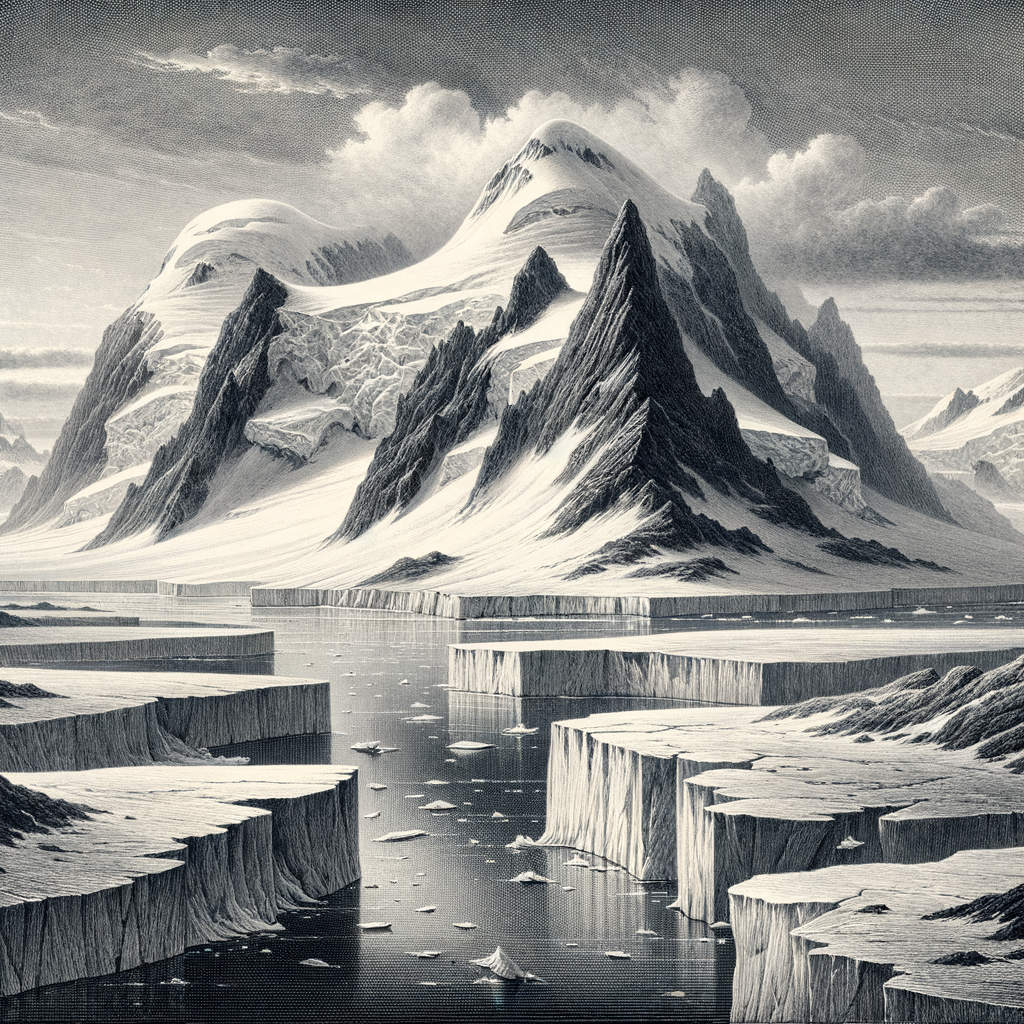
King Edward Point is a research station and administrative center located on the island of South Georgia, part of the British Overseas Territory of South Georgia and the South Sandwich Islands. The station was established in 1909 as a base for the British Antarctic Survey, and it has played a key role in supporting scientific research in the region ever since. The station is currently run by the Government of South Georgia and the South Sandwich Islands, and it serves as the main point of contact for visitors to the island.

King Edward Point is the main hub for scientific research on South Georgia and the South Sandwich Islands. Scientists from around the world come to the station to conduct research on the island’s unique and diverse flora and fauna, similar to the scientific programs conducted at the Crozet Islands in the Indian Ocean, as well as its geology and climate. The station also serves as a base for monitoring the populations of penguins, seals, and other marine mammals that live in the waters around South Georgia.

The station also serves as an important logistics center for the British Antarctic Survey and other organizations working in the region. It provides accommodation, laboratory facilities, and other support services to researchers and field teams working on the island and in the surrounding waters. Additionally, King Edward Point is the main port of entry for visitors to South Georgia and the South Sandwich Islands, and it serves as the center of administration and government for the territory.
Do you like my work? Buy Me A Coffee

More Islands to Explore

  • At Berkner Island, science unravels Antarctica’s hidden mechanics

    At Berkner Island, science unravels Antarctica’s hidden mechanics

    Almost everything about this place resists the ordinary idea of an island. Berkner Island lies in Antarctica, enclosed not by open sea but by the floating mass of the Ronne Ice Shelf in the southern Weddell Sea. It is large by any standard—about 320 kilometers long and roughly 135 kilometers wide—yet for long stretches of…

    Read more

  • A tiny Arctic outpost reframes the law around Jeannette Island

    A tiny Arctic outpost reframes the law around Jeannette Island

    Named from a disaster, fixed in ice Far above the Siberian mainland, where the Laptev and East Siberian seas merge into a long regime of pack ice, Jeannette Island rises as a dark, abrupt interruption in a white world. It belongs to the De Long group in Russia’s New Siberian archipelago, and even by high-Arctic…

    Read more

  • Storm-battered nesting grounds at Ile aux Cochons prompt conservation reassessment

    Storm-battered nesting grounds at Ile aux Cochons prompt conservation reassessment

    A black mass in a vacant quarter of ocean Ile aux Cochons belongs to the French Southern and Antarctic Lands, yet even in a territory defined by distance it stands apart. The island lies in the Crozet archipelago of the southern Indian Ocean, far from regular sea routes and far from settlement, a steep volcanic…

    Read more