At the edge of the Pacific
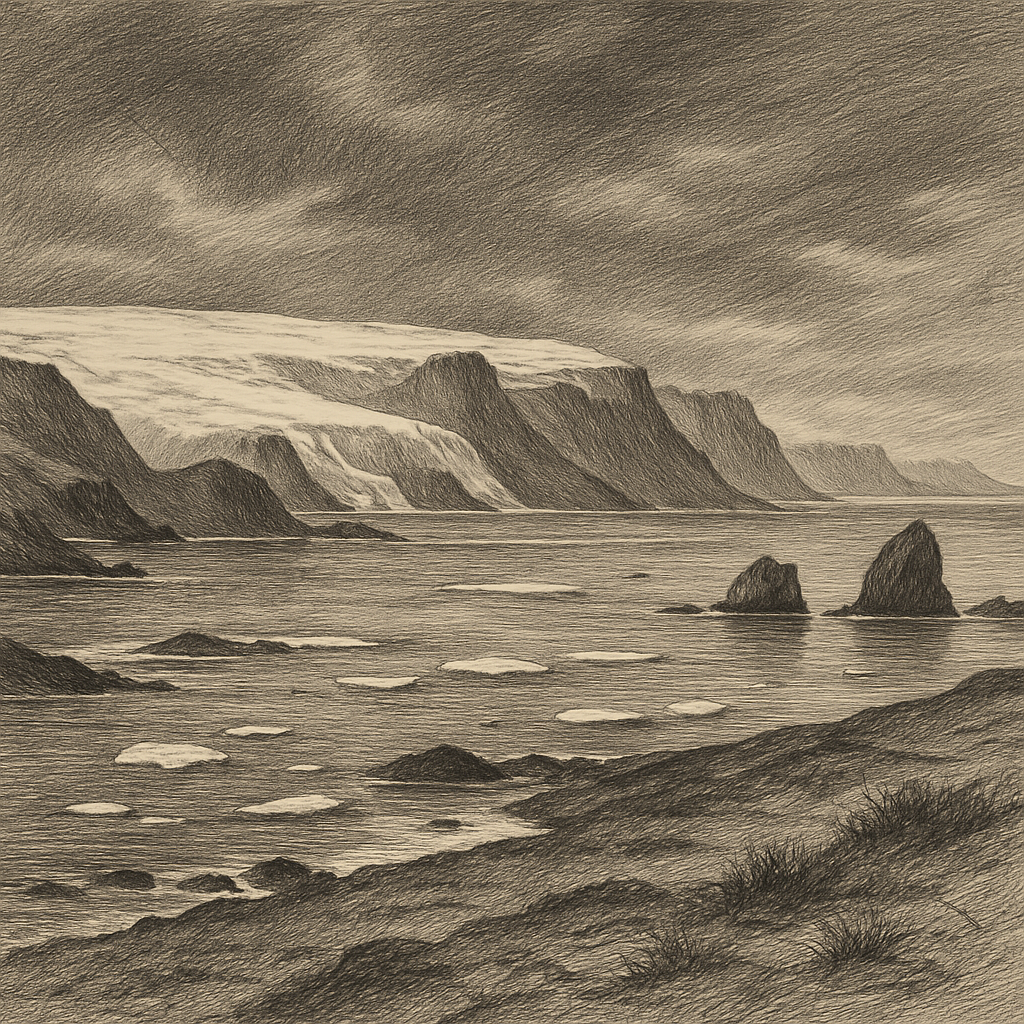
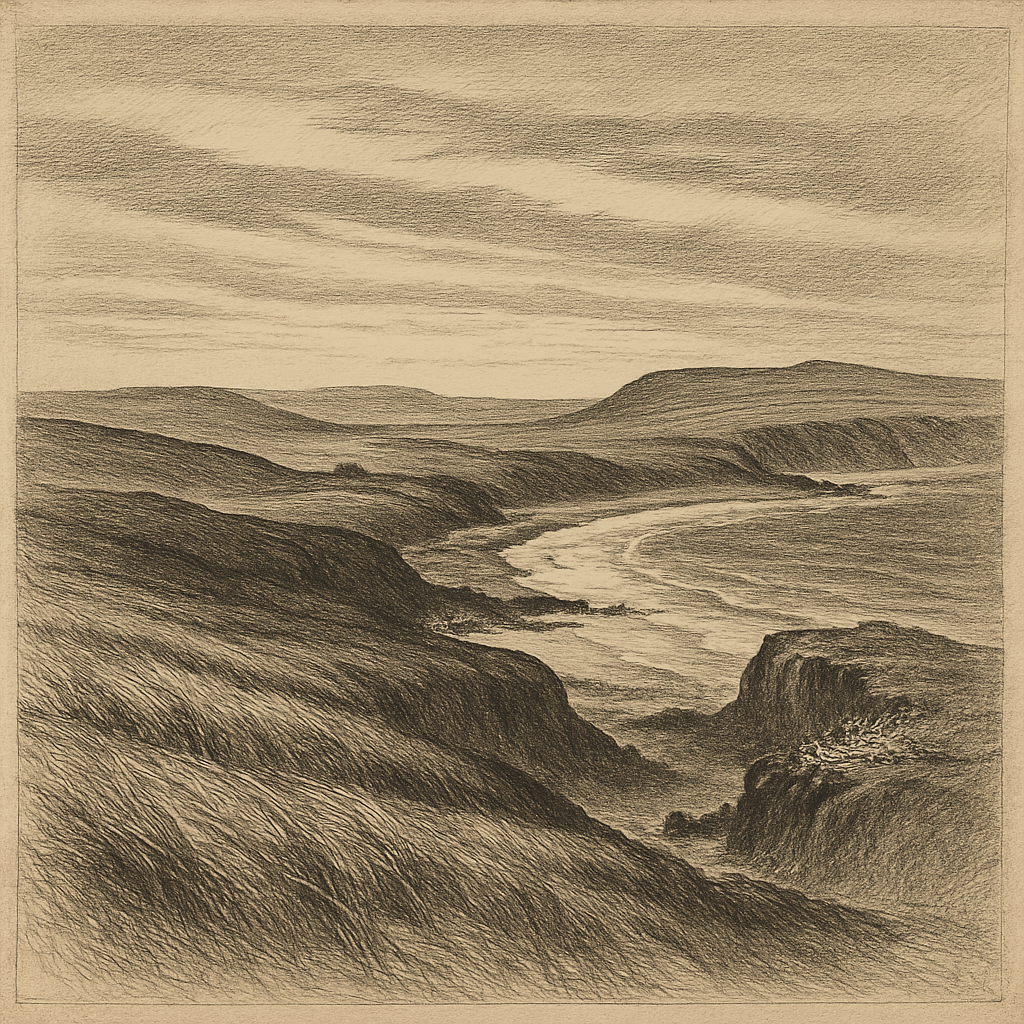
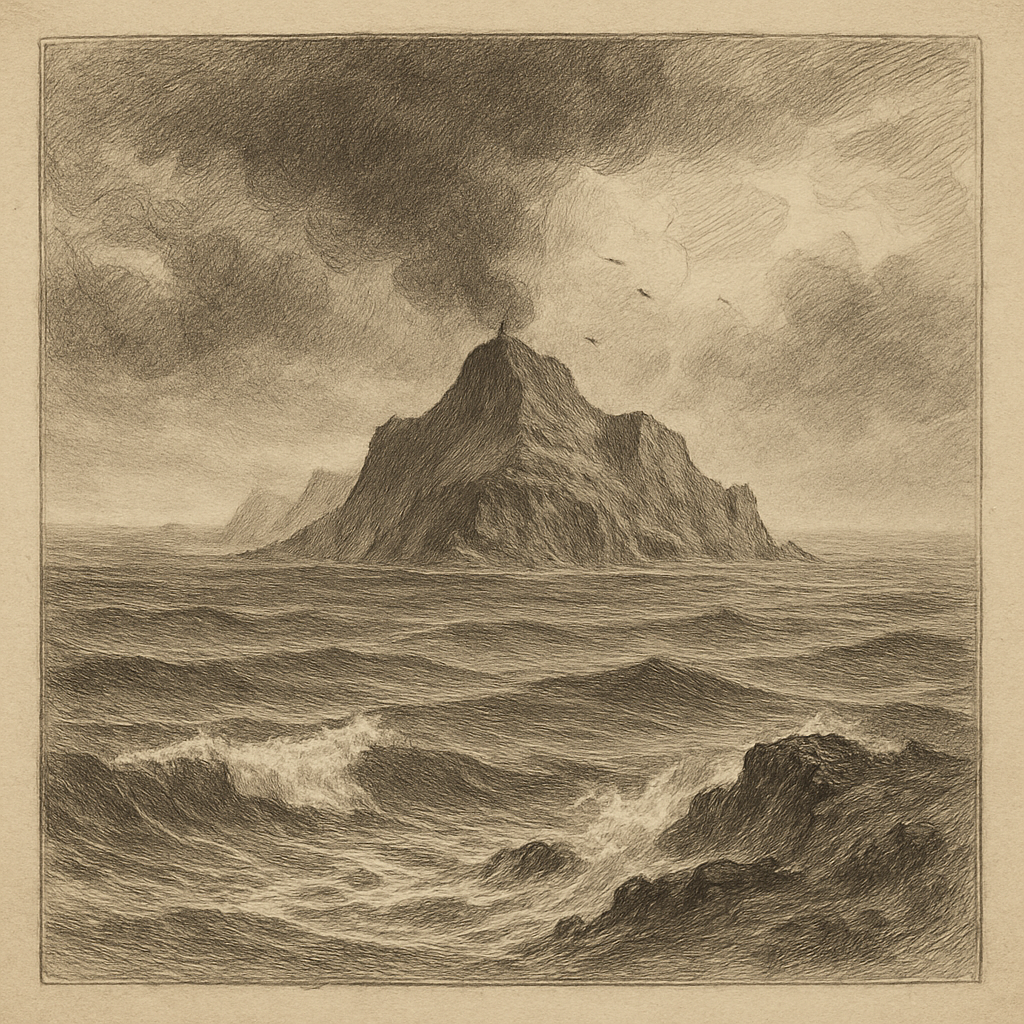
There are islands that feel remote on a map, and then there are islands that seem to have slipped almost out of the human world altogether. Kiska Island lies in the Rat Islands group of Alaska’s western Aleutians, a long, storm-lashed arc reaching toward Russia, where the North Pacific and the Bering Sea meet under a low, restless sky. Even by Aleutian standards it is far away: treeless, wind-scoured, frequently hidden by fog, and ringed by cold water that has shaped every human approach to it. The place has the severe clarity of the far north. Dark volcanic slopes rise from the sea. Beaches of black sand and boulder shorelines give way to tundra, marsh, and ridges cut by weather. Above all of it stands Kiska Volcano, an active stratovolcano whose presence gives the island a permanent sense of unfinished geology.
This is not an island that welcomes easy arrival. Aleutian weather arrives in layers—mist, rain, sleet, sudden wind, a horizon erased almost as soon as it appears. Mariners knew these seas as dangerous long before modern charts gave every headland a name. The island’s deep harbor, one of its most consequential features, offered shelter in a region where shelter mattered enormously. That single fact helps explain why a place so exposed could become, for a brief and violent interval, strategically important.
For centuries, the Aleut people lived across this region, adapting to conditions that outsiders often read only as hardship. Russian fur traders entered the Aleutians in the eighteenth century, and imperial expansion remade native life with extraordinary brutality. Yet the island’s wider fame belongs to the Second World War, when this lonely ground became one of the few pieces of what is now U.S. territory to fall under Japanese occupation. In June 1942, after bombing Dutch Harbor, Japanese forces landed here and on Attu. Suddenly an island at the margin of the continent was drawn into a global war.
The occupation transformed the harbor into a military outpost of tunnels, gun positions, camps, and supplies concealed as much as possible in fog and terrain. American and Canadian forces spent more than a year fighting the Aleutian campaign under conditions that were punishing even when no enemy was visible. Weather killed and maimed, aircraft vanished in cloud, ships operated in icy uncertainty, and distance complicated every decision. When Allied forces finally returned in strength in August 1943, they expected another savage battle after the costly recapture of Attu. Instead they landed into silence. Under cover of fog, the Japanese had evacuated the garrison by sea weeks earlier without detection by Allied forces. The island had become a battlefield defined as much by absence as by combat.
Even so, it was not bloodless. In the confusion of the landing and subsequent operations, troops moving through abandoned positions, mines, booby traps, and brutal terrain suffered deadly accidents. The war left wreckage across the landscape: gun emplacements, trenches, rusting machinery, and aircraft remains slowly surrendering to corrosion. Few places preserve the strange texture of the Aleutian campaign so vividly—a war of invisibility, misdirection, and endurance fought in one of the least forgiving environments on earth.
What remains when people leave
No permanent civilian settlement followed. The island today is uninhabited, part of the Alaska Maritime National Wildlife Refuge, and access is difficult, tightly shaped by weather, distance, and practical constraints. Time has not erased the human record so much as submerged it in moss, ash, and salt air. Military debris persists because the climate can preserve and destroy at once: metal rusts spectacularly, wood collapses, but outlines remain. It is a landscape where history does not stand in neat monuments. It lies half-visible in the tundra.
The natural world has resumed command. Seabirds nest on cliffs and offshore rocks, and the surrounding waters support the immense marine life typical of the Aleutians. Introduced mammals once damaged parts of the refuge ecosystem on various Aleutian islands; restoration work across the chain has been one of the North Pacific’s significant conservation efforts. Here, as elsewhere in the archipelago, ecology and history are entangled. Human use arrived abruptly, altered systems, and receded, leaving biologists and historians to read the aftermath together.
There is no large body of folklore attached specifically to this place in the popular imagination, no famous treasure legend or gothic tale to explain its hold on the mind. Its eeriness is documented rather than embellished. Veterans wrote of fog so dense it seemed to swallow sound. Sailors respected the harbor and feared the surrounding seas. Archaeologists and historians have found in the surviving structures a rare, almost theatrical example of how war can occupy a remote landscape and then vanish from it overnight. The island’s reputation comes from that factual strangeness: a volcano above an empty battlefield, a harbor once crowded with warships now given back to birds and weather.
The silence after strategy
Seen from a distance, it is easy to mistake the place for pure wilderness, a severe arrangement of mountain, cloud, and surf at the end of the map. Yet that impression is incomplete. The island is wilderness marked by strategy, solitude charged with memory. It stands in one of the world’s great maritime corridors, where currents, birds, armies, and empires have all passed, and where nature remains plainly stronger than any of them.
What lingers most is not simply remoteness, but the scale of indifference around it. Storms still move over the volcano. Fog still closes the harbor. Rust still blooms on abandoned metal. In that weather-beaten meeting of geology and history, human ambition looks brief, almost fragile. Few inhabited places can feel so decisively abandoned; fewer abandoned places can feel so alive. Here, at the far rim of Alaska, the Pacific keeps its own counsel, and the silence is never empty.