A low island in a very large ocean
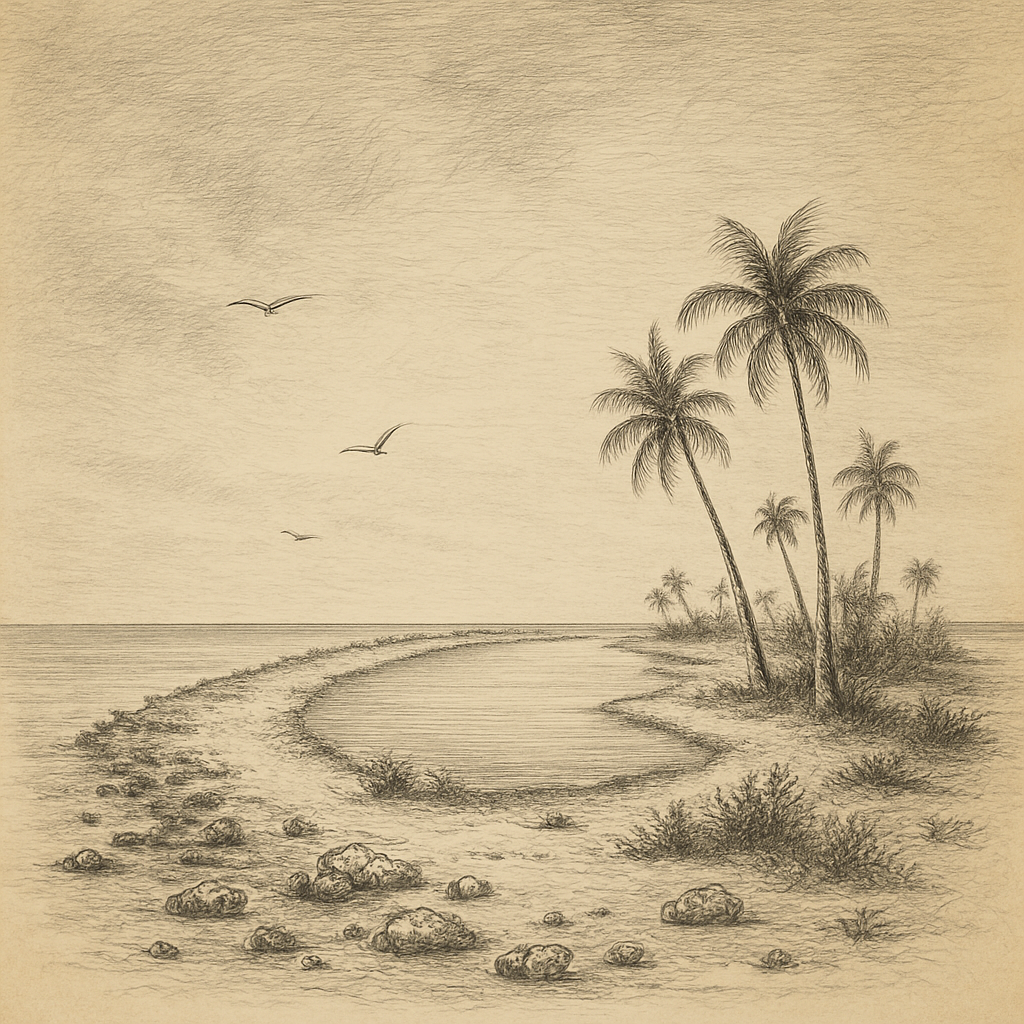
Few places make human absence feel so complete. Birnie Island lies in the Phoenix Islands of the central Pacific, part of the Republic of Kiribati, a small, flat coral island ringed by reef and exposed to a sweep of sea that seems to erase scale. It is not an atoll with a lagoon but a compact uplift of coral and sand, roughly half a square kilometer in area, remote even by the standards of one of the world’s most isolated archipelagos. The nearest settled worlds are far away. What remains here is glare, wind, salt, and a horizon with nothing to interrupt it.
The ground rises only slightly above the ocean. That modest elevation matters, because on islands like this the difference between dry land and overtopping water can be measured in little more than a storm tide. There are no streams, no hills, no protective woods. Seabirds and scrub define the place more than any human imprint does. Coconut palms were once planted on some islands of the Phoenix group, but this one never became a viable outpost of settlement. Its physical facts argued against permanence from the beginning: no fresh water, poor soils, difficult landings, relentless exposure.
Brief human designs, then withdrawal
European navigators charted and named islands across this ocean in the nineteenth century, and Birnie Island entered the documentary record during that era of surveying and maritime passage. In the twentieth century, as Britain sought to extend settlement in the Phoenix Islands through the Phoenix Islands Settlement Scheme, some neighboring islands received colonists. This one did not become a lasting inhabited station. The reasons were practical rather than dramatic, which in some ways makes them starker. An island can be too small, too dry, too inhospitable to justify the effort of keeping people there.
There were attempts to use and alter the vegetation. Like other coral islands in the region, it was affected by the logic of copra-era planning, when remote land was often valued according to what might be planted or harvested. Yet the place resisted utility. By the mid-twentieth century, any thought of sustained occupation had faded, and the island settled back into the condition that now defines it: uninhabited, difficult to reach, and known chiefly through scientific and conservation records.
Its modern significance has less to do with empire or commerce than with what survives in the absence of both. The Phoenix Islands Protected Area, established by Kiribati in 2008, brought international attention to one of the largest marine protected areas on Earth. Within that protected seascape, this island matters as a nesting ground and as part of a wider ecological system that has endured with remarkably little direct disturbance.
Bird ground, reef margin
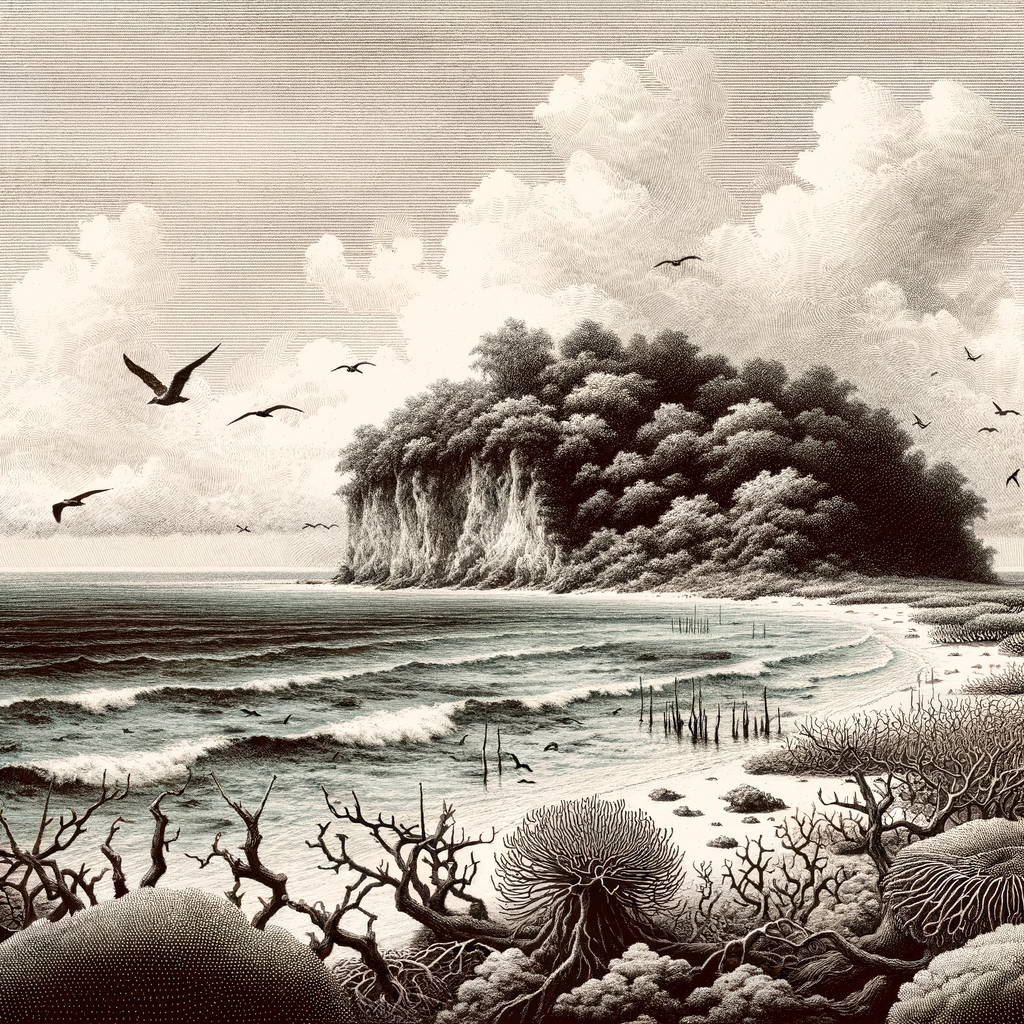
The most vivid life here comes by wing. The island has long been recognized as an important seabird site, supporting breeding colonies typical of the central Pacific’s remote coral islands. Sooty terns, frigatebirds, boobies, noddies, and other seabirds have used such ground for nesting, and the value of the place lies precisely in its lack of people, predators, and infrastructure. On many oceanic islands, introduced rats and cats devastated bird populations; on islands where those threats never took hold or were removed, the old avian order can still be felt.
That bird-richness is tied to the surrounding waters. The reef and nearby ocean are part of the exceptionally intact marine environment of the Phoenix group, known for coral communities, reef fish, sharks, and large pelagic species. The island itself may appear austere from a distance, but its bareness is only the visible rim of a far larger living system. Nutrients cycle between sea and shore through guano, nesting, and the constant passage of birds. Even the silence is deceptive; what seems empty is in fact busy with migrations, feeding routes, breeding seasons, and currents moving under the surface.
There is no substantial archive of folklore attached specifically to this island, no famous castaway chronicle, no grand ruin for the imagination to cling to. That scarcity of story is part of its character. It has existed mostly at the edge of official attention, surfacing in expedition notes, conservation surveys, and charts rather than in memoir or myth. Some islands gather narratives because people stayed. This one is memorable because they did not.
What remains when almost nothing does
Seen in photographs or satellite images, the island can look nearly provisional, a pale piece of land laid lightly on the Pacific. Yet it has outlasted the plans made for it. Settlement schemes passed, maritime routes shifted, imperial administrations vanished, and still the same elemental terms govern the place: reef, sun, birds, salt, and distance. In an age inclined to measure territory by use, it offers another kind of fact. Some islands are most important not for what was built on them, but for what has been left alone.
That is the lasting force of Birnie Island. It stands in no dramatic vertical posture, hides no mountain crater, and carries no village ghosts. Its strangeness is quieter. It is a piece of land so reduced to essentials that every feature feels final: the hard coral surface, the spare vegetation, the dependence on weather, the unbroken company of seabirds. Far from the usual routes and too slight for ordinary ambitions, it remains what many remote islands once were before the world tried to improve them: exposed, exacting, and almost entirely its own.