About
The South Orkney Islands are a group of islands located in the Southern Ocean, part of the British Antarctic Territory. The islands were first discovered by the British sealer James Weddell in 1823, who named them after the Orkney Islands in Scotland. The islands were later visited by American and British sealers and whalers, who established bases on the islands to hunt for seals and whales, much as they did on South Georgia to the southeast.
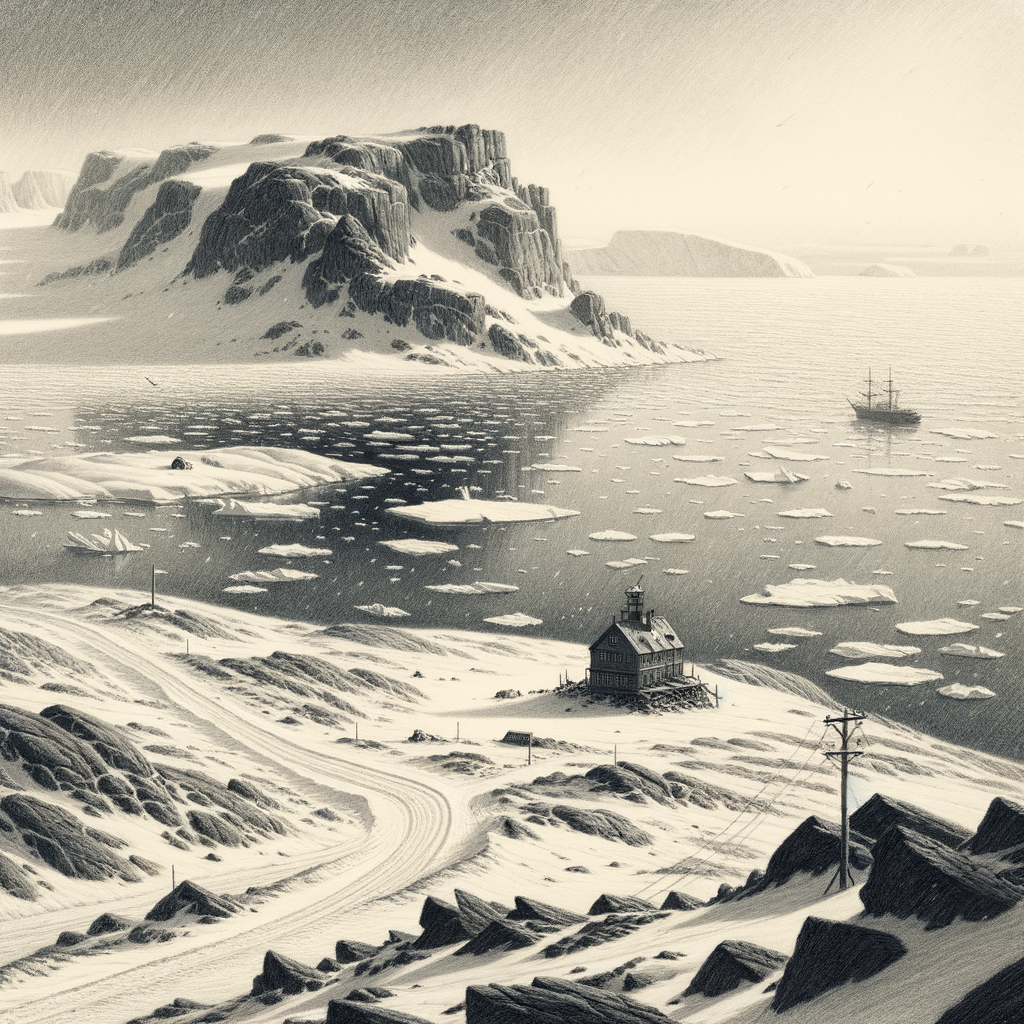
In 1903, a British expedition led by William Speirs Bruce established a research station on Laurie Island, one of the South Orkney Islands. The station, called Orcadas, was the first permanent research station in Antarctica and was operated by the Scottish National Antarctic Expedition. The station’s main focus was on meteorology and magnetism, and it served as a base for scientific research in the region for several decades.
During the early 20th century, the South Orkney Islands were also claimed by Argentina and Chile, who established their own research stations on the islands. This led to a territorial dispute between the three countries, which was eventually resolved in 1985 with the signing of the Antarctic Treaty. Under the treaty, the South Orkney Islands are considered to be a “zone of cooperation,” and all three countries continue to conduct scientific research on the islands.
During the Cold War, the South Orkney Islands were also of strategic importance as a potential location for military bases. The UK and Argentina both maintained naval presence in the islands, but the signing of the Antarctic Treaty put a stop to any militarization of the area.
Today, the South Orkney Islands are primarily used for scientific research. The Orcadas station, now run by the Argentine government, is one of the oldest continuously manned research stations in Antarctica. Research conducted on the islands includes studies of meteorology, geology, biology, and the impacts of climate change, comparable to programs on Heard Island in the Indian Ocean. The islands are also home to a variety of unique and endangered species, including seabirds, seals, and penguins.