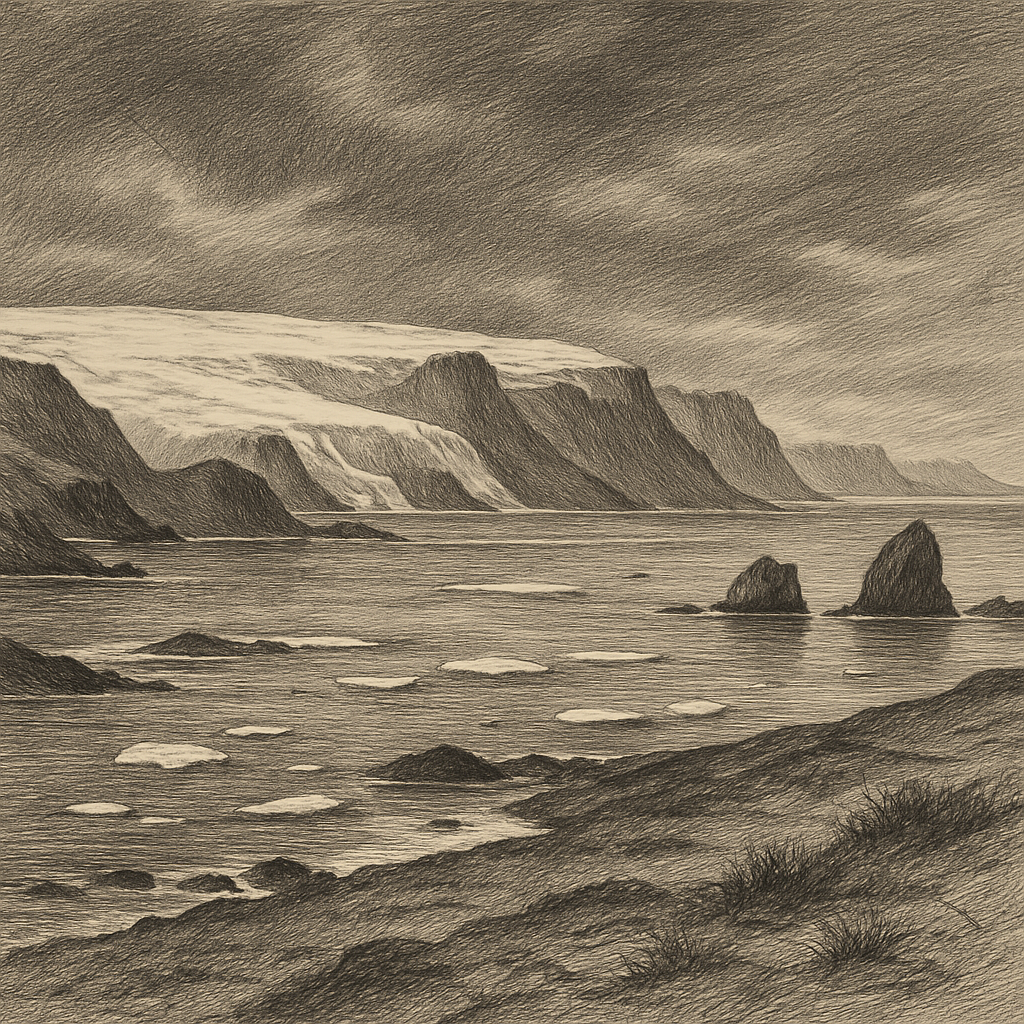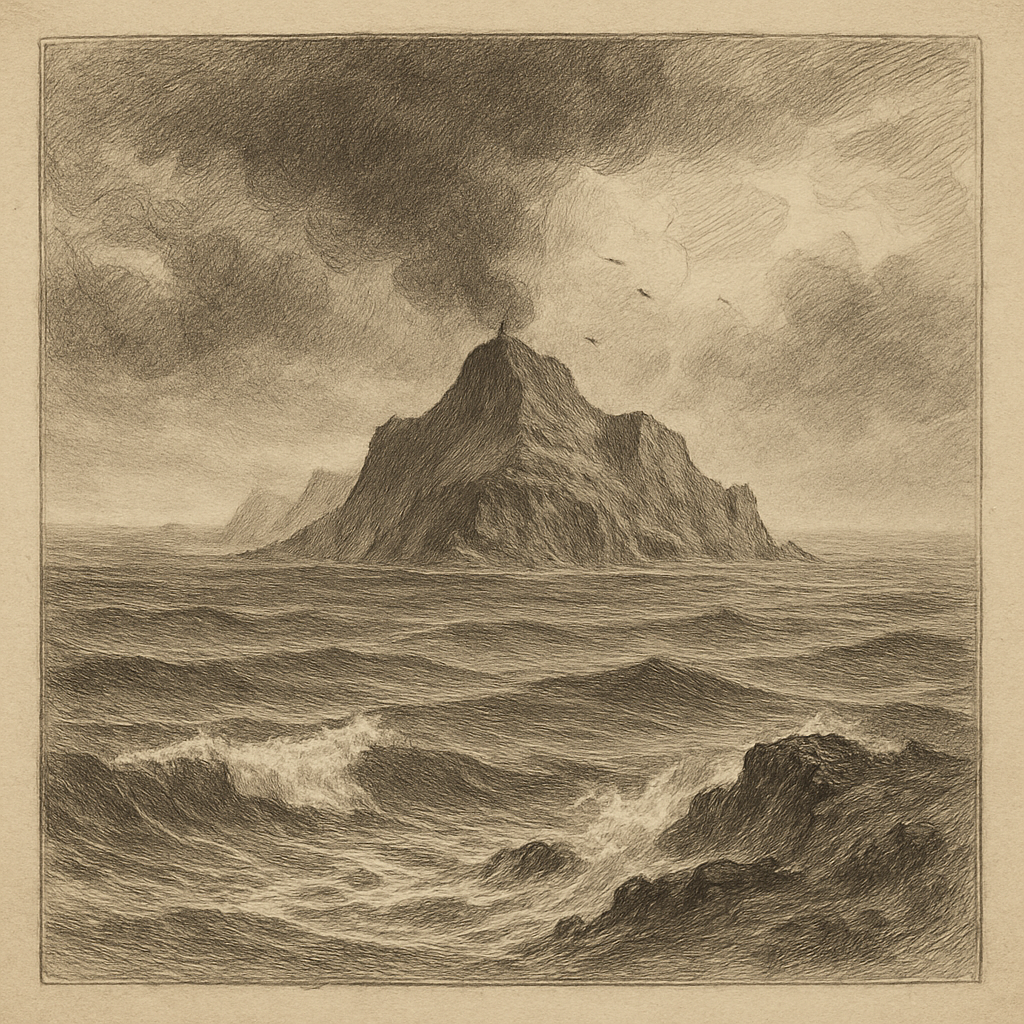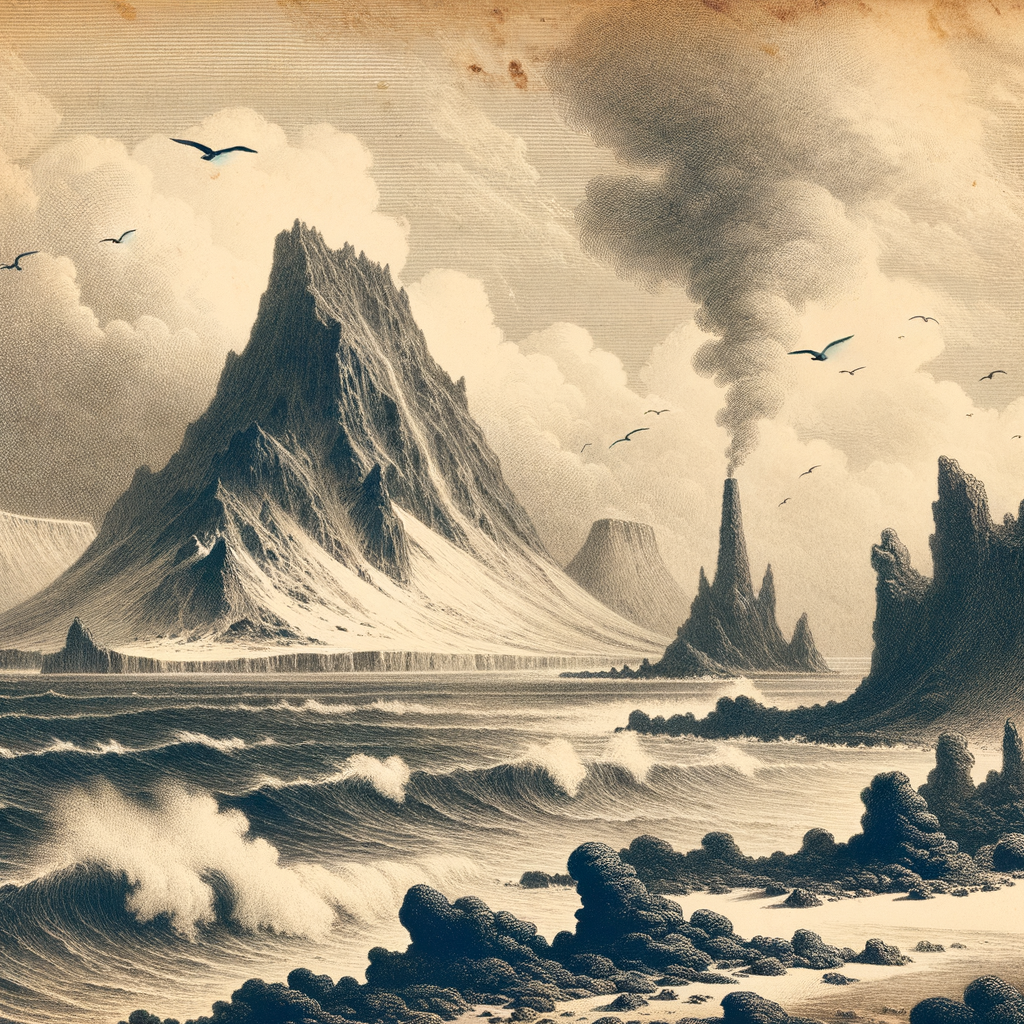
It began as an argument between fire and water, witnessed in real time. In November 1963, south of Iceland in the Vestmannaeyjar archipelago, the North Atlantic heaved, darkened, and broke open. Columns of ash and steam climbed into the winter sky as a submarine eruption forced its way above the surface, building land where there had been only sea. Fishermen first saw the plume; within days, the newborn island had a name drawn from Norse myth: Surtsey, after Surtr, the fire giant of Ragnarök. Few places on Earth have entered the map under such close observation, and fewer still have remained so rigorously protected from human interference once they arrived.
A shoreline still under construction
The island lies about 32 kilometers off Iceland’s south coast, exposed to weather that wastes little time on ceremony. It is small, black, raw-edged, and younger than many of the trees planted in European cities. Its first years were violent. The eruption lasted until June 1967, shifting in character as vents opened and waned. At first, explosive encounters between magma and seawater produced towering ash clouds and unstable tephra. Later, lava flows armored parts of the island, creating harder capes and cliffs better able to resist Atlantic surf. Even so, erosion began almost immediately. Waves cut at loose deposits, reducing the island from its larger early extent to a more compact shape.
What survives is a stark volcanic landscape: tuff cones, lava fields, black beaches, and a perimeter under constant negotiation with the sea. Height and area have both changed over time, not through any human work but through the ordinary, relentless arithmetic of ocean and weather. Surtur, the main crater, and smaller volcanic structures remain as evidence of the eruption’s stages. From a distance, the island can look severe, but up close its surfaces record the exact sequence of its making: ash settled from boiling plumes, bombs and fragments fell back around vents, lava hardened into crust and rampart.
The forbidden laboratory
Its greatest distinction is not simply that it was born in modern memory, but that scientists and Icelandic authorities decided to leave it almost entirely alone. Access has long been tightly restricted. The reason is straightforward and rare: this is one of the world’s clearest natural experiments in primary succession, the process by which life colonizes brand-new land. Because people were largely kept away, biologists could watch the arrival of organisms with unusual clarity, tracing how wind, waves, and birds carried life to sterile volcanic ground.
Seeds and spores came first, some washed ashore, others borne by air. Bacteria, fungi, and molds found footholds. Vascular plants appeared cautiously; in the early years, a single sea rocket or lyme grass was an event worth noting. Seabirds transformed the pace of change. Their droppings enriched the nutrient-poor substrate, and nesting created concentrated zones of fertility. Fulmars, gulls, and other species made the island less barren simply by living there. As vegetation developed, invertebrates increased, and ecological complexity followed. By the late twentieth century, plant cover had become markedly richer in bird-colony areas than on more exposed, ungrazed, nutrient-starved ground.
The work done here helped turn the island into a benchmark for ecological study. It was inscribed on the UNESCO World Heritage List in 2008, recognized not as a scenic curiosity alone but as a scientific archive in plain sight. Researchers have documented colonization by mosses, lichens, and flowering plants, along with visiting and breeding birds and the arrival of marine mammals on surrounding shores. Every gain has been contingent, every patch of life dependent on dispersal, shelter, and the chemistry of new rock.
No settlement, only witnesses
There has never been a permanent community here, and that absence matters. Human presence has mostly taken the form of carefully managed research visits, occasional enforcement, and the brief practical structures needed for scientific work. The island’s story therefore lacks the usual register of abandoned houses, failed crops, or dwindling populations. Its drama is of another kind: not departure, but refusal. It is a place intentionally denied the ordinary fate of islands, which is to be landed on, altered, used, and named over by habit.
That does not mean the human record is thin. The eruption was photographed, filmed, measured, and described almost from its first visible hours. Geologists studied Surtseyan eruptions—a term now used worldwide for this explosive interaction of magma and shallow water—through the evidence provided here. The island became a touchstone in volcanology as well as ecology, a site where the making of land and the making of an ecosystem could be watched almost from page one.
There is maritime lore around sudden islands in Icelandic waters, but this one belongs less to legend than to documentation. Its mystery comes from being fully real, fully observed, and still beyond ordinary approach. Offshore, it remains remote rather than romantic: hard weather, rough sea, strict rules, and a terrain that has not finished becoming itself.
What the surf is editing
Years continue to pass over the lava and tuff with visible effect. The Atlantic pares, undercuts, and revises. Yet disappearance is only part of the story. The island persists as process, not monument. It is changing in the two oldest ways islands change: by being worn down from the outside and quietly occupied from within. Grass takes root where birds gather. Cliffs collapse. New profiles emerge after storms. The map is stable enough to print and unstable enough to need correction.
Seen from the sea, this young fragment of Iceland looks solitary in a way older islands do not. It has no deep human time to soften it, no harbor life, no layered architecture of use. What it offers instead is rarer: the sight of beginnings that are still legible. Black rock, white surf, nesting birds, and a sealed perimeter of respect—these are the terms on which it meets the world. Out there, beyond the usual traffic of settlement and tourism, land is still being written in the present tense.