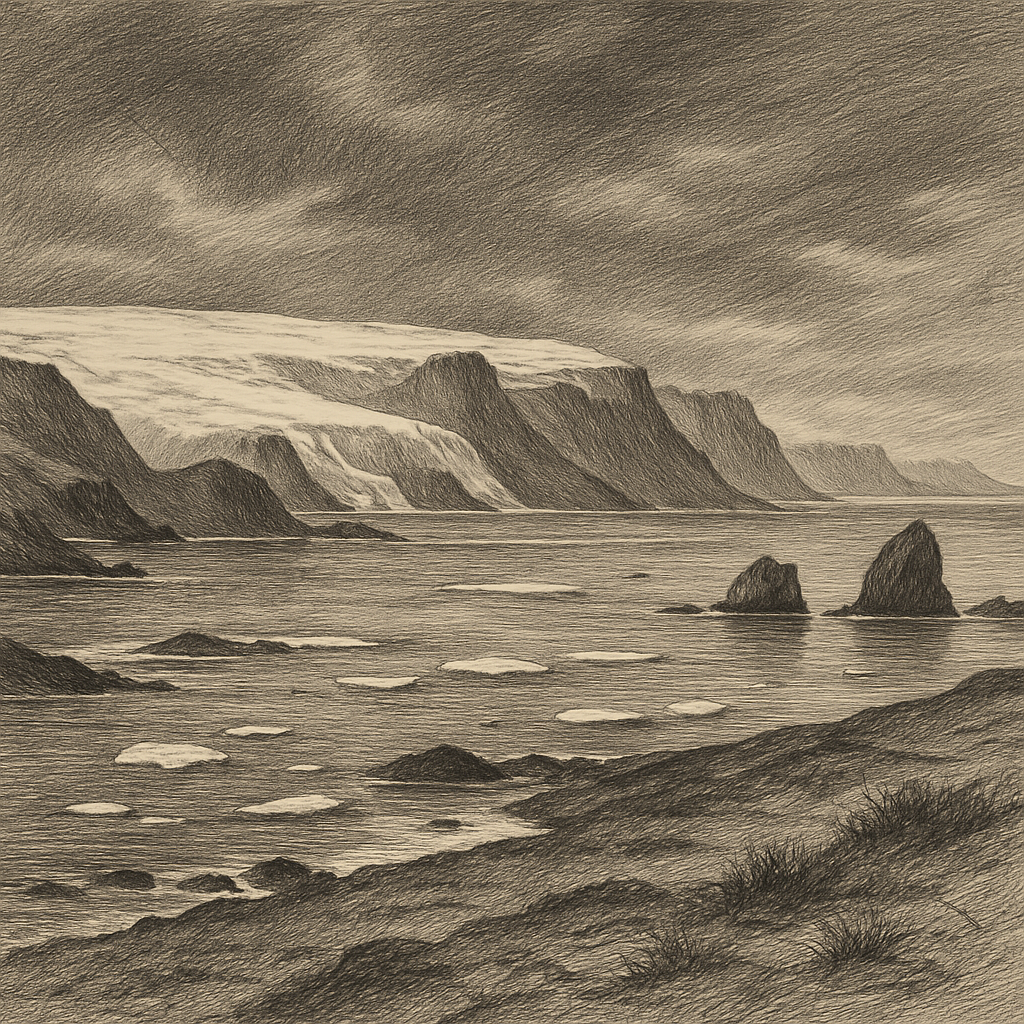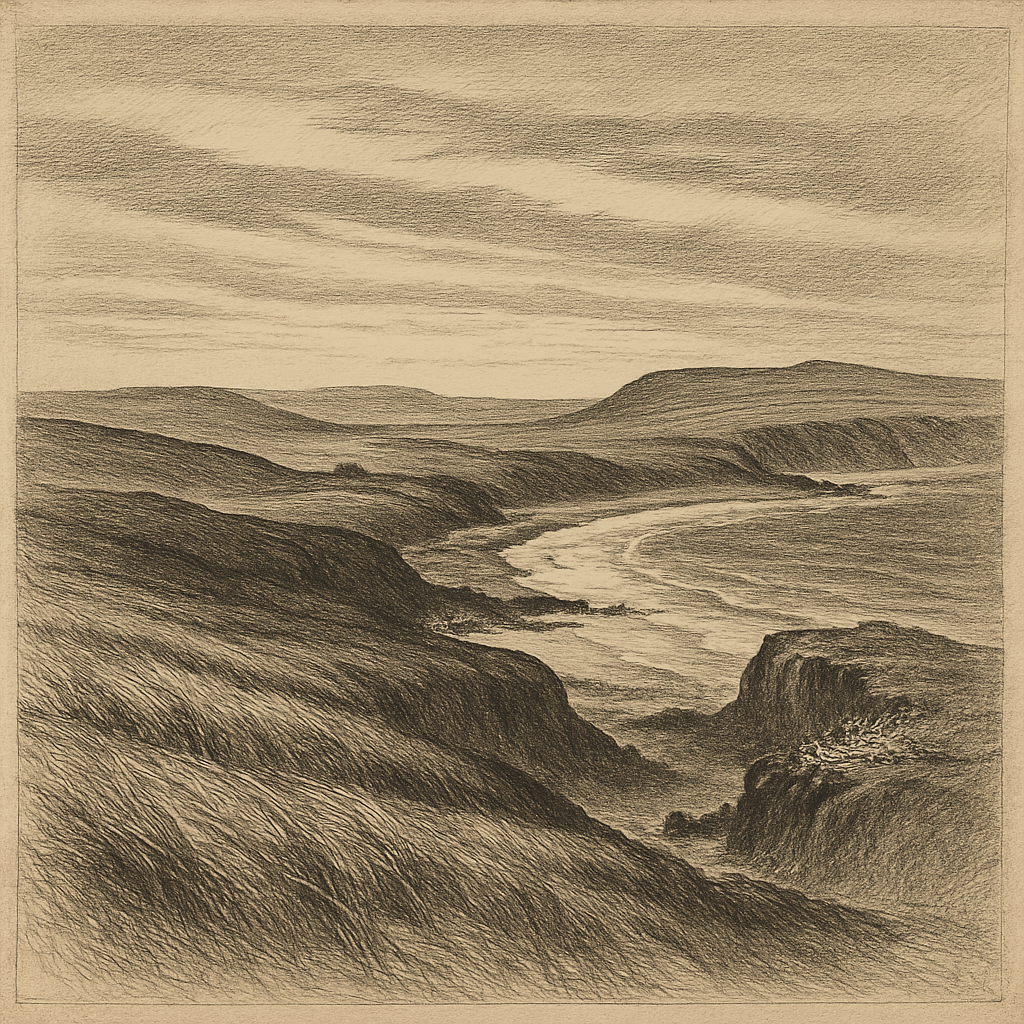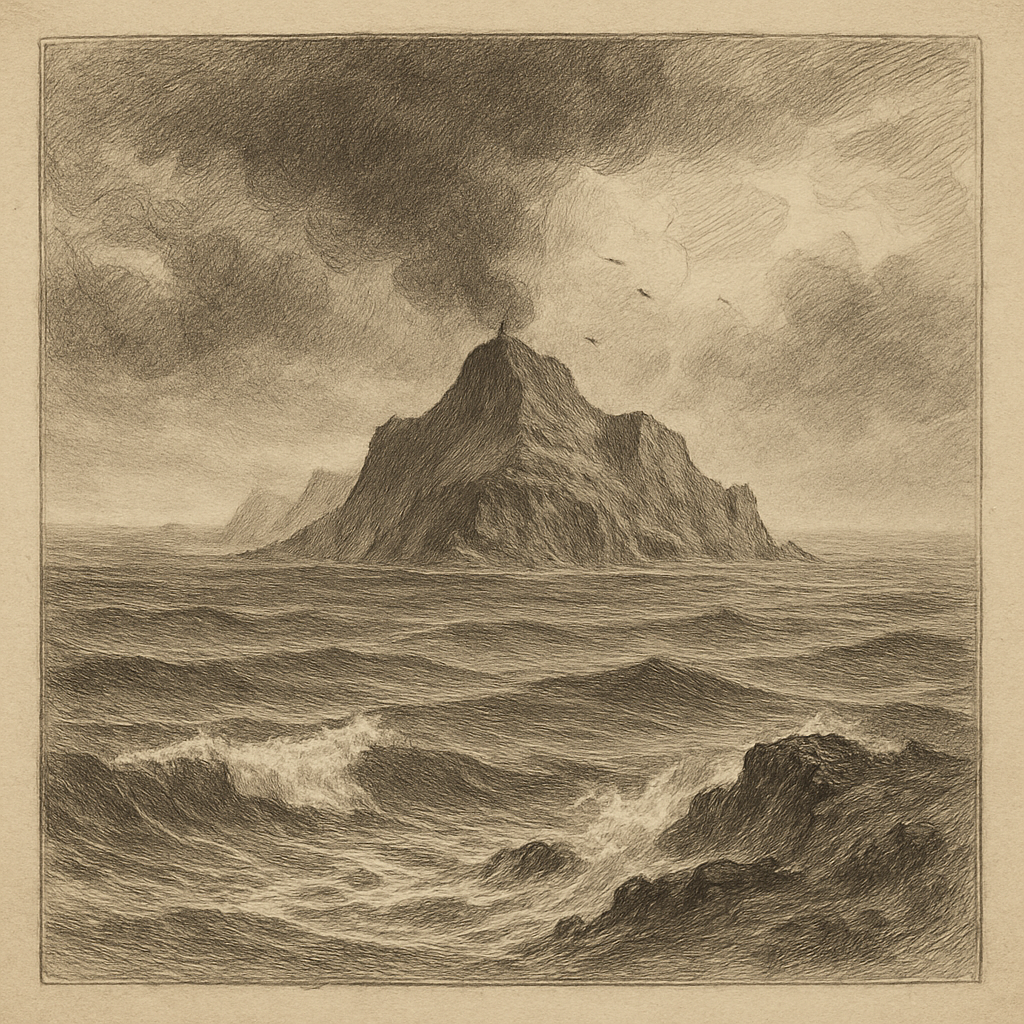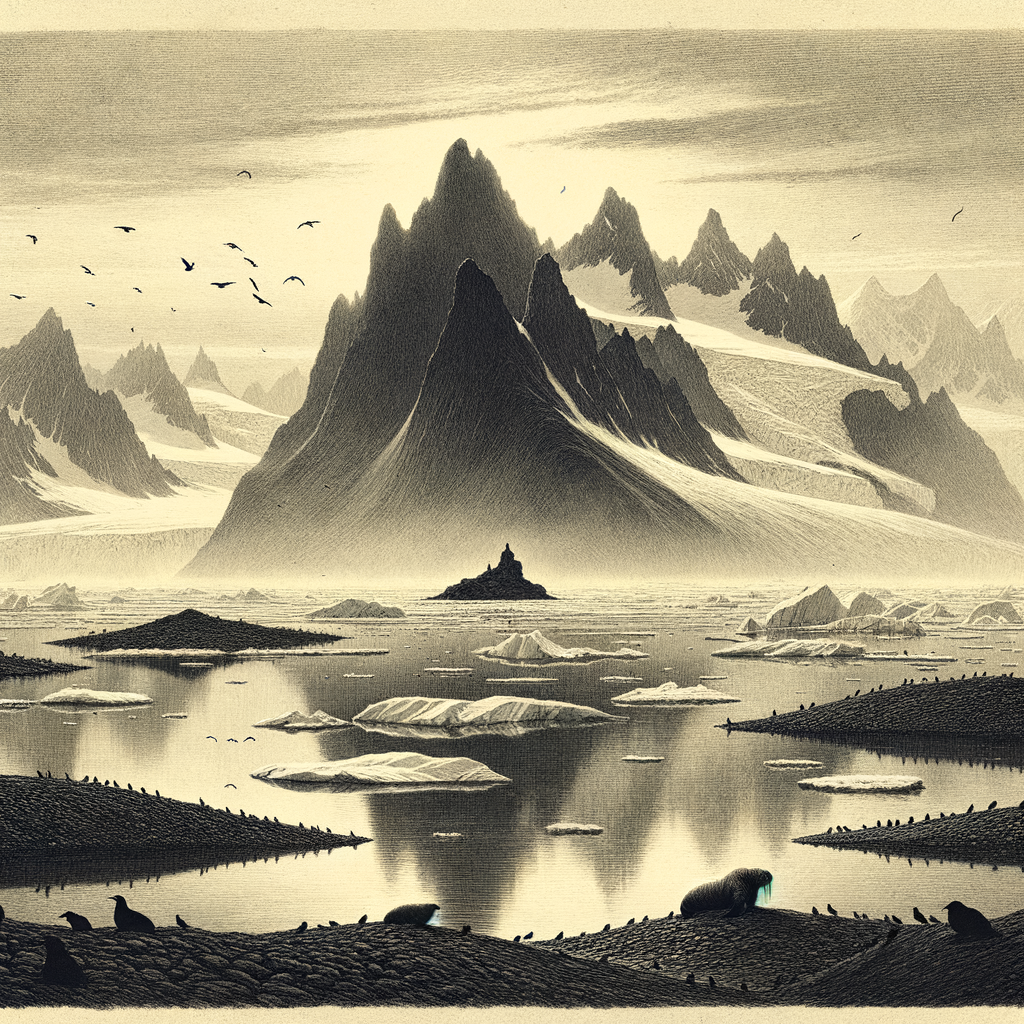
Long before most people ever saw it, sailors argued over whether it was there at all. In the high Arctic between the East Siberian and Chukchi seas, north of Chukotka and well above the Siberian mainland, Wrangel Island spent decades as a rumor on the horizon: a dark line glimpsed through weather, then lost again in ice haze. Today its outline is certain enough on any globe, yet certainty does little to soften the impression it gives. This is a large, mountainous island, roughly 7,600 square kilometers in area, ringed by severe coasts, crossed by valleys and rivers, and locked for much of the year in sea ice. Even in summer, when the snow withdraws from lower ground and tundra plants briefly flare into bloom, the place keeps the poise of something not entirely surrendered to the human world.
Its position helps explain the island’s strange authority. It lies near the seam between Asia and North America, close to the 180th meridian, in a zone where weather, currents, and drifting ice have always made approach uncertain. The interior rises into a central mountain system, with peaks over 1,000 meters, while broad tundra lowlands spread outward toward lagoons, gravel bars, and beaches where the Arctic Ocean presses in from two sides. During the Pleistocene, this terrain formed part of Beringia, the great unglaciated landmass that once connected continents. That deep history still shows in the island’s biology. Unlike many Arctic landscapes scraped clean by continental ice sheets, this one preserved a remarkably rich flora; botanists have recorded an unusually high diversity of Arctic plant species there, one reason UNESCO later recognized its global importance.
A place first pursued by absence
The island bears the name of Ferdinand von Wrangel, the Baltic German officer in Russian service who, in the 1820s, searched for land north of Siberia after hearing Chukchi reports of it. He never reached it. The first confirmed sighting is usually credited to the British whaler Thomas Long in 1867, who named it for Wrangel, though the American captain Calvin L. Hooper had reported land there earlier in the same period. In 1881 the United States Revenue Cutter Thomas Corwin, commanded by Calvin L. Hooper, landed on the island while searching for the missing vessel Jeannette. Among those aboard was the naturalist John Muir, who left vivid descriptions of an austere coast crowded with birds and surf.
The island’s human story never settled into permanence. In 1914, survivors from the Canadian Arctic Expedition’s ship Karluk reached it after a disastrous drift in pack ice; several died before rescue. In 1921, a small party sponsored by Vilhjalmur Stefansson attempted to establish a claim for Canada. The effort ended in tragedy: four men died, and only Ada Blackjack, an Iñupiat seamstress from Alaska, survived until rescue in 1923. Another colonization attempt followed, then Soviet control was firmly asserted. Small settlements and weather stations existed in the Soviet period, but they were never the beginning of ordinary habitation. They were outposts against distance. The last settlement, Ushakovskoye, was abandoned in the late twentieth century. What remains now is administration, research, and strict protection, not village life.
The old world under Arctic light
Much of the island’s fascination lies in the way epochs overlap there. It is famous as one of the last refuges of the woolly mammoth, Mammuthus primigenius. Dwarf mammoths survived on the island until about 4,000 years ago, thousands of years after mainland populations vanished. The fact seems almost theatrical, but it is one of the best-established paleontological revelations of the Arctic: while Bronze Age societies were already rising elsewhere, mammoths still moved across this tundra.
The living fauna is no less striking. The island and surrounding waters support one of the world’s most important polar bear denning areas, making it a critical nursery for Ursus maritimus. Pacific walrus, Odobenus rosmarus divergens, gather in huge coastal haul-outs. Snow geese, seabirds, Arctic foxes, and lemmings shape the seasonal pulse of the land, and the seas nearby are used by gray whales and bowhead whales. Reindeer and musk oxen are present too, introduced in the Soviet era, adding another layer to an ecology that is both ancient and managed.
In 1976 the area was designated a zapovednik, a strict nature reserve, and in 2004 UNESCO inscribed the Natural System of Wrangel Island Reserve as a World Heritage Site. The designation was not a decorative honor. It recognized a place of exceptional ecological intactness: a complete Arctic island system with tundra, mountains, freshwater, marine habitats, and a concentration of biodiversity rare at such latitude. For scientists, it is a benchmark. For everyone else, it is a reminder that remoteness can preserve not just scenery, but processes older than memory.
What remains when the weather clears
No famous mythology clings to the island in the way it does to some northern coasts, but it has long carried the aura that drifting ice gives to any land intermittently seen and seldom reached. Explorers came looking for certainty and often found only delay, wreckage, or the strict arithmetic of supplies. Even now access is tightly controlled, and most people who know the island know it through expedition logs, natural history papers, or the hard, luminous photographs made during the brief Arctic summer.
What those records suggest is not emptiness, but concentration. Here, histories that elsewhere lie far apart are pressed close together: Indigenous reports dismissed and later vindicated; imperial searches; survival stories balanced on rifle cartridges and seal meat; mammoths surviving into the human present; polar bears denning in numbers that make the island matter to the future tense. The coasts still meet the same moving ice that delayed wooden ships and misled navigators. The mountains still rise behind beaches where walrus crowd by the thousands. Few islands seem so decisively beyond casual possession. It stands not as a relic or a curiosity, but as a hard piece of the Arctic still operating by its own terms.