Hallig Habel is one of the smallest and most remote halligen — low-lying islands — in the North Frisian archipelago off the coast of northern Germany. Despite its miniature size and sparse population, Hallig Habel boasts a rich natural and cultural history, offering a rare glimpse into a unique way of life that has persisted for centuries amid the ever-changing tides of the Wadden Sea.
Location and Geography
Hallig Habel is situated in the Schleswig-Holstein Wadden Sea National Park, part of the UNESCO World Heritage-listed Wadden Sea. It lies to the west of the larger island of Pellworm and northeast of Hallig Hooge.
Covering an area of just 0.07 square kilometers (7 hectares), Hallig Habel is among the smallest of the ten inhabited and uninhabited halligen that dot the mudflats of the German North Sea coast. Unlike other islands, halligen are not protected by dikes.
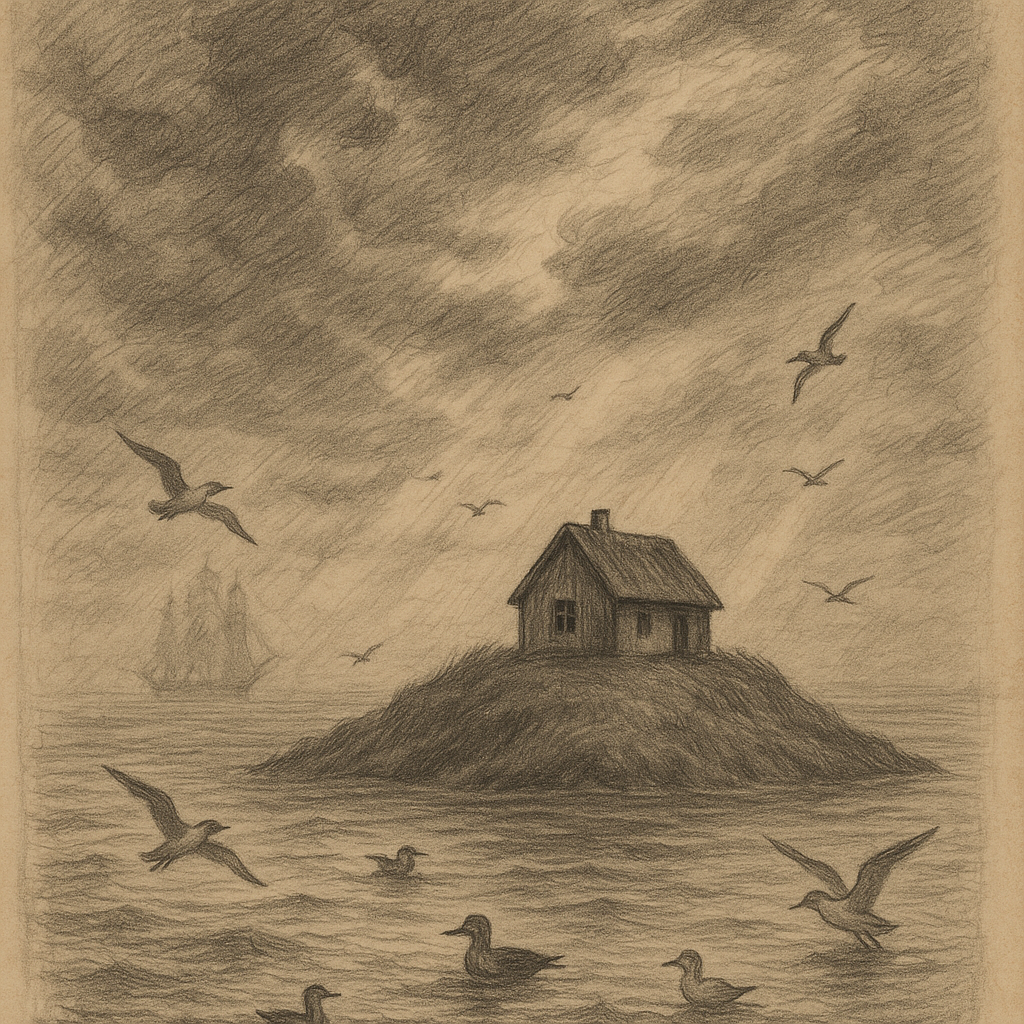
Instead, they rely on man-made dwelling mounds, known as warften, to stay above sea level during high tides and storm surges. Hallig Habel has only one such warft and is often partially or completely submerged during storm tides, temporarily disappearing beneath the sea.
This rhythmic flooding has shaped both the land and the lifestyle of those who live there. The constant interplay between land and sea creates a dynamic environment that changes with every tide.
History and Human Presence
Documented mentions of Hallig Habel date back to centuries ago, although precise historical accounts are sparse due to the island’s insignificance in major political or economic affairs. For most of its existence, Hallig Habel has been privately owned.
Presently, it is privately held and managed for agricultural and conservation purposes. Hallig Habel is permanently inhabited by just one or two people who are responsible for maintaining the island and its environment.
Due to its status as private property, casual visitation is restricted. However, limited guided visits are occasionally allowed for educational or ecological purposes — a rare opportunity to step onto one of the last places where traditional hallig life survives.
Flora, Fauna, and Environment
Hallig Habel is a treasure trove for ornithologists and nature enthusiasts. It serves as a crucial breeding and resting site for various seabird species, including oystercatchers, redshanks, Arctic terns, and Brent geese.
During migration seasons, thousands of birds stop here to feed on the nutrient-rich mudflats surrounding the island. The sight of these massive flocks is nothing short of spectacular.
The vegetation on Hallig Habel adapts to the harsh maritime conditions, with salt-tolerant species such as samphire, sea couch grass, and sea lavender dominating the landscape. The constant interplay of saltwater inundation and sun exposure has created unique microhabitats that support a delicate yet resilient ecosystem.
Due to its ecological importance, Hallig Habel stands under special protection. It forms part of the important Ramsar wetland conservation area, highlighting its role in global biodiversity efforts.
Interesting Facts about Hallig Habel
Despite its size, Hallig Habel is home to numerous intriguing details. It is the smallest permanently inhabited island in Germany, though “inhabited” refers to just a single household.
Hallig Habel has no roads, no electricity grid, and no public utilities — creating a zero-emission, off-the-grid lifestyle. This makes it one of the most environmentally sustainable inhabited places in Europe.
The island is accessible only by boat, and only when the tides permit. In winter months, it can be isolated for weeks, with the inhabitants completely cut off from the mainland.
The periodic flooding of the land is known as “Landunter” and is a natural phenomenon unique to the halligen — turning the warft into a lonely island in the sea. This dramatic event can occur dozens of times per year.
The island plays a critical role in bird conservation, leading to its designation as a core zone within the Schleswig-Holstein Wadden Sea National Park. This status ensures its protection for future generations.
Legends and Folklore
Given its isolation and the dramatic natural forces that shape its environment, it’s no surprise that legends have grown around Hallig Habel. One local tale speaks of a ghost ship — “Der Schwarze Eider” — that wanders silently across the Wadden Sea during foggy nights.
Supposedly crewed by lost sailors from a centuries-old storm, the ship is said to appear near Hallig Habel before vanishing just as suddenly. Fishermen claim to have seen its ghostly silhouette on particularly misty evenings.
Another folk legend tells of an old bell buried beneath the marsh soil, a remnant of a chapel said to have stood on the island during medieval times. On quiet nights, especially before a storm, locals on nearby islands claim to hear mysterious ringing coming across the water — the submerged bell of Hallig Habel, warning of the coming tide.
Although no archaeological evidence confirms such tales, they are deeply embedded in the oral traditions of the North Frisian coast, lending an aura of mystery to the island.
Visiting Hallig Habel
Visiting Hallig Habel is not for the casual tourist. Due to its status as privately owned and environmentally protected land, permits are required, and access often depends on boat availability, tidal schedules, and weather conditions.
Most visitors come as part of ornithological research groups or conservation delegations. The journey itself requires careful planning and coordination with the island’s inhabitants.
The experience, however, is unforgettable: standing atop a solitary mound surrounded by the vast Wadden Sea, accompanied only by seabirds and the wind, one can sense the enduring spirit of the halligen and the rhythms of nature that continue to shape them.
Conclusion
Hallig Habel may be diminutive in size, but its ecological, historical, and cultural significance far outweighs its geographic footprint. As one of the last places where traditional hallig life continues, it reminds us of the delicate balance between human existence and the natural world.
In a time of rising seas and changing climates, islands like Hallig Habel stand as both relics of the past and beacons for a more harmonious future. They demonstrate that sustainable living is not only possible but has been practiced for centuries in some of the world’s most challenging environments.