## Hunga Tonga–Hunga Haʻapai: The Vanishing Volcanic Island of the South Pacific
Nestled in the heart of the South Pacific between the islands of Tonga lies the volcanic island of Hunga Tonga–Hunga Haʻapai. This remote and short-lived island is one of the most extraordinary natural formations in recent history, capturing the attention of geologists, environmentalists, and adventurers alike. Formed by volcanic activity and dramatically altered by a massive eruption in 2022, Hunga Tonga–Hunga Haʻapai remains a symbol of our planet’s dynamic geological processes.
## Birth from the Sea: Geological Origins
Hunga Tonga–Hunga Haʻapai emerged in late December 2014 following a powerful undersea volcanic eruption. The eruption occurred along the Tonga-Kermadec volcanic arc, a highly active subduction zone where the Pacific Plate is being forced beneath the Indo-Australian Plate. This collision generates seismic and volcanic activity throughout the region.
Originally, two small uninhabited islands—Hunga Tonga and Hunga Haʻapai—were separated by about 2 km of ocean. The eruption filled the gap with new volcanic material, fusing the two landmasses into a single substantial island. The newly created landform rose approximately 120 meters above sea level and reached a length of more than 1.8 kilometers, forming a crescent-shaped island with a central crater lake.
The island’s formation captured international scientific interest, as it was one of the few modern examples of a volcanic island forming above water and persisting long enough to be studied.
## A Natural Laboratory for Geological and Biological Studies
Hunga Tonga–Hunga Haʻapai offered scientists a rare chance to observe the rapid development of ecosystems on new land. NASA and other institutions monitored the island through satellite imagery while occasional expeditions collected soil and biological samples.
Geologists were particularly interested in studying how oceanic volcanic materials consolidate and resist erosion from waves, tides, and rainfall. Though most such island formations wash away within months, Hunga Tonga–Hunga Haʻapai defied expectations by surviving for several years.
Biologists observed the initial colonization of ash-covered surfaces by plants and seabirds. When surveyed, it was found that barn owls, shrubs, and even nesting sooty terns had come to inhabit the island. These developments underscored how life finds a way to establish itself even in the most newly formed and seemingly uninhabitable environments.
## The Cataclysm of 2022
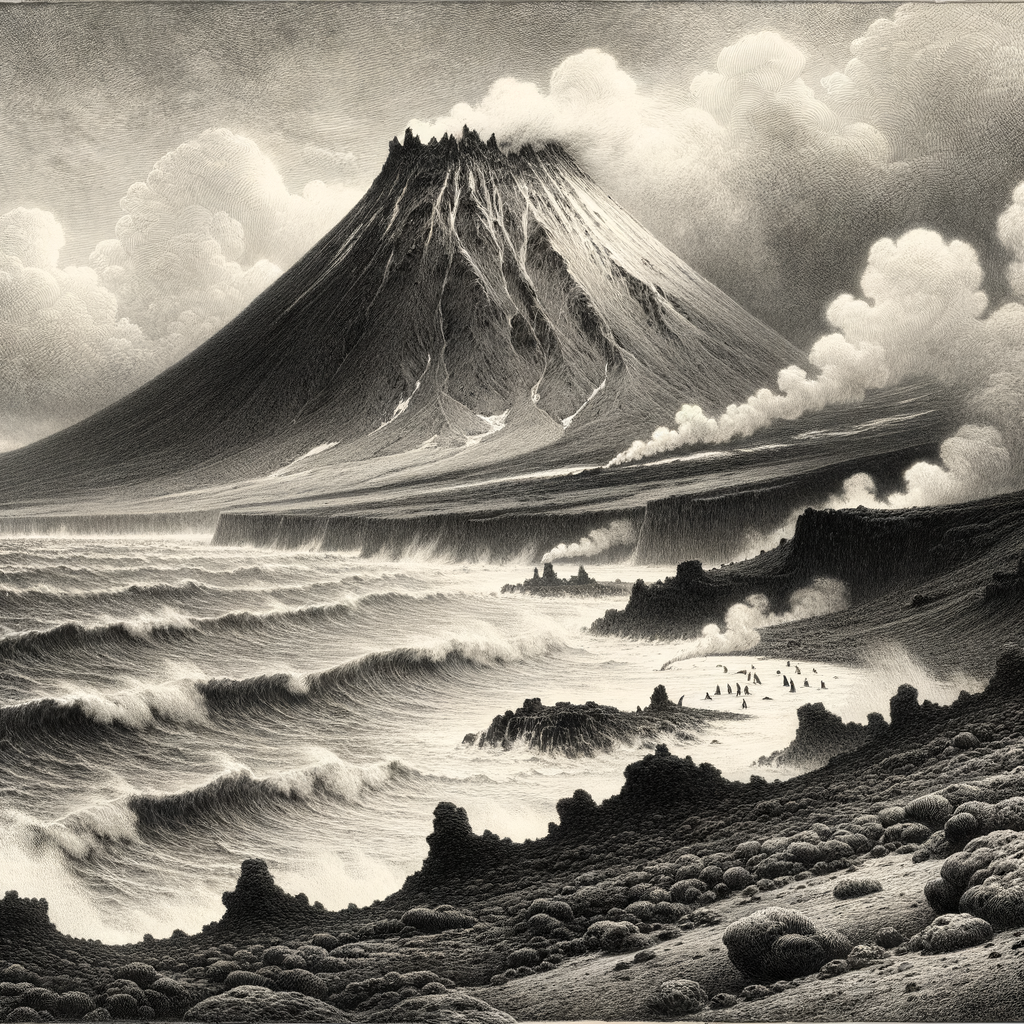
On January 15, 2022, Hunga Tonga–Hunga Haʻapai was the site of one of the most powerful volcanic eruptions of the 21st century. The undersea volcano erupted with such intensity that it sent ash 58 kilometers into the stratosphere, triggered tsunamis across the Pacific Ocean, and generated atmospheric shockwaves observed around the world.
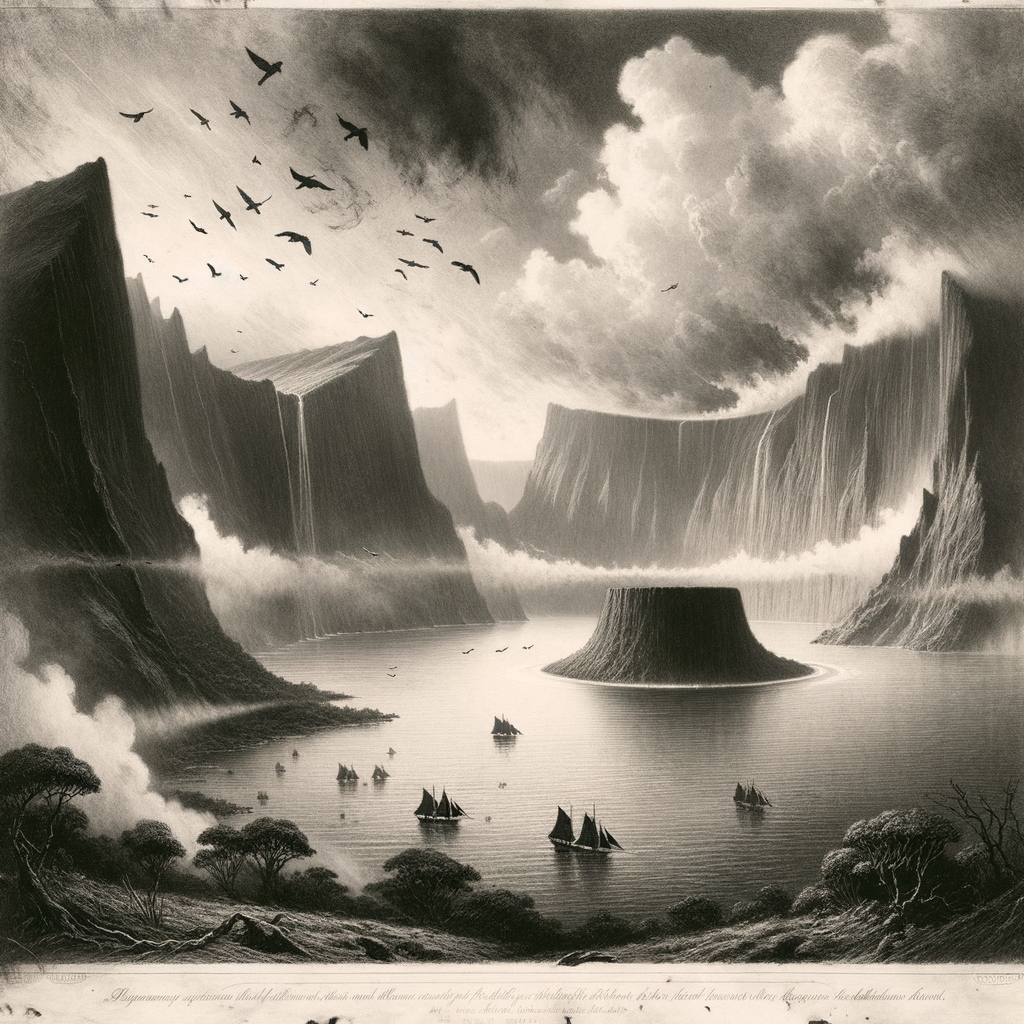
The eruption was so forceful that it obliterated most of the island. Satellite imagery before and after the event showed dramatic changes: where once stood the fused mass of land between Hunga Tonga and Hunga Haʻapai, only remnants of the original islands flanked by a gaping caldera remained. Scientists believe the eruption was comparable in magnitude to the 1991 eruption of Mount Pinatubo in the Philippines.
Aside from scientific implications, the eruption caused widespread damage in Tonga, cutting off communications and producing a humanitarian crisis that required international aid.
## Intriguing Facts and Natural Phenomena
Hunga Tonga–Hunga Haʻapai stands as a testament to the raw power and unpredictable nature of Earth’s geology. Here are some fascinating facts about the island and its dramatic lifecycle:
– The 2022 eruption released energy equivalent to hundreds of Hiroshima-type atomic bombs.
– The island’s formation was the first observed above-sea emergence of a new landmass since Surtsey in Iceland in 1963.
– Acoustic signals from the blast were detected as far away as the United Kingdom and Alaska.
– The eruption altered global atmospheric pressure and caused measurable disturbances in Earth’s ionosphere.
– It provided invaluable data to NASA and NOAA concerning how volcanic events affect weather and satellite instruments.
– The freshwater crater lake on the island survived for several years after formation despite its proximity to the salty sea.
Even in destruction, Hunga Tonga–Hunga Haʻapai contributed significant insight into how volcanic islands evolve, disappear, and impact global systems.
## Legends of Fire and Sea: Local Lore
Long before satellite images and scientific expeditions, the people of Tonga passed down oral histories and legends surrounding this volatile part of the sea. According to traditional belief, the area encompassing Hunga Tonga and Hunga Haʻapai was sacred and associated with divine anger and powerful sea spirits.
One such legend tells of a sea god known as Tangaloa, who created the islands with thunder and flame to assert dominance over rival deities vying for control of the ocean. The merging of the two ancient islands was interpreted by some local storytellers as a rekindling of an ancient bond temporarily severed by supernatural forces.
Locals also recount cautionary tales about canoes approaching the unstable islands, only to vanish in smoke and boiling seas—fables that now seem prescient given the caldera’s catastrophic eruption in 2022. These myths reflect a deep cultural awareness of the region’s volatility, encoded in the oral traditions of Tongan heritage.
## Legacy and Continuing Relevance
Though now significantly altered and mostly submerged, Hunga Tonga–Hunga Haʻapai continues to serve as an invaluable reference point for understanding the interplay between volcanic processes, ecosystem development, and natural hazards. It showcased our planet’s ability to create and destroy land in short, dramatic intervals—and reminded us of the delicate balance between life and geology in remote oceanic regions.
Future expeditions may one day document either a new island emerging from the same caldera or the long-term ecological recovery surrounding the remaining fragments. For now, Hunga Tonga–Hunga Haʻapai occupies a unique place in geological history and in both the scientific and cultural imagination of a world constantly reshaped by the forces beneath our feet.