Introduction
Kanton Island, also known as Canton Island, is the largest island in the Phoenix Islands group in the central Pacific Ocean. Situated roughly halfway between Hawaii and Fiji, Kanton Island is one of the most remote inhabited islands on Earth. It is part of the Republic of Kiribati and holds both geographical and historical significance, attracting interest for its unique past, ecological importance, and isolated location.
Geographical Setting
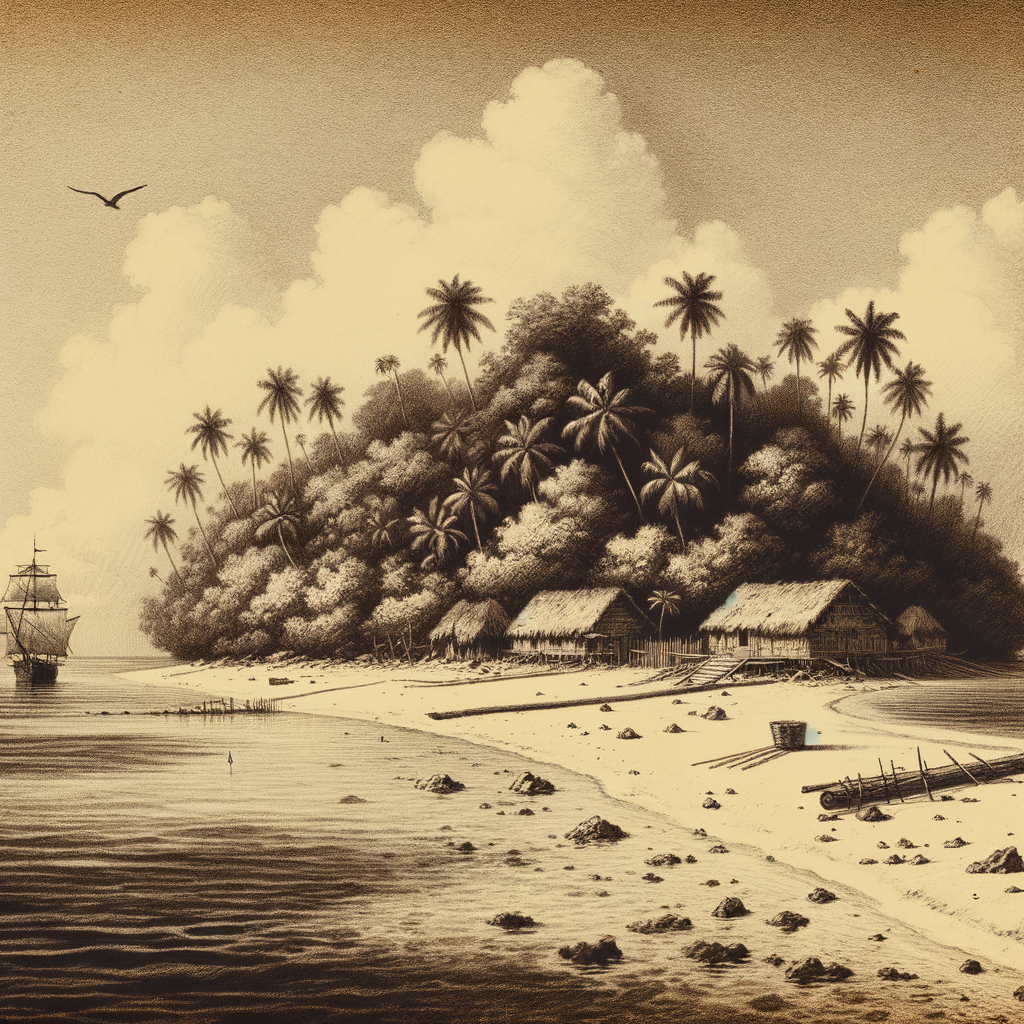
Kanton Island lies near the equator at approximately 2°50′S latitude and 171°43′W longitude. It is part of the Phoenix Islands, a cluster of atolls and coral islands scattered across the central Pacific. Kanton is an elongated atoll, approximately 14.5 km long and 3.5 km wide, with a land area of about 9.2 square kilometers. The central lagoon, encircled by a narrow coral strip, offers a natural harbor and frames the island’s shallow ecosystem.
Due to its location, Kanton Island resides in a deep marine region of the Pacific where tectonic activity is minimal compared to the Pacific Ring of Fire. Unlike neighboring island groups with volcanic origin, Kanton formed through coral atoll development atop ancient submerged seamounts.
A Brief History
The island first came to international attention in the 19th century, originally charted by European explorers. Its name comes from the American whaling ship “Canton,” which ran aground on the atoll in 1854. Afterward, various nations vied for control due to its strategic location. The United Kingdom and the United States both claimed sovereignty, finally resolving the dispute in 1939 when the two nations agreed to administer the island jointly.
During World War II, the U.S. Navy constructed an airstrip and used Kanton as a stopover point for aircraft crossing the Pacific. The strategic base played a valuable logistical role in military operations and was later used in the early years of commercial trans-Pacific aviation. Pan Am and other airlines used it as a refueling station from the 1940s to the 1960s. After these services ceased, the island’s importance waned, and its population declined steadily.
Climate and Environment
Kanton Island experiences a hot, equatorial climate tempered slightly by the Pacific breeze. Average temperatures range from 26°C to 32°C, and annual rainfall varies, generally between 1,000 and 2,000 mm. The island has a dry season from May to October and a wetter season from November to April.
Despite its limited vegetation, the island supports a variety of species thanks to its lagoon and surrounding coral reefs. It provides a vital nesting site for seabirds and is an important habitat for marine life, including sea turtles, reef sharks, and tropical fish. Due to its ecological significance, Kanton is part of the Phoenix Islands Protected Area (PIPA)—one of the largest marine conservation zones in the world, protected under UNESCO as a World Heritage Site.
Current Human Presence
Today, Kanton Island is sparsely inhabited, with a small population of fewer than 50 people. The residents are typically part of a rotating group from Kiribati, tasked with monitoring environmental conditions and maintaining a presence as a claim of national sovereignty. There is no regular transport to and from the island, and the inhabitants live in modest, self-sustained conditions, relying on rainwater collection, fishing, and limited supply runs for survival.
Interesting Facts
– Kanton Island was once considered as a potential satellite tracking station and emergency landing site for space missions, due to its flat terrain and isolation.
– The airstrip constructed during World War II still exists and, although unused commercially, remains one of the defining features of the island.
– In the early days of long-range aviation, it was one of the few sites along the route for trans-Pacific flights, serving as a key stopover between Australia, Hawaii, and the United States.
– In 1979, Kanton Island played host to a limited solar eclipse expedition and has since attracted occasional scientific teams for its pristine ecological conditions.
Legends and Local Lore
Despite its remote location and sparse indigenous population, Kanton has its share of enduring legends. Local lore speaks of ancestral spirits who dwell in the lagoon and guard the island’s isolated beauty. Fishers are said to occasionally witness mysterious lights beneath the waves—interpreted as the guiding presence of ancient protectors. There are also tales passed among Kiribati elders that speak of distant ocean voyagers whose canoes never returned after entering Kanton’s lagoon, claimed by the island’s spiritual keepers.
Another legend tells of a “singing reef.” On certain calm days, inhabitants have reported hearing humming or low-toned singing noises emerging from the reef system surrounding the lagoon. While some speculate it could be caused by water movement or marine animals, others regard it as the voice of the island itself—a gentle reminder of its age-old guardianship over the sea.
Preservation and Access
Because of its fragile ecosystem and cultural significance, travel to Kanton Island is strictly regulated. Visitors must secure special permits from the Kiribati government and demonstrate a clear environmental or scientific purpose. Conservation groups and researchers are among the few who have managed to visit in recent decades.
Efforts are ongoing to protect Kanton Island from the environmental degradation that has affected many Pacific islands. These include initiatives to prevent overfishing, manage plastic waste, and preserve native species. The inclusion of Kanton within the Phoenix Islands Protected Area actively supports these goals, making it a beacon of marine conservation in a time of rising global concerns about ocean health.
Conclusion
Kanton Island stands as a symbol of Earth’s isolation, history, and resilience. Its story, ranging from wartime runways to whispered legends of spirits in the sea, encapsulates the magical allure of remote islands across the Pacific. As ecological priorities grow in global importance, Kanton represents both a natural treasure and a challenge to the modern world—how to coexist with fragile environments and preserve them for future generations.