At the edge of the Southern Ocean
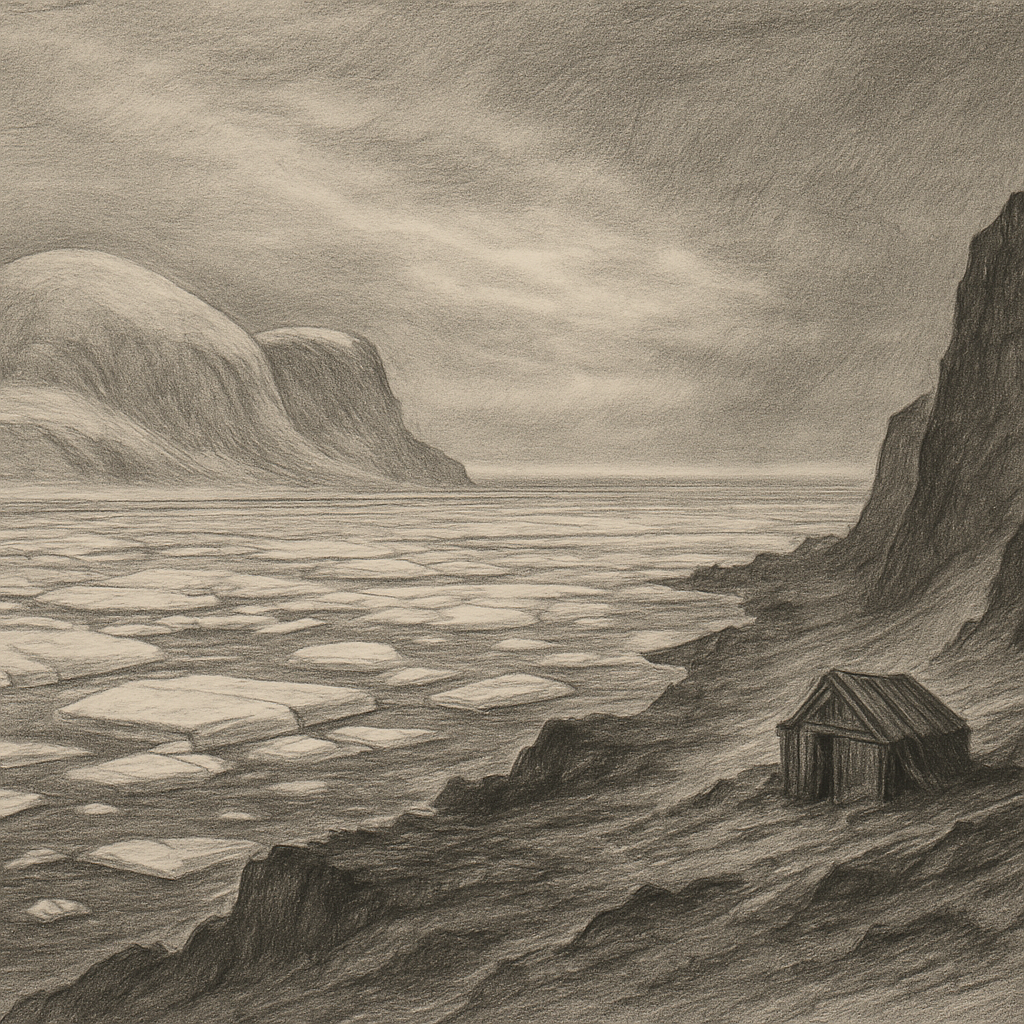
There are islands that seem merely far away, and then there are places that appear to have slipped loose from the ordinary map of the world. Kerguelen Island lies in the southern Indian Ocean, thousands of kilometers from the nearest continental shore, in a belt of wind and water sailors once approached with dread. The first impression is not tropical isolation but something harsher and more unnerving: long, dark ridges rising out of a steel-colored sea, cloud dragging over volcanic highlands, bays cut deep into the land like old wounds. Even in photographs it has the look of a place weather is still shaping.
This is one of the largest islands in the French Southern and Antarctic Lands, yet it feels less like a single island than a broken world. Its coastline is immensely indented, divided by fjord-like inlets, peninsulas, and narrow channels, so that the sea seems to have entered the land and stayed there. Mountains, plateaus, and glacial valleys give it a severe anatomy. Much of the landscape was built by volcanic activity; the island is the exposed crest of a vast submarine plateau, and the highest point, Mount Ross, rises above 1,800 meters. There are glaciers, black rock, peat bogs, lakes, and slopes where almost nothing stands upright for long under the force of the westerlies. Trees never took hold. What survives here keeps low.
A land named in hope, remembered for desolation
When the French navigator Yves Joseph de Kerguelen-Trémarec sighted this coast in 1772, he believed he had found part of the great southern continent long imagined by European geographers. The illusion did not last. A return voyage revealed not a fertile new land but a bleak, storm-struck island with no indigenous human population and no easy promise of settlement. In the years that followed, mariners gave it a more telling unofficial name: the Desolation Islands.
The phrase endured because it was accurate. During the late eighteenth and nineteenth centuries, sealers and whalers came for profit, not permanence. They hunted elephant seals and fur seals in brutal numbers, leaving behind rough shelters, graves, and traces of temporary camps in lonely coves. The island entered maritime history as a place of extraction and refuge, a coast where ships might anchor, repair, or wait on weather, but rarely where anyone wanted to remain. There were occasional castaways, scientific visitors, and expeditions, yet no continuous civilian settlement ever grew from the basalt and rain.
Today there is still no ordinary town, no port linked to commercial routes, no resident population in the familiar sense. Human presence is concentrated at the French scientific base of Port-aux-Français, established in the mid-twentieth century, where researchers and support staff rotate through seasons of cold, isolation, and disciplined routine. For everyone else, access is tightly controlled and rare. The island remains what it has long been: inhabited only provisionally, visited by necessity, curiosity, or science.
What lives where almost nothing should
If the terrain seems stripped to essentials, the life it supports is all the more striking. The climate is subantarctic: cool rather than deeply frozen, soaked by frequent rain, often wrapped in mist, and dominated by relentless wind. The absence of trees and the relative mildness of the winters produce a landscape that can look, at a distance, almost unfinished. Up close it is intricately alive. Mosses, lichens, grasses, and cushion plants spread across the ground. Among the island’s most famous botanical oddities is the Kerguelen cabbage, a native plant once valued by sailors for its vitamin C, who ate it in hopes of holding scurvy at bay.
The surrounding waters and coastal margins sustain dense concentrations of seabirds and marine mammals. King penguins gather in colonies of remarkable scale, and albatrosses, petrels, skuas, and other ocean wanderers exploit the immense feeding grounds of the Southern Ocean. Elephant seals haul themselves onto beaches with an air of prehistoric authority. Fur seals, once devastated by hunting, returned after protection. On land, however, the ecological story is more complicated. Introduced animals, especially rabbits and later cats and reindeer in some parts of the archipelago, altered fragile plant communities and bird habitats, providing one more example of how even a place this distant is not beyond human disturbance.
Maritime silence and the island’s reputation
Its eerie reputation does not depend on folklore in the usual sense. There is no rich body of native myth because no native society existed here to create one. Instead, the island accumulated a different kind of legend: the testimony of sailors. In logs, reports, and remembered names, it appears as a place of foul weather, deceptive shelter, and immense loneliness. The old title “Desolation” was not literary flourish. It was practical language from men who knew what an anchorage meant when gales swept unchecked around the globe.
There are stranger footnotes too. In the nineteenth century, a short-lived and unauthorized attempt was made by hunters to claim the island in the name of a private enterprise, an episode so improbable it might sound invented were it not documented. Decades later, this remained, above all, a station of weather, science, and endurance. Radio masts, laboratories, and supply ships replaced try-pots and sealing camps, but the fundamental drama did not change: humans arriving in a place too exposed to belong to them.
The meaning of a place beyond the usual world
What makes this island unforgettable is not any single spectacle. It is the consistency of its mood. Everything here seems pared down to rock, water, wind, and time. The distances are not only geographic but psychological. One can imagine standing on a ridge above a drowned valley, hearing no engine, no traffic, no village dog, only gusts moving through coarse grass and the distant uproar of surf. In an era when almost every coast is tracked, photographed, and folded into networks of use, this remains a place that resists familiarity.
That resistance is its power. It reminds us that some parts of the planet are still governed less by human intention than by weather systems, breeding cycles, ocean currents, and old geology. It is not empty, exactly; it is occupied by other priorities. To look at it is to see how thin the idea of settlement can be, how provisional even science can seem under a low southern sky. The world is full of islands that invite arrival. This one leaves the stronger impression of endurance: a dark, wind-battered land holding its silence in the middle of a cold and enormous sea.