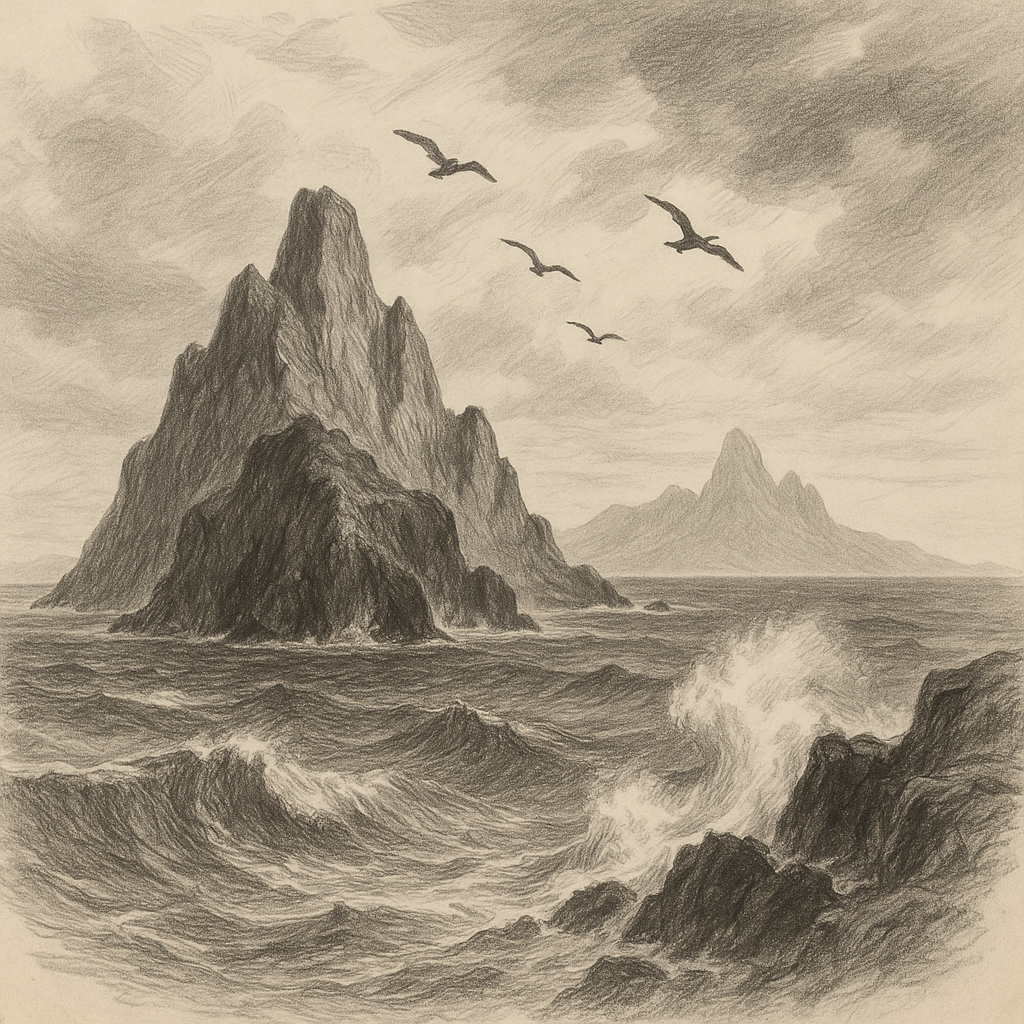
Motu Oa: The Mysterious Island of the Marquesas
Far away in the vast expanse of the South Pacific Ocean lies Motu Oa, one of the lesser-known gems of the Marquesas Islands in French Polynesia. Often overshadowed by its larger and more populated neighbors, Motu Oa remains virtually untouched by modern development. This remote isle, with its rugged cliffs and vibrant seabird populations, offers a glimpse into a primal and unspoiled ecosystem that has inspired both scientific curiosity and traditional folklore.
Location and Geography
Motu Oa is situated approximately 1,400 km northeast of Tahiti and just off the coast of Ua Pou — one of the prominent islands of the Marquesas archipelago. Also known as “Bird Island” due to its thriving seabird colonies, Motu Oa stretches roughly 1.5 kilometers in length and is surrounded by steep cliffs plunging into the cobalt blue waters of the Pacific. As a typical volcanic outcrop in the Marquesas chain, Motu Oa is the exposed tip of an ancient submarine volcano that has long since gone dormant.
Despite its modest size, the island presents a striking natural profile. Its basalt formations, shaped by centuries of erosion, resemble guardians watching over the sea. There are no beaches, and the violent waves crashing against the rocks make landing a difficult task even on calm days. Access is typically restricted to favorable weather conditions and experienced mariners who are familiar with the treacherous coastline.
Climate and Ecosystem
The island experiences a tropical oceanic climate, with temperatures consistently ranging between 24°C and 30°C throughout the year. Rainfall is sporadic but sufficient to support a sparse cover of hardy vegetation adapted to the saline conditions and wind exposure. The lack of freshwater sources makes the island unsuitable for permanent human habitation and restricts the types of flora and fauna that can survive here.
However, what Motu Oa lacks in diversity it makes up for in avian abundance. The island is a crucial nesting site for several species of seabirds, including the red-footed booby, frigatebirds, noddies, and petrels. It has been designated an Important Bird Area (IBA) by BirdLife International due to its significance in maintaining regional bird populations. The seabirds play a vital ecological role, contributing to nutrient cycling across the island’s rocky terrain through guano deposits—fertilizer for the few resilient plants that cling to the stone.
Flora and Fauna
Because of its isolation, Motu Oa boasts interesting examples of ecological adaptation. Most notable are the seabird colonies, which have evolved behavioral traits to coexist within a harsh shared nesting habitat. Rare sightings of land crabs, geckos, and native insect species are occasionally recorded, though no mammals inhabit the island naturally.
Vegetation is limited to grasses, coastal shrubs, and a few pioneer species of ferns and hardy succulents that have taken root among cracks in the volcanic rock. These plants not only provide cover for nesting birds but help prevent soil erosion caused by heavy rainfall events. Marine life surrounding the island is vibrant, with thriving coral reefs and large populations of tropical fish, reef sharks, and occasionally passing manta rays and dolphins.
Interesting Facts about Motu Oa
– The name “Motu Oa” translates loosely as “Long Islet” in Marquesan, a reference to the island’s narrow and elongated shape.
– From certain angles along the coast of Ua Pou, Motu Oa is reminiscent of a reclining human figure—a feature that has contributed to local legends.
– Though uninhabited, the island is sometimes used as a traditional fishing ground by the residents of Ua Pou, who revere it for its rich marine bounty.
– Because of its sensitive nesting zones, landing on Motu Oa is prohibited during the main breeding season from November to May.
– French ornithologists have studied its seabird populations as part of long-term conservation efforts for the Marquesas’ fragile island ecosystems.
Legends and Cultural Significance
Like many locations in the Marquesas, Motu Oa is steeped in myth. According to local legend, the island was created by the mythical demigod Tū Mata’u, who is said to have thrown a spear far out to sea during a moment of frustration. The spear landed and transformed into an island, giving rise to Motu Oa as a solitary guardian fending off sea spirits that threatened Ua Pou.
Another tale speaks of a beautiful bird-woman who transformed into rock after being forsaken by her lover, her body becoming the form of Motu Oa. On moonlit nights, villagers say her song can still be faintly heard carried by the winds across the sea.
These legends, passed down through generations, reflect the deep spiritual relationship between the Marquesan people and their environment. Motu Oa, despite its inaccessibility, continues to hold an enduring place in the cultural landscape of the region.
Conservation and Access
Due to its ecological importance, Motu Oa is part of broader conservation efforts initiated across the Marquesas archipelago. While there are no permanent monitoring stations on the island, periodic expeditions are conducted by biologists and conservationists to study the seabirds, evaluate changes in flora, and ensure that invasive species have not entered the habitat.
Access to the island is heavily restricted. Special permits must be obtained through the Polynesian environmental authorities, and any visits must be aligned with scientific or conservation-based objectives. This level of protection is necessary to safeguard the delicate ecosystems that have developed in isolation for centuries.
A Place Remembered, Not Touched
Motu Oa remains a sanctuary—both physically, as a haven for seabirds, and spiritually, in the hearts of the Marquesan people. Remote, wind-swept, and rugged, the island stands as a testament to nature’s resilience and the enduring connection between people and place. Though few will ever step foot on its craggy shores, the stories of Motu Oa continue to soar on the wings of the birds that call the islet home.