Introduction to Palmyra Island
Palmyra Island, also known as Palmyra Atoll, is a remote and uninhabited coral atoll located in the central Pacific Ocean. Though administered by the United States, it lies roughly halfway between Hawaii and American Samoa, about 1,000 miles south of Honolulu. This isolated cluster of islets and lagoons is a U.S. territory but is not part of any state or incorporated governing structure. Despite its inaccessibility and lack of a permanent population, Palmyra Island is known for its stunning natural beauty, extraordinary biodiversity, and mysterious past.
Geography and Location
Palmyra Atoll is situated in the Northern Line Islands, just south of the equator at approximately 5°53′N 162°05′W. The atoll encompasses about 12 square kilometers of land spread across more than 50 islets surrounding two shallow lagoons. Its total area, including lagoon and reef, is around 277 square kilometers. It lies within a maritime protected part of the U.S. Fish and Wildlife Service, making it one of the few pristine tropical ecosystems under the U.S. flag.
The atoll is part of the Pacific Remote Islands Marine National Monument, one of the largest marine conservation areas in the world. Due to its isolation and absence of human settlement, Palmyra has remained relatively undisturbed and is considered a critical site for marine and climate research.
Geological Origin
Palmyra Island is not of volcanic origin like many of its Pacific counterparts. Instead, it is a classic example of an atoll formed from coral growth on the rim of a submerged volcanic island. Over time, the original volcanic island eroded and sank, leaving behind a ring of coral reefs and sandbars. These reefs have created the protective lagoons and the numerous islets that form today’s Palmyra Atoll.
Climate and Ecology
The atoll experiences a tropical climate with warm temperatures year-round and frequent rainfall, particularly during the wet season from May to November. Its humid environment is ideal for the dense vegetation and rich marine life that thrive here. Frequent rain showers and abundant sunshine make Palmyra a lush, green haven surrounded by turquoise waters.
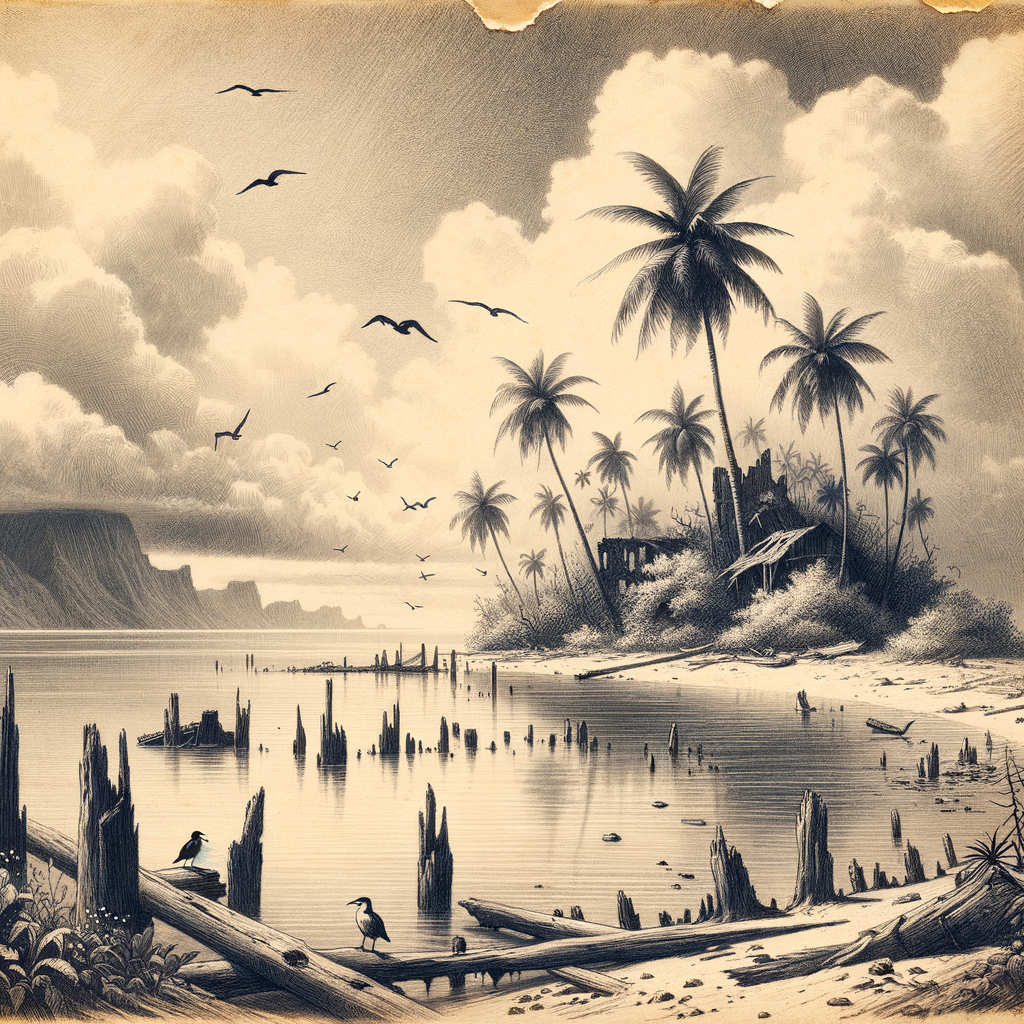
Palmyra supports a variety of seabirds, crabs, and coconut palms, and its lagoons are teeming with reef fish, sharks, and sea turtles. One of its most significant biological roles is as a breeding ground for seabirds, including red-footed boobies, sooty terns, and tropicbirds. It also hosts endangered species such as the hawksbill turtle and provides vital stopover habitat for migratory birds.
Human Activity and Conservation
Palmyra Island has no indigenous human population and has seen only sporadic human activity over the centuries. It was first sighted by American sea captain Edmund Fanning in 1798, but not formally claimed until its annexation by the United States in 1898. During World War II, the atoll served as a military air base, with over 6,000 troops stationed there at its peak.
Today, the island is managed by the United States Fish and Wildlife Service and The Nature Conservancy. It remains uninhabited except for visiting scientists and conservation teams. The island’s lack of urban development allows researchers to study natural processes in an environment largely undisturbed by modern civilization.
Conservationists have undertaken extensive efforts to protect Palmyra’s unique ecology. Invasive species such as black rats, introduced during World War II, were eradicated in a major conservation success in the early 2010s, leading to a dramatic recovery in native bird populations and forest regrowth. Ongoing studies on climate resilience, coral reef health, and restoration ecology make the atoll a valuable living laboratory for scientists around the world.
Interesting Facts About Palmyra Island
Palmyra Island holds a number of distinctions and unique characteristics:
– It is one of only a few territories under the direct jurisdiction of the U.S. Department of the Interior and has a unique political status as an incorporated unorganized territory.
– The island has no time zone and no legal residents; even researchers and conservationists must acquire permits and follow strict environmental protocols.
– Despite its isolation, Palmyra has attracted attention from nonprofits, scientific institutions, and even amateur radio operators who seek rare DXCC contacts due to the island’s rarity on the airwaves.
– It is one of the few atolls in the Northern Hemisphere, and its biodiversity and unspoiled condition make it an international example of tropical marine conservation.
Legends and Mysteries of Palmyra Island
Palmyra Island’s remoteness and untouched nature have long given rise to tales of secrecy, mystery, and danger. Perhaps the most enduring legend concerns the murder of a wealthy couple, Mac and Eleanor Graham, whose disappearance during a sailing trip near Palmyra in 1974 became the subject of books and documentaries. The incident cast a dark aura over the island, leading many to speculate about curses and hidden violence in paradise.
Rumors abound about buried treasure left behind by pirates or perhaps hidden from Japanese forces during World War II. Some adventurers have claimed to feel uneasy or even “watched” when walking on the island. These stories, combined with the island’s isolation and unpredictable weather, have painted it as both a natural Eden and a place of unsolved mysteries.
Such legends have only added to Palmyra’s allure, drawing not just scientists and historians, but also collectors of rare stories and thrill-seekers yearning for a taste of the unknown.
Conclusion
Palmyra Island is a striking example of what the world might look like without human interference — a thriving ecological haven teeming with life and mystery. From its vibrant coral reefs to its towering coconut palms and seabird colonies, the atoll offers a glimpse into a rare, pristine ecosystem. Its storied past, filled with naval history, unsolved crimes, and tropical lore, adds depth to its natural beauty.
Although access to Palmyra is restricted, the importance of its preservation serves as a reminder of the delicate balance that exists between nature and human activity. Whether considered through the lens of science, history, or mystery, Palmyra Island remains one of the Pacific’s most intriguing secret corners.