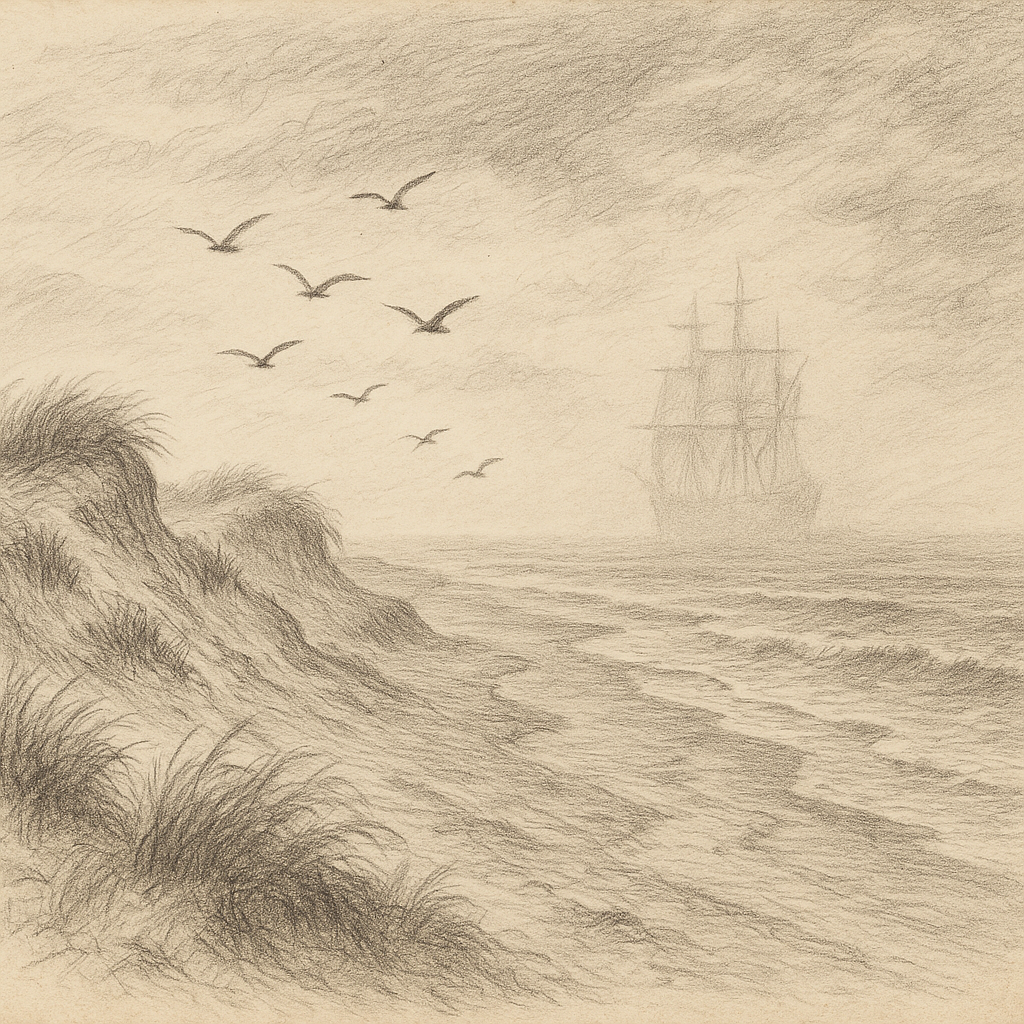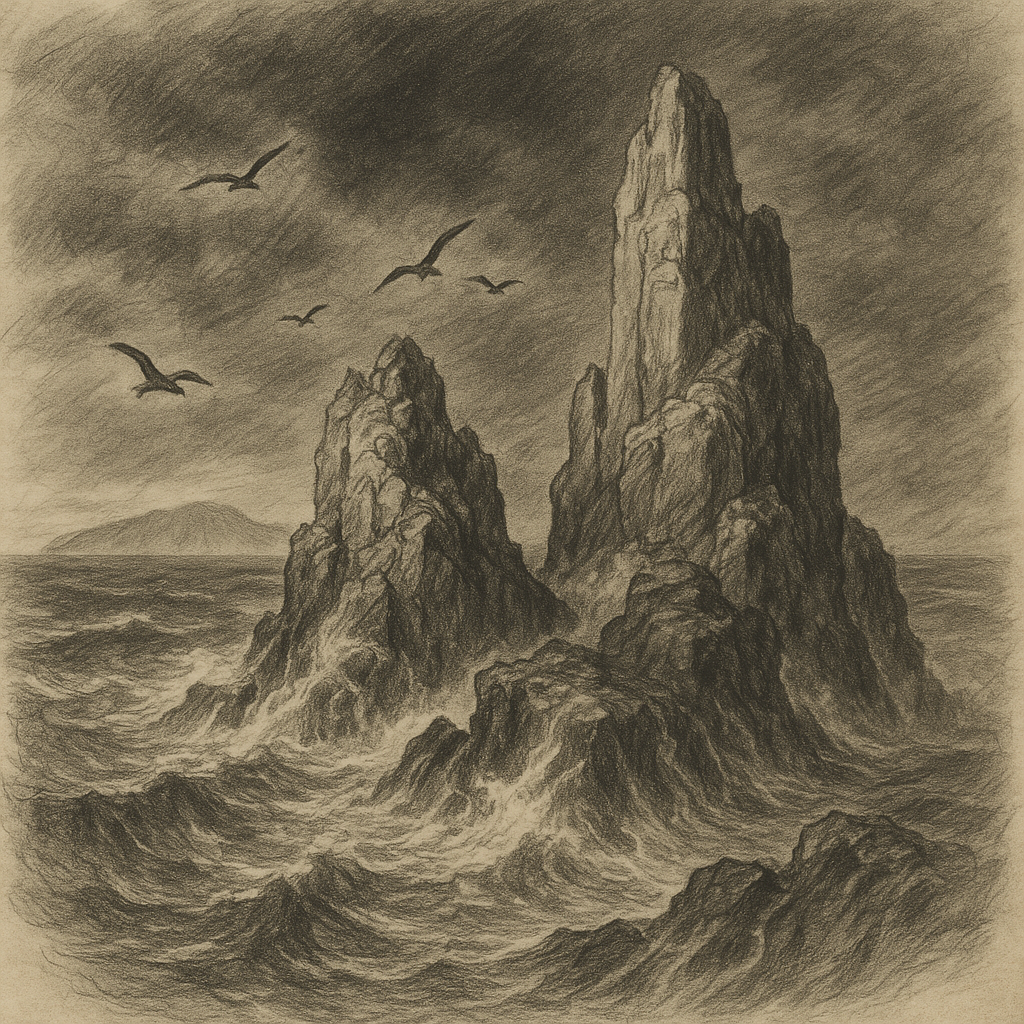
A distant sighting of land can begin with the difficulty of separating something solid from the moving sea around it. The Saint Peter and Saint Paul Archipelago (Arquipélago de São Pedro e São Paulo) invites that patient attention in the Atlantic Ocean, where a small group of islets interrupts the water. For a reader drawn to old voyages, the prospect needs no imagined vessel or account of a landing. There is enough in the thought of looking ahead across the sea and finding ground, then trying to distinguish its separate outlines. At such a distance, even a little exposed rock gives the eye somewhere to rest.
Brazil administers this archipelago, 1,010 km off its northeastern mainland coast, with an area of 0.01 km². The disproportion between that reach of water and that small extent of ground is part of its attraction. Another part lies in what a closer view offers: shallow reefs and water held in hollows among the islets. A place almost reduced to a point on a map contains surfaces worth lingering over, close enough in thought to examine through the water.
The sea around the islets
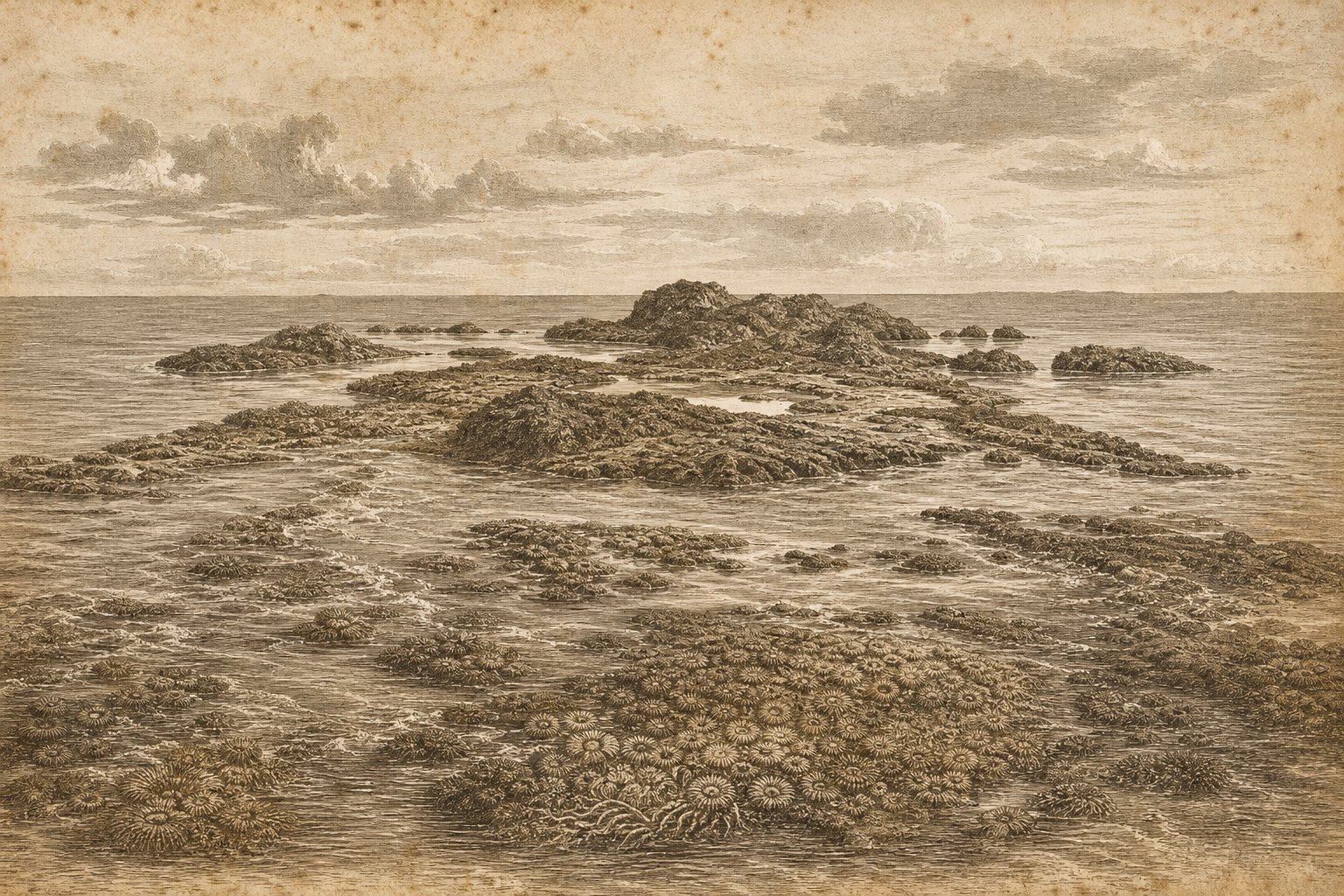
From offshore, the exposed ground would be only part of the place ahead. Shallow reefs continue the scene beneath the surface, where moving water can make the bottom difficult to distinguish. The outline is incomplete. Looking only for land would leave much of this archipelago out of view, including the submerged surfaces that support its marine communities. An approach contemplated from a chart becomes more absorbing when attention moves beyond the marked islets to the shallows beside them. The water around the rock deserves the same patient scrutiny as the rock itself, even before anything beneath it can be made out.
The paired saints may call to mind other island names, including St. Paul Island and Île Saint-Paul, names a reader might pause over while following distant shores across a map. Here the name belongs to a group, requiring attention to separate pieces of ground and the seawater between them. A single outline cannot quite serve the imagination. The closer view asks for distinctions: exposed rock, submerged reef, a hollow containing water. Each gives a different way of considering the same small place, without supplying a landing scene or a voyage that the available record does not establish.
Waiting beside a tidal pool
Most of the islets have tidal pools, generally flushed with seawater at high tide. Their separation is temporary. To picture remaining beside one is to attend to the point where its edge meets the surrounding sea, and to the ordinary change that allows water across it. The setting needs no invented storm to give waiting a purpose. There is the pool before the exchange, the movement of water into it, and the submerged surface below. A scene that might seem still in a brief glance contains this recurring movement, small enough to follow at the edge of a hollow.
Waiting also allows a closer look at what the water covers. A pool has depth as well as an outline, and its bottom can occupy attention after the shape of the hollow has become familiar. Light on the surface may draw the eye away from what lies beneath; a change in that light can make looking possible again. Such details offer a quieter prospect than the usual imagined ordeal on a remote shore. Nothing here requires an account of endurance. The appeal lies in giving a small submerged space the time that a glance from farther away cannot provide.
Life across the shallow reefs
The shallow reefs are covered mainly by the zoanthid Palythoa caribaeorum and algae belonging to Bryopsis, Caulerpa, and Dictyota. The rock supports living cover. These names identify what a distant view cannot resolve, bringing attention to the surface beneath the water rather than the outline above it. The reef is worth considering on its own terms, without expecting a large animal to cross the scene. Its covering is already a substantial part of what is there. Looking closely means allowing that surface to occupy the foreground, with the islets and the open water still present beyond it.
Inside the pools, the bottom communities consist mainly of the same zoanthid and an epilithic algal matrix, a covering associated with the rock surface. The detail gives the hollow a character that its shape alone cannot convey. Water occupies the depression, but beneath it the surface is inhabited. For a reader accustomed to following coastlines on charts, this is another scale of exploration: considering what covers a particular piece of submerged rock. The view need not acquire invented colors or sudden movement to hold attention. The living surface itself supplies something definite to look for beneath the reflections.
Protected water beyond the rock
A Brazilian decree in 2018 created the archipelago’s Environmental Protection Area and a Natural Monument encompassing Sirius, Gago Coutinho, and Sacadura Cabral islands, together with adjacent marine waters. Their boundaries differ. Belmonte, São Pedro, São Paulo, Barão de Tefé, and Graça Aranha are excluded from the Natural Monument. Those distinctions cannot be read from the surface of the sea, yet they concern the same ground and water that make up the view. The inclusion of marine waters matters in a place whose exposed land gives only a partial impression of its habitats. Protection extends beyond the rock visible above the surface.
Seen again from a distance, the separate surfaces would become difficult to distinguish: the covering on the reef, the bottom of a pool, then the edges of the islets themselves. The opening sight of ground across water would remain, now accompanied by a closer image. For a reader restless for distant shores, the attraction can lie in holding both views together without losing the particular place between them. Beyond the broad Atlantic prospect is a small hollow among these islets, with light on its water and living cover on the rock below.
Quick facts
- Location: 0°55′1″N 29°20′45″W; 1,010 km off the northeastern coast of mainland Brazil.
- Area: 0.01 km².
- Highest point: Not specified in the supplied facts.
- Status: Administered by Brazil; an Environmental Protection Area and a Natural Monument were created by decree in 2018, with different island coverage.
- Population: Not specified in the supplied facts.
- Access: Transport and permission requirements are not specified in the supplied facts.
- Wildlife/Protection: Shallow reefs are covered mainly by Palythoa caribaeorum and algae belonging to Bryopsis, Caulerpa, and Dictyota; most islets have tidal pools generally flushed at high tide.
Sources
- DEIMS-SDR: Saint Peter and Saint Paul’s Archipelago
- Instituto Chico Mendes de Conservação da Biodiversidade: APA do Arquipélago de São Pedro e São Paulo
- Brazilian Federal Senate (2018): Decreto nº 9.313, de 19 de março de 2018
- Wikidata: Saint Peter and Saint Paul Archipelago (Q241357)