Where the Monsoon Leaves the World Behind
Far out in the Arabian Sea, where shipping lanes have long threaded between Arabia, East Africa, and India, there is a place that looks less discovered than stranded from another age. Socotra rises from the water not as a lush tropical refuge but as a hard, wind-worked mass of limestone plateaus, jagged mountains, and coastal plains bleached by salt and sun. For much of the year, the island is ruled by powerful monsoon winds that once decided when sailors could approach and when they had to stand off. That seasonal violence still shapes its atmosphere. Even in photographs, the land seems exposed in the deepest sense: open to the sky, the sea, and time itself.
Its isolation is geographical fact, not poetic embellishment. Lying east of the Horn of Africa and south of the Arabian Peninsula, it belongs politically to Yemen, yet feels set apart from every mainland horizon around it. The distance has mattered. Isolation here did what isolation sometimes does best: it turned ordinary evolution into something startlingly particular. Much of what grows on the island exists nowhere else on Earth. The result is a landscape that can seem almost fabricated, as if botany had slipped free of the usual rules.
A Landscape of Stone, Resin, and Wind
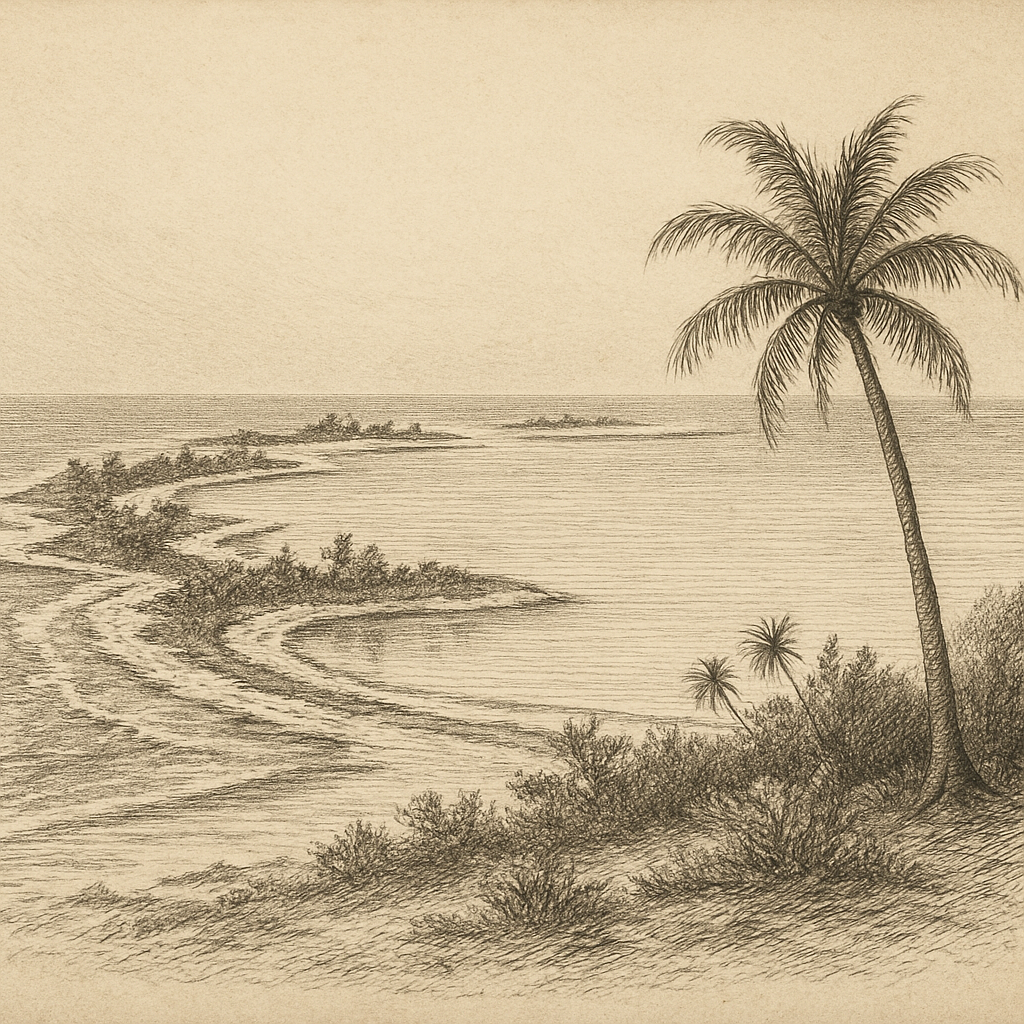
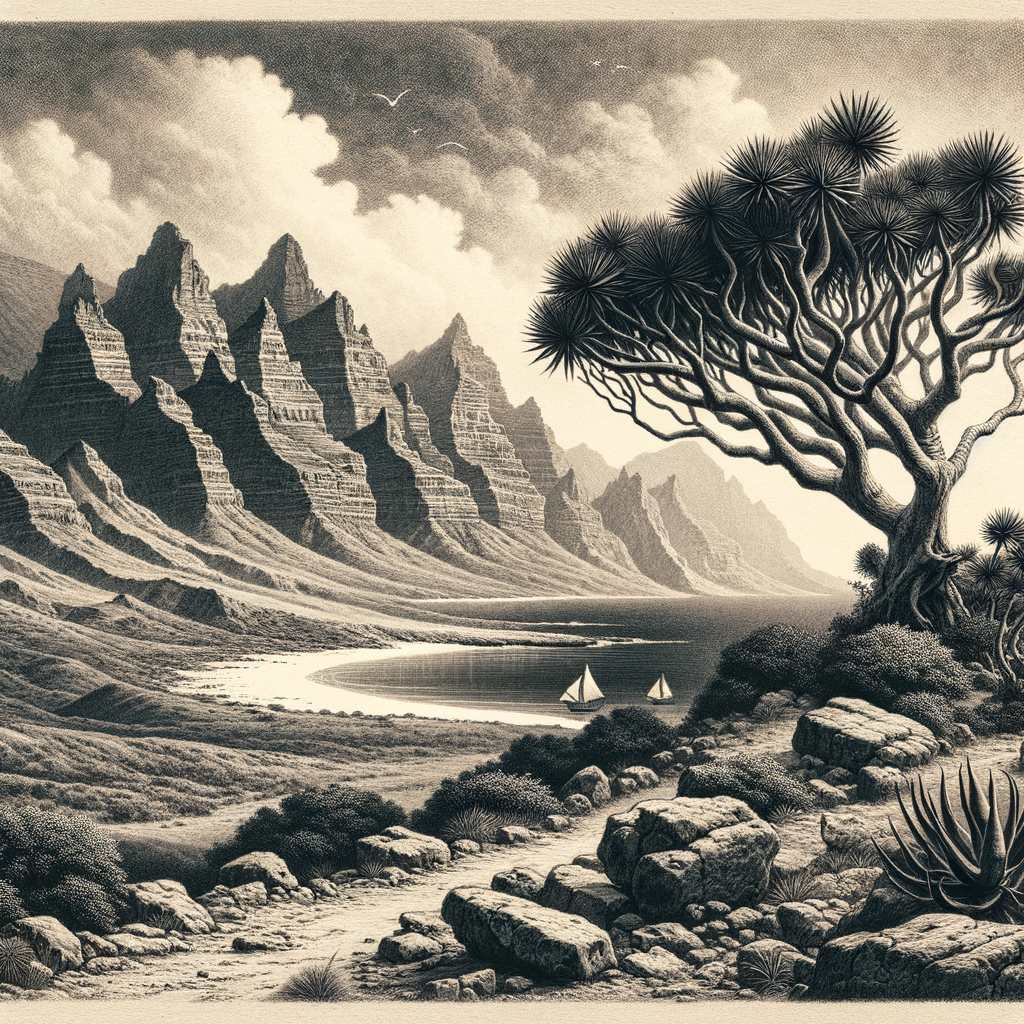
The island’s interior is severe and varied. The Haghier Mountains rise sharply, catching what moisture they can from passing clouds, while broad limestone tablelands and karst formations create a country of caves, sinkholes, and sudden escarpments. Around them lie arid lowlands and long shores where dunes and white beaches meet water of striking clarity. Fresh water is scarce and unevenly distributed; life here has had to negotiate drought, salt, and thin soils.
Out of that difficulty came the forms for which the island is famous. The dragon’s blood tree, with its dense, upturned crown, stands like a deliberate act of design against the bare ground. Its red resin was known in antiquity and traded widely, valued at different times as medicine, pigment, and varnish. Nearby grow bottle trees swollen with stored water, frankincense species rooted in rock, and cucumber trees unrelated to the vegetable their name suggests. These are not decorative curiosities but survivors, each carrying the logic of a harsh environment in its shape. The archipelago’s biodiversity earned it UNESCO World Heritage status in 2008, recognition of how unusual and vulnerable this living assemblage really is.
Known to the Ancients, Apart from Them All
For all its remoteness, the island was not unknown to the older world. Greek, Roman, and later Arab sources mention it, usually through the lens of trade. The anonymous author of the Periplus of the Erythraean Sea, writing in the first century, described a place engaged in commerce, linked to the circulation of aromatics and other goods moving across the Indian Ocean. That early notice is revealing: this was never a blank spot on the map, but neither was it ever fully drawn into the centers of power around it.
Its people developed a culture marked by distance and endurance. Most inhabitants traditionally lived in small communities tied to fishing, pastoralism, and seasonal movement across difficult terrain. The island’s long separation helped preserve a distinct language, Soqotri, part of the Modern South Arabian group and carried largely through oral tradition rather than writing. Foreign powers touched the island without ever quite smoothing away its separateness. The Portuguese appeared briefly in the early sixteenth century; the British later took strategic interest in it because of the sea routes nearby. Yet even empire, so effective elsewhere at reducing places to stations and coordinates, never made this island feel ordinary.
Sailors’ Watering Place, Naturalists’ Revelation
Mariners knew it as a place of difficult approach, useful anchorage, and uncertain weather. The seas around it could be unforgiving, especially under monsoon conditions, and the coastline did not always offer easy welcome. That practical maritime knowledge fed the island’s reputation: not haunted in the theatrical sense, but set apart, exposed, faintly forbidding. It was a place a captain respected before he admired it.
In the nineteenth and twentieth centuries, naturalists and explorers described a world so singular that comparison often failed them. What impressed visitors was not only the number of endemic species but the coherence of the whole scene. The flora, the geology, the dry light, the cliffs over a luminous sea—everything seemed to belong to a separate experiment in making an island. Birds, reptiles, and marine life added to the sense of biological apartness, though the most memorable encounters were often with plants: slow-growing, bizarrely shaped, and ancient-looking, as if they had survived from a chapter the rest of the planet had edited out.
The Fragile Edge of Elsewhere
Romantic distance can hide a harder truth. Isolation protects, but it also exposes. Development pressure, overgrazing, invasive species, extreme weather, and the wider instability affecting Yemen all threaten the ecological and human balance here. Species adapted over millennia to narrow conditions are not resilient in the casual way people imagine wild nature to be. A tree that looks indestructible can, in fact, belong to an ecosystem with very little margin for error.
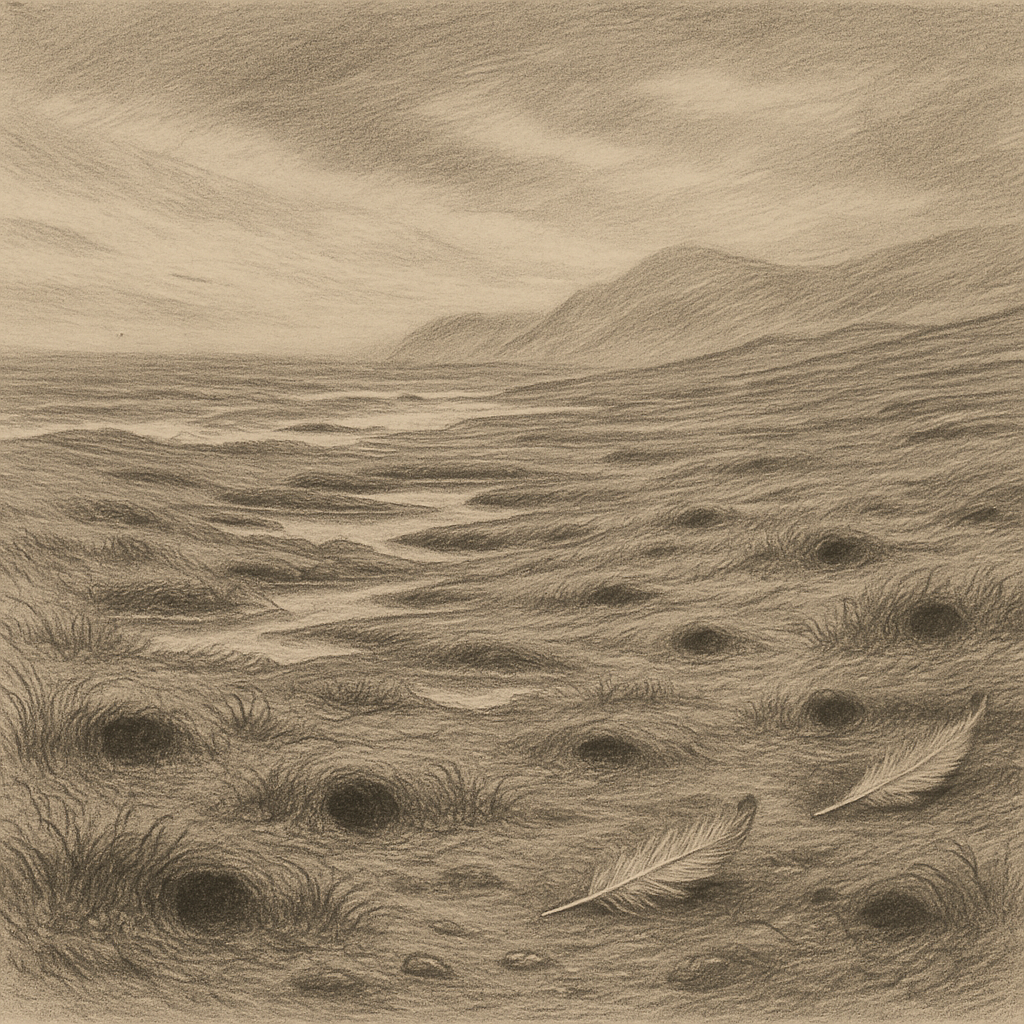
That tension is part of what makes the island so affecting. It is not empty, not abandoned, not a dead relic of navigation, but a living place whose remoteness has preserved one of the most extraordinary environments in the Indian Ocean. And yet it still feels, in the mind, like an edge-world: a high plateau under moving cloud, a beach where wind erases tracks, a stand of dragon’s blood trees holding their strange silhouettes against the evening light. Some islands invite possession, itineraries, plans. This one resists all that. It remains what the sea and the monsoon made it—distant, exacting, and unforgettable.