Far out in the southeastern Pacific
More than any story told about it, distance defines San Felix Island. It lies far off the coast of Chile, in the Desventuradas Islands, a small and exposed outpost of volcanic land in an immense field of ocean. The nearest continental shore is not near in any ordinary sense. The result is a geography that feels stripped to essentials: rock, slope, sea, wind, and the long recurrence of swells arriving from open water.
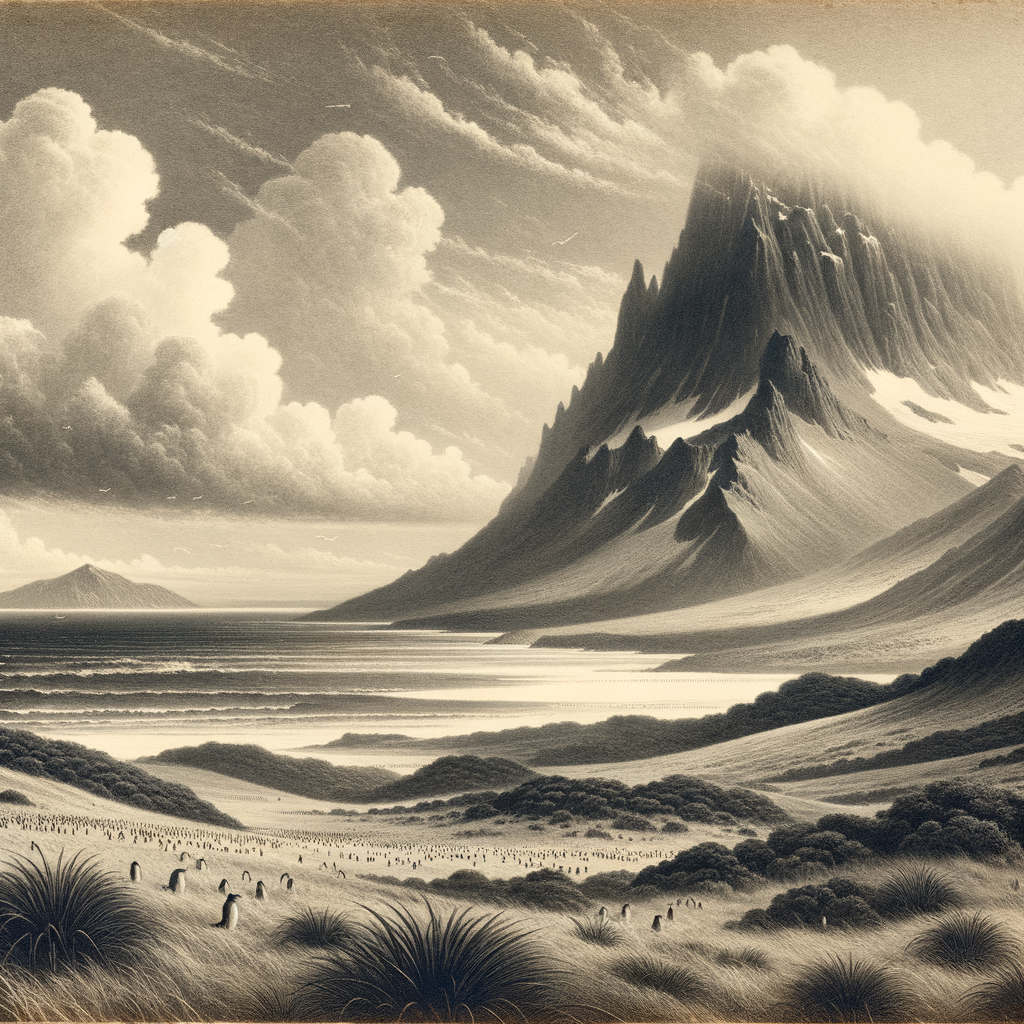
The island itself is modest in size, dry in aspect, and abrupt in profile. It is volcanic in origin, built not by rivers or glacial carving but by submarine eruptions that raised steep ground above the Pacific. Along with neighboring San Ambrosio, it forms part of one of the most isolated island groups under South American sovereignty. The terrain is rugged rather than inviting, with cliffs and broken surfaces that make landing difficult and habitation harder still. Fresh water is scarce. Vegetation exists, but under conditions of exposure and limited moisture that prevent any lush illusion. Everything here is shaped by constraint.
That severity is one reason the place has never carried the kind of settled human history found on larger islands. There is no layered townscape, no sequence of farms and roads and ports. Human presence has been intermittent, strategic, and often provisional. The islands were known to Spanish navigators in the early colonial period; the usual attribution places their European discovery in the sixteenth century, during the era when the Pacific was being charted by imperial routes rather than by curiosity alone. Yet being named was not the same as being occupied. For centuries, these islands remained what remote oceanic rocks often become in maritime history: known, noted, occasionally approached, and mostly left to weather and birds.
A station for seabirds, a challenge for people
If the human story is thin, the biological one is not. Isolation has made the Desventuradas important to science and conservation, precisely because separation alters life. San Felix Island belongs to a region where endemism matters. Seabirds use these islands as breeding ground, and the surrounding waters fall within a rich marine zone now recognized through large-scale protection in Chilean waters. The nearby Nazca-Desventuradas Marine Park, created in 2015, reflects how exceptional this oceanic setting is, not only for birds but for fish, invertebrates, and deep marine ecosystems linked to the underwater Salas y Gómez and Nazca ridges.
On land, conditions are harsher and more limited. The flora of the Desventuradas has long interested botanists because of its isolation from both continental Chile and other Pacific islands. Species adapted to drought, salt exposure, and poor soils persist where less specialized plants could not. Seabird colonies, in turn, have historically helped shape these austere island ecologies through nesting, trampling, and nutrient deposits. This is not abundance in the tropical sense; it is a tighter, stranger form of life, assembled under pressure.
What makes such places memorable is not spectacle but concentration. A small island in the open Pacific can hold an outsized scientific value because so much of its character depends on boundaries that are hard to cross. Species arrive rarely, adapt slowly, and endure only if the island’s narrow terms allow it. The same remoteness that deters settlement has preserved ecological distinctiveness.
Why so little happened here
The absence of a populous past is not an empty fact; it is the central fact. There were practical reasons. The island’s exposure, the lack of easy anchorage, the scarcity of water, and the difficulty of building a self-sustaining community all worked against permanent settlement. In different centuries, remote Pacific islands were mined for guano, stocked by passing sailors, or used as occasional naval reference points, but many never became more than temporary footholds. This was one of them.
Chile has maintained a presence in the wider island group through naval and meteorological activity rather than civilian life. That modern link underscores the old reality: these rocks matter on maps and at sea even when they remain nearly empty on land. Their significance is strategic, ecological, and geographic more than demographic. The islands extend a national horizon far into the Pacific, while also standing apart from the ordinary rhythms of the mainland.
There is an eerie quality in that kind of place, though not because of legend. Documented folklore tied specifically to this island is scarce. Its atmosphere comes instead from a familiar maritime pattern: a location repeatedly recognized by navigators and scientists, yet still resistant to incorporation into everyday human space. Ships have passed; surveyors have recorded; governments have claimed and administered. Even so, the island keeps the feel of something barely interrupted.
The outline that remains
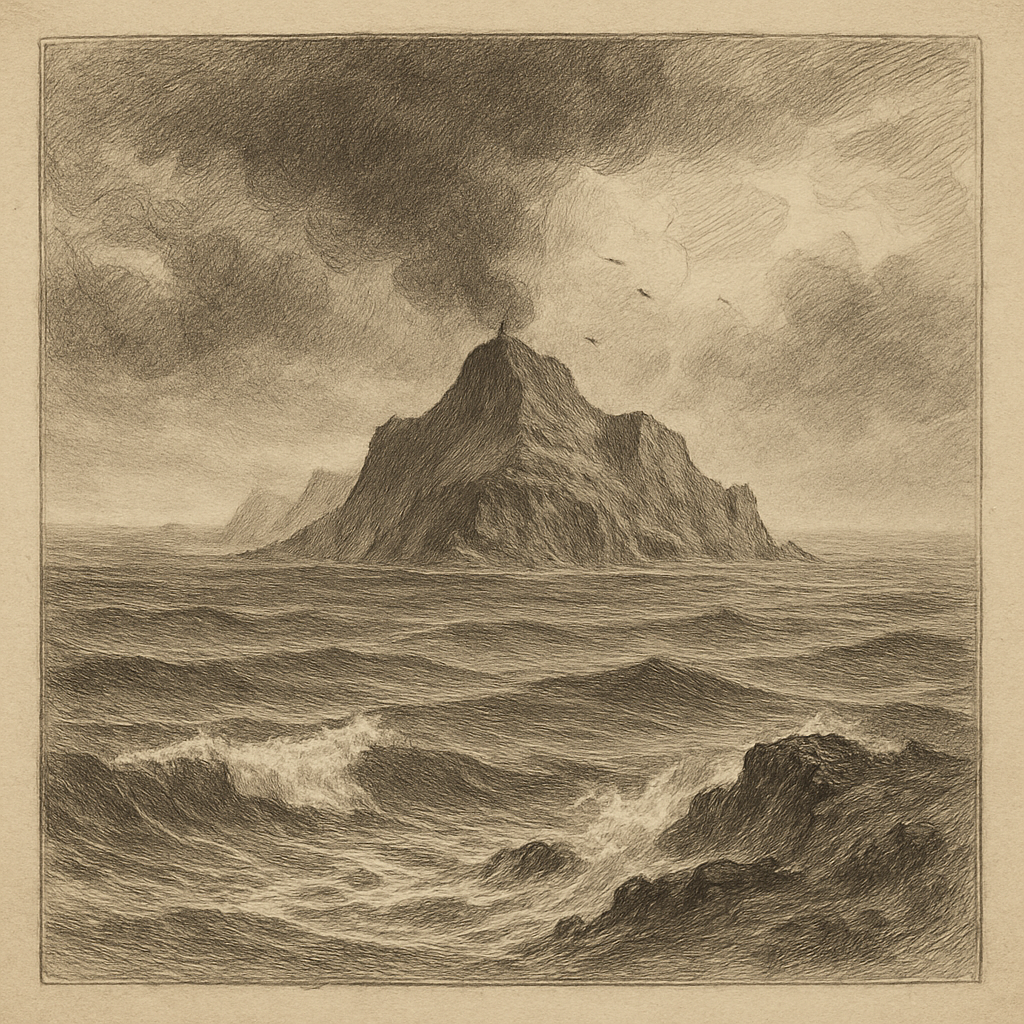
Seen in imagination from a vessel’s deck, it would appear first as a hard interruption in light: dark volcanic ground lifted into the marine haze, without the softening signals of habitation. No harbor town announces arrival. No cultivated slope explains the land. The eye meets a place that has not been arranged for comfort.
That is the lasting impression San Felix Island leaves. It is real, mapped, studied, sovereign, and biologically important, but still somehow close to the condition of first sight. In a century crowded with reachable places and constant images, it endures as one of those rare bits of earth whose chief drama is simply that it stands so far away, taking the full weather of the Pacific with almost no audience at all.