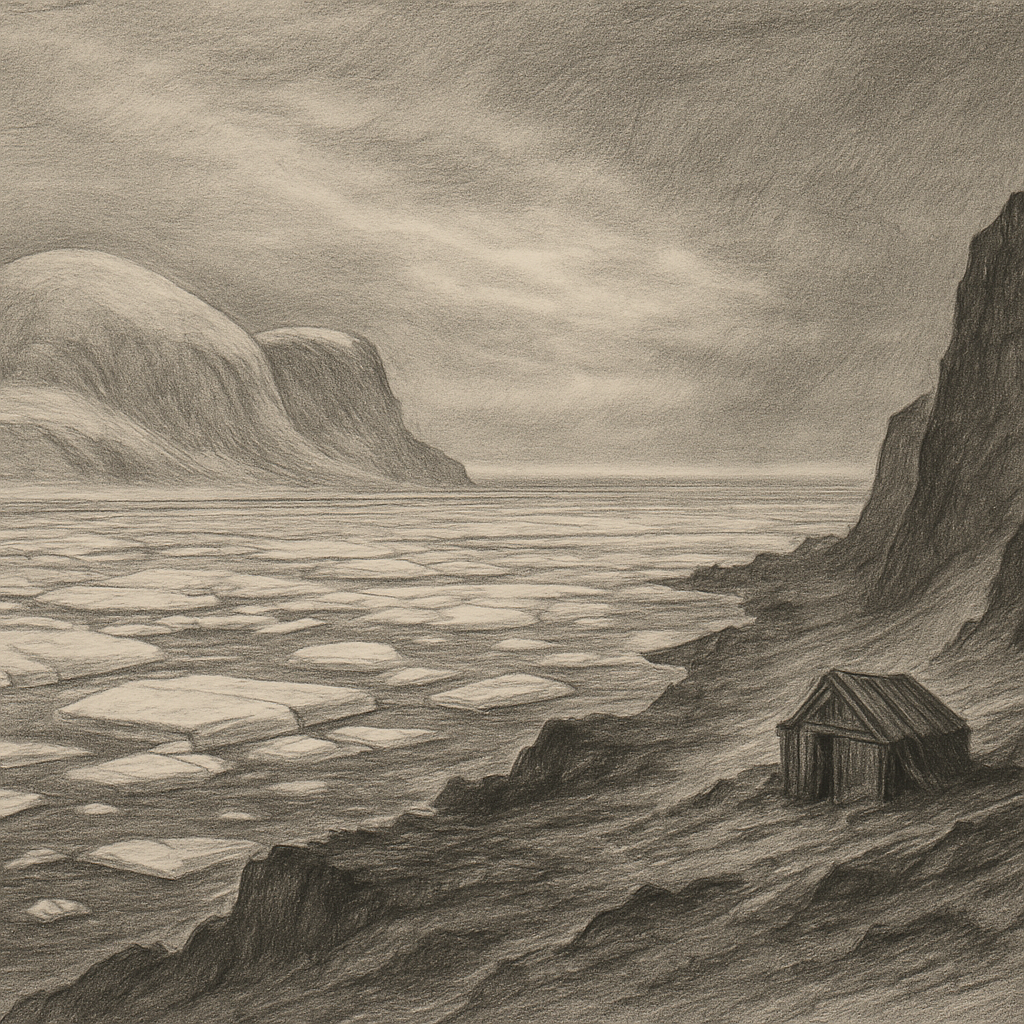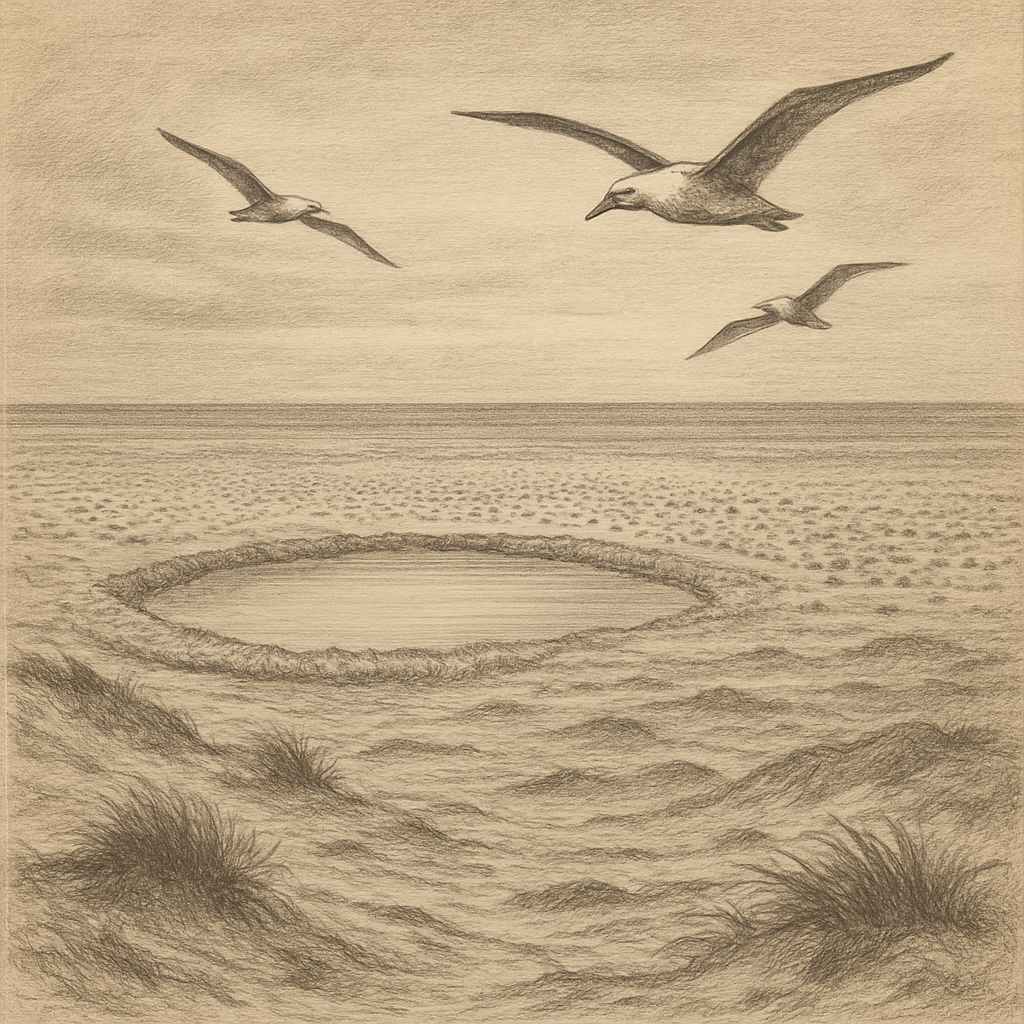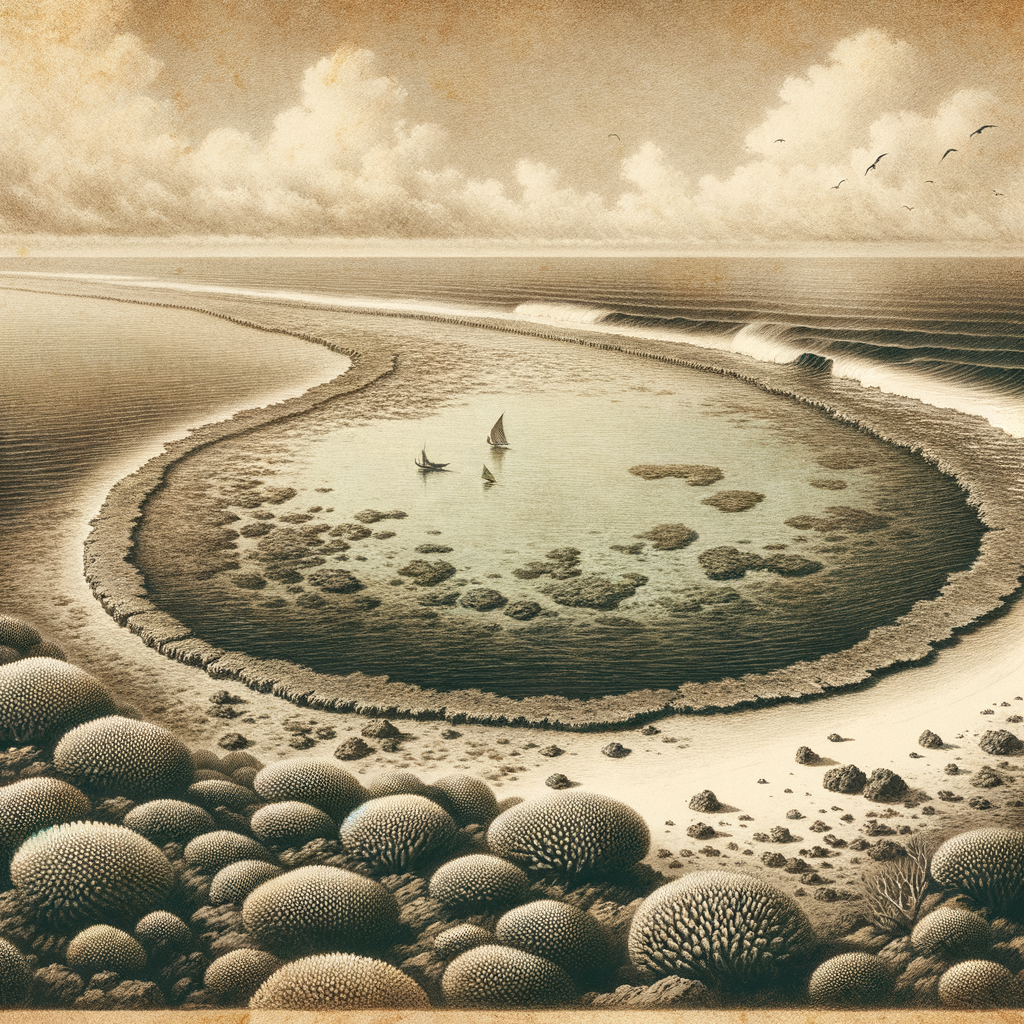
Hardly any land stands above the water here. What appears on charts as Kingman Reef is, in physical terms, almost an argument with the sea: a mostly submerged coral atoll in the North Pacific, far southwest of Honolulu and north of American Samoa, with only the slightest scraps of dry ground showing at low tide. Its lagoon, enclosed by a narrow reef rim, measures several nautical miles across, but the emergent land adds up to almost nothing. The impression is not of an island rising from the ocean so much as of the ocean briefly misplacing part of itself.
That near-absence explains both its allure and its menace. For mariners in the age of sail and early steam, low coral formations were among the most feared features on any route. They gave no mountain warning, no dark wall on the horizon, no high silhouette at dawn. A vessel could be standing into danger before anyone on deck knew there was land at all. This reef entered the written record in 1798, when the American ship Betsy, commanded by Captain Edmund Fanning, is generally credited with its discovery. The name came later, after the American captain W. E. Kingman reported it in 1853 while in command of the Shoal. Even in that sequence of names and sightings, the place seems to resist possession; it was observed, nearly struck, noted, renamed, and still remained mostly underwater.
A ring too low for certainty
Geographically, this is one of the United States Minor Outlying Islands, administered as an unincorporated and unorganized territory. It lies just north of the equator in a part of the Pacific where distance is best understood in days at sea. The atoll is triangular to oval in outline, enclosing a deep lagoon and edged by a reef flat that dries only in places. Unlike the lush image many people attach to coral islands, there are no groves, no village clearings, no freshwater lens to sustain settlement, and no substantial beaches. Exposure, salinity, and the lack of permanent dry land decide everything.
That bare geometry shapes the atmosphere of the place. The reef can seem less like terrain than like a condition: a margin of coral, surf, and moving light where water dominates every calculation. Waves break hard on the ocean side, while inside the lagoon the surface can briefly turn glassy, masking the fact that this calm is held by one of the Pacific’s most precarious rims. In rough weather, the distinction between sea and land is nearly academic.
Its legal and environmental status reflects that fragility. The atoll is part of the Pacific Remote Islands Marine National Monument, and public access is tightly restricted. What protection seeks to preserve is not scenery in the conventional sense but an intact marine system: coral communities, pelagic fish, sharks, seabirds, and a lagoon-ocean exchange that has been spared many of the disturbances common on more visited islands. Scientific surveys have described exceptionally abundant marine life here, including large predatory fishes that are now rare in many tropical seas. In that respect, the reef offers a glimpse of what parts of the Pacific may once have looked like before industrial fishing and constant human traffic altered food webs on a grand scale.
Claims, wrecks, and brief designs
Human intentions have passed over this atoll more often than people have actually stood on it. In the nineteenth century it was claimed under the U.S. Guano Islands Act, one of many such claims made when bird islands and coral outcrops were valued for phosphate-rich deposits. Yet the logic that drew prospectors elsewhere found little to hold onto here. There was no practical foundation for settlement, no meaningful agricultural possibility, and scarcely any secure footing for the infrastructure that exploitation required.
The record that does persist is maritime rather than domestic. The reef’s danger to navigation became one of its defining facts. Low coral hazards generated not folklore in the romantic sense but a harder, professional kind of reputation among sailors: a place to mark carefully, to avoid in poor light, to remember because forgetting could open a hull. That reputation was reinforced by actual losses. In 1937 the tanker R. C. Stoner ran aground here, a stark modern reminder that even steel ships and better charts did not make such places harmless. Salvage and survival stories belong to many Pacific reefs; on this one, they underscore the same truth the geography has always announced—visibility is not the same as safety.
There were also strategic glances. During the era when transpacific aviation sought stepping stones across the ocean, remote atolls were assessed for their utility as refueling stations, weather outposts, or emergency stops. This one was examined and discussed, but its deficiencies were obvious. A ring of coral too low, too exposed, and too insubstantial could not easily be converted into a durable human foothold. The Pacific has many islands that were transformed by war, cables, airstrips, or colonial administrations. This was largely passed by because it could not convincingly become anything else.
Protected by inconvenience
What remains most striking now is that its emptiness is not simply scenic emptiness; it is functional. The very qualities that made the atoll hazardous and disappointing to would-be users have helped preserve it. Seabirds still use the few available resting and nesting sites. Green turtles and other marine animals move through waters that are protected not only by law but by remoteness. The surrounding sea, rather than any emergent shore, is the true body of the place.
That reversal gives the reef its unusual power. Most islands gather meaning by offering landing, shelter, fresh water, or habitation. Here the facts run the other way. It offers almost none of the usual terms on which people make land part of their story. The charts acknowledge it, governments administer it, biologists value it, and ships have feared it, yet it remains nearly free of the human signatures that make many remote islands legible. In the end, the memorable thing is not what was built there or what survived there, but how little the world has been able to fasten onto it at all: a coral outline, a bright lagoon, a name, and around them the enormous, uninterrupted Pacific.